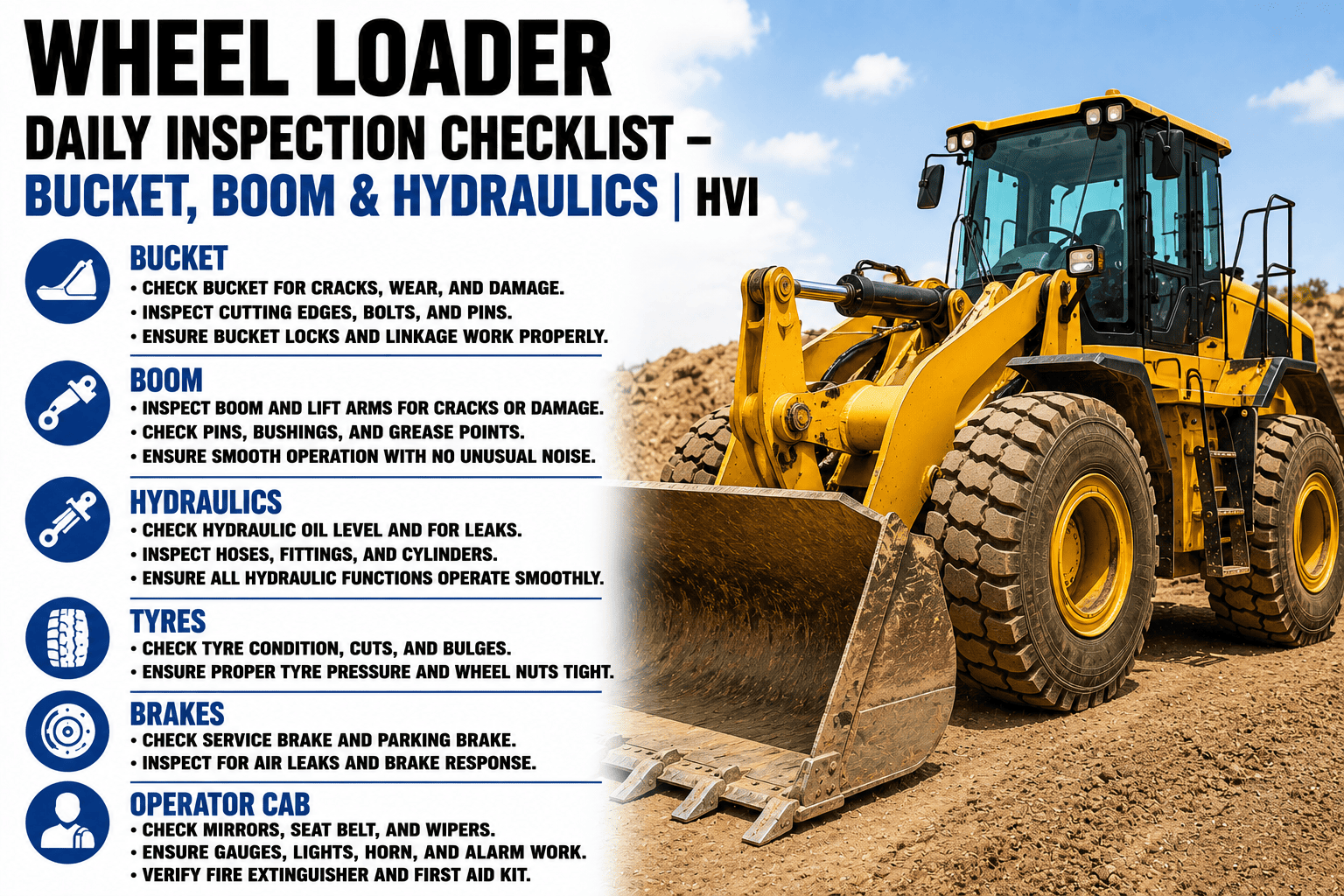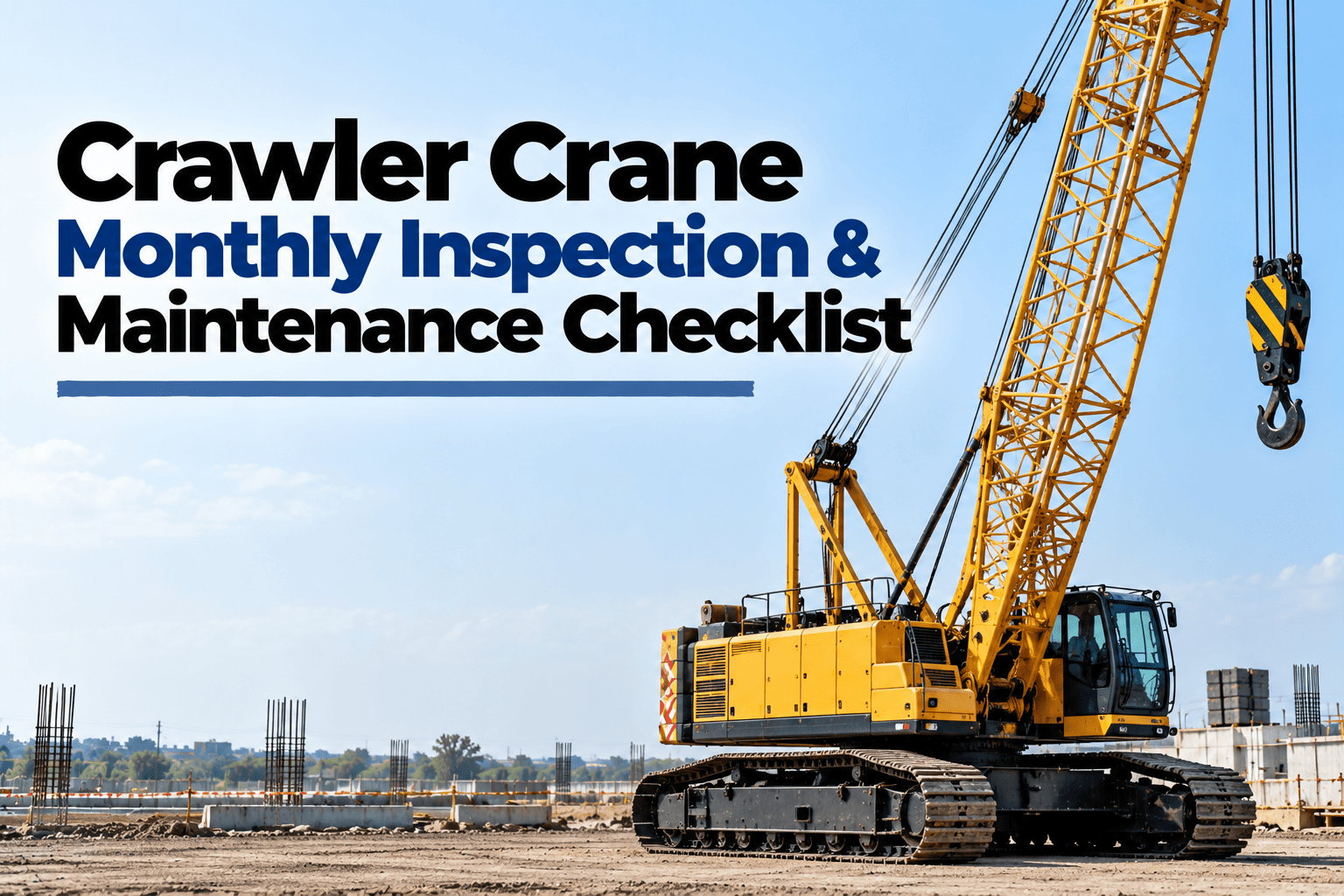
Crawler cranes make the heaviest and most critical lifts on refinery, power plant and bridge projects. They also carry the highest stakes: a cracked boom lacing, a worn pendant or a load moment indicator that reads wrong can turn a planned lift into a disaster. Daily operator checks catch obvious faults, but the monthly inspection by a competent person is where hidden wear is found. This checklist covers that monthly inspection zone by zone, and shows how teams keep every crawler crane's inspection history in HVI.
Crawler Crane Monthly Inspection and Maintenance Checklist
Lattice boom and pins, pendants, wire ropes and sheaves, hoist drums and brakes, load moment indicator, tracks and counterweights, checked every month.
The Monthly Checklist, Zone by Zone
Carry out the inspection with the crane safely parked and, where needed, the boom lowered. Follow the manufacturer's manual for limits and detailed procedures.
Lattice boom and jib
- Chords and lacings for dents and cracks
- Connecting pins and keepers
- Boom tip and jib fittings
Pendants and guy lines
- Pendant straps or ropes for damage
- End fittings and pins
- Even tension across sets
Wire ropes and sheaves
- Ropes against reject criteria
- Sheave grooves and bearings
- Rope guards in place
Hoist drums and brakes
- Rope spooling and drum condition
- Brake linings and adjustment
- Drum pawls and locks working
Load moment indicator
- Display matches the crane setup
- Angle and load sensors working
- Cut-outs and alarms tested
Upper works and slewing
- Slewing ring bolts and play
- Slew brake and lock
- Gantry and A-frame welds
Tracks and carbody
- Track tension and shoes
- Rollers, idlers and sprockets
- Carbody pins and welds
Counterweights and hook
- Counterweights secure and correct
- Hook block, latch and swivel
- Anti-two-block device working
Wire Rope Reject Signs
Wire ropes are consumables and must be replaced before they fail. Use the manufacturer's and applicable standard's discard criteria for exact limits.
| Defect | What it looks like | Action |
|---|---|---|
| Broken wires | Wire ends sticking out, especially at sheaves | Replace if beyond discard limits |
| Kinks | Permanent bends from looping or snatching | Replace |
| Birdcaging | Strands opening outwards like a cage | Replace |
| Crushing | Flattened rope from poor spooling | Replace if severe |
| Corrosion | Rust, pitting or loose wires | Assess and replace if heavy |
| Reduced diameter | Rope measures smaller than when new | Replace if beyond limits |
Inspection After Every Assembly
Crawler cranes are often assembled and dismantled on site. Each assembly must be checked before the first lift.
Never stand under or inside a lattice boom while pins are being removed or fitted. Follow the manufacturer's assembly sequence exactly, use the correct pin keepers, and never lift until the configuration, counterweights and load moment indicator setup have been checked.
Check the setup
Boom length, counterweight and configuration match the plan.
Check every pin
All pins fitted with keepers in place.
Set the LMI
Enter the configuration and test cut-outs.
Test functions
Hoist, boom, slew and travel without load.
A Complete Inspection History for Every Crane
HVI records daily, monthly and post-assembly inspections with photos and the inspector's name, tracks wire rope changes and flags overdue checks across every crawler crane you run.
What a Good Monthly Record Includes
Clear records protect the crew, satisfy clients and auditors, and show how the crane is wearing over time.
Who and when
The competent person's name, date and hour meter reading.
Configuration
Boom length, jib and counterweight at the time.
Findings
Every defect with photos and location.
Actions
Repairs, rope changes and when they were done.
Crawler Crane Status in HVI
A sample view across projects, showing inspection status and open findings for each crane.
| Crane | Project | Monthly inspection | Open finding | Status |
|---|---|---|---|---|
| CC-01 | Refinery unit | Done 8 days ago | None | In service |
| CC-02 | Power plant | Due in 3 days | Sheave bearing noisy | Book inspection |
| CC-04 | Bridge site | Overdue by 5 days | Broken wires on hoist rope | Out of service |
Crawler Crane Inspection FAQs
What should a crawler crane monthly inspection cover?
The lattice boom and jib, pendants, wire ropes and sheaves, hoist drums and brakes, load moment indicator, upper works and slewing, tracks and carbody, counterweights and the hook block.
Who should carry out the monthly inspection?
A competent person with the knowledge and experience to judge the crane's condition, separate from the operator's daily check. Some clients and projects also require third-party inspections.
When should a crawler crane wire rope be replaced?
Replace it when broken wires, kinks, birdcaging, crushing, heavy corrosion or loss of diameter exceed the discard criteria in the manufacturer's manual and applicable standards.
Does a crawler crane need inspection after reassembly?
Yes. After every assembly or move, check the configuration, pins and keepers, counterweights and load moment indicator setup before the first lift. Teams that log assemblies in HVI keep a full record.
How can I track inspections across several cranes?
Record every daily, monthly and post-assembly inspection in one system, with reminders for upcoming checks and alerts for overdue ones. Book a demo to see crane inspection tracking in HVI.
Safer Heavy Lifts, Every Month
Run monthly crawler crane inspections, check every assembly and track ropes, findings and repairs in HVI. Confident heavy lifts, clean audits and cranes you can rely on.