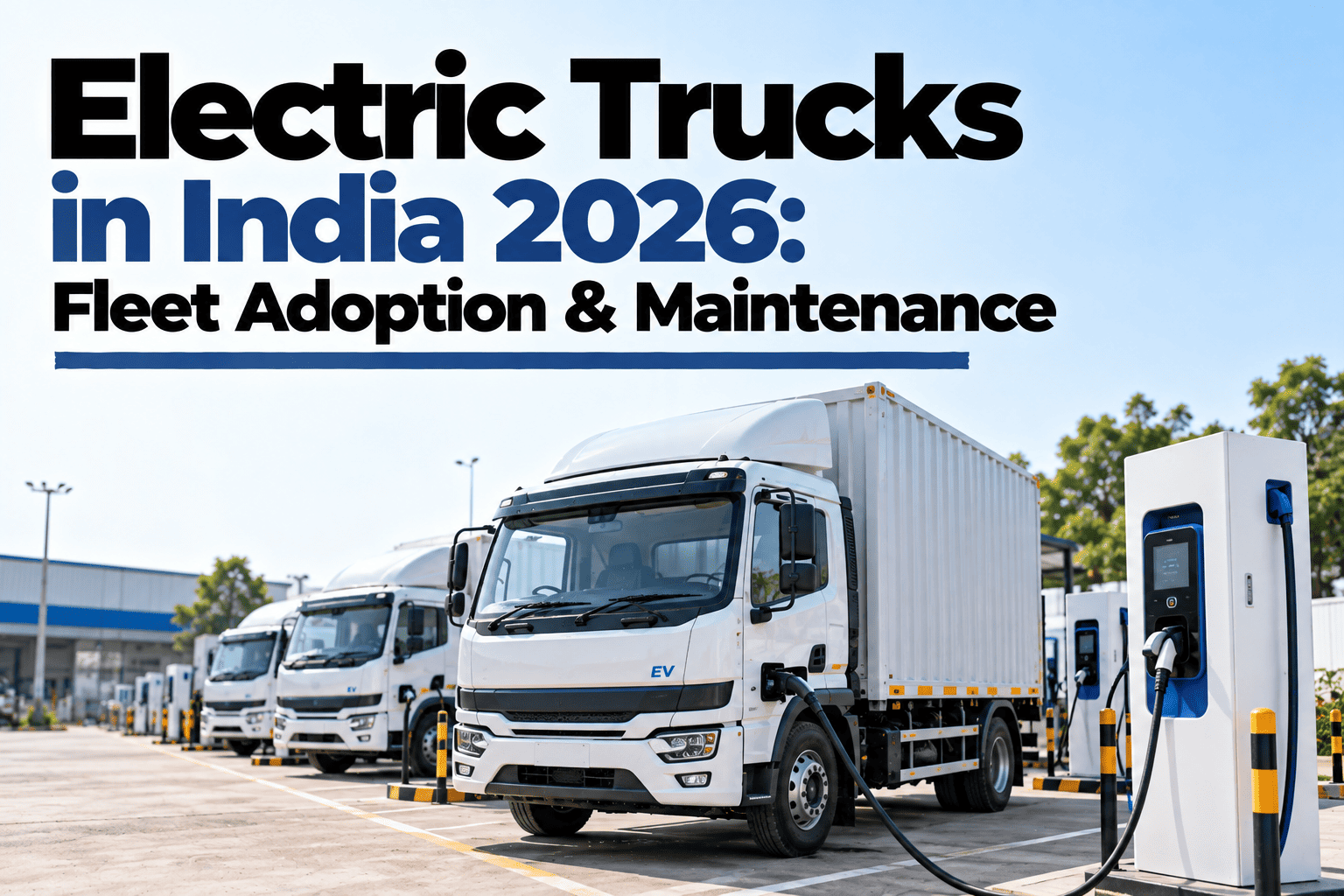
Electric trucks are no longer just a pilot project in India. Cement, steel, port and logistics companies are putting them to work on short, repeated routes where charging is easy and diesel bills are high. A central incentive now helps with the higher purchase price, linked to scrapping an old diesel truck. But charging, maintenance, safety and route planning all change. This guide covers where e-trucks fit, the costs, charging, maintenance and a phased adoption plan, and how fleets manage mixed diesel and electric fleets in HVI.
Electric Trucks in India 2026: Fleet Adoption and Maintenance
Where electric trucks make sense today, the incentive and costs, charging depot planning, how maintenance changes and a step-by-step adoption plan.
The PM E-DRIVE Incentive for E-Trucks
The central scheme offers a demand incentive on medium and heavy electric trucks, scaled to gross vehicle weight and linked to scrapping an old diesel truck.
| Category | Gross vehicle weight | Maximum incentive per truck |
|---|---|---|
| N2 | Above 3.5 t up to 7.5 t | Rs 2.7 lakh |
| N2 | Above 7.5 t up to 12 t | Rs 3.6 lakh |
| N3 | Above 12 t up to 18.5 t | Rs 7.8 lakh |
| N3 | Above 18.5 t up to 35 t | Rs 9.6 lakh |
| N3 | Above 35 t up to 55 t | Rs 9.3 lakh |
A scrapping certificate of deposit from a registered scrapping facility, for a diesel truck of equal or higher weight, is needed to claim it. Check the current scheme status and terms with your dealer before buying.
Running Cost: Diesel vs Electric
Electric trucks cost more to buy but much less per kilometre to run. The figures below are illustrative only.
In this example, an electric truck running 80,000 km a year saves about Rs 11.9 lakh a year in energy. Compare that with the extra purchase price, financing, charging setup and battery life to see the payback for your routes.
Planning a Charging Depot
Charging is the backbone of an electric fleet. Plan it before the trucks arrive.
Study routes
Daily kilometres, loads and depot time.
Size the power
Agree grid capacity with the electricity board.
Choose chargers
Overnight slow charging or fast top-ups.
Plan the schedule
Stagger charging to avoid peak demand.
One System for Diesel and Electric Trucks
HVI handles daily checks, services, defects and costs for diesel and electric trucks side by side, with checklists suited to each, so a mixed fleet runs from one place.
How Maintenance Changes
Electric trucks remove many diesel jobs but add new ones that need different skills.
- Engine oil, filters and fuel system
- Clutch and much of the gearbox
- Exhaust after-treatment and AdBlue
- Brakes, thanks to regenerative braking
- Battery health and charging habits
- Battery and motor cooling systems
- High-voltage cables and connectors
- Software updates and fault codes
Safety and Training
High-voltage systems need trained people and clear rules.
Trained technicians
Only trained staff should work on high-voltage parts.
Safe isolation
Follow the maker's steps to make the system safe.
Charging safety
Inspect cables and connectors before every charge.
Fire response
Agree a battery fire plan with local fire services.
A Phased Adoption Plan
Start small on the best route, learn from real data and then scale.
A Mixed Diesel and Electric Fleet in HVI
A sample monthly view comparing trucks on similar routes.
| Truck | Type | Kilometres | Energy cost per km | Status |
|---|---|---|---|---|
| EV-02 | Electric | 6,800 km | Rs 10.6 | Running well |
| EV-05 | Electric | 5,900 km | Rs 12.4 | Check charging habits |
| DS-11 | Diesel | 7,100 km | Rs 26.1 | Running well |
Electric Truck FAQs
Are electric trucks practical in India yet?
They are practical today for short and medium routes where trucks return to a depot or site to charge, such as city distribution and port, plant or mine shuttles. Long-haul use is still at an early stage due to range and charging.
What incentive is available for electric trucks?
The PM E-DRIVE scheme offers a demand incentive of up to Rs 9.6 lakh per truck for eligible N2 and N3 e-trucks, depending on weight, linked to a scrapping certificate for an old diesel truck. Check the current status and terms with your dealer.
Do electric trucks need less maintenance?
They need less engine, fuel system, clutch and exhaust work, and often less brake work. But they add battery, cooling, high-voltage and software checks, which need trained technicians.
How should a fleet start with electric trucks?
Start with a pilot on one or two suitable routes, plan charging carefully and track real costs and uptime against diesel trucks. Teams that track both in HVI can compare them fairly.
Can one system manage diesel and electric trucks?
Yes. Each truck type has its own checklists and service plans, while costs, defects and uptime sit in one view. Book a demo to see mixed-fleet management in HVI.
Move to Electric With Confidence
Pilot electric trucks on the right routes, plan charging, adapt maintenance and compare real costs with diesel in HVI. Lower running costs and cleaner freight, without the guesswork.