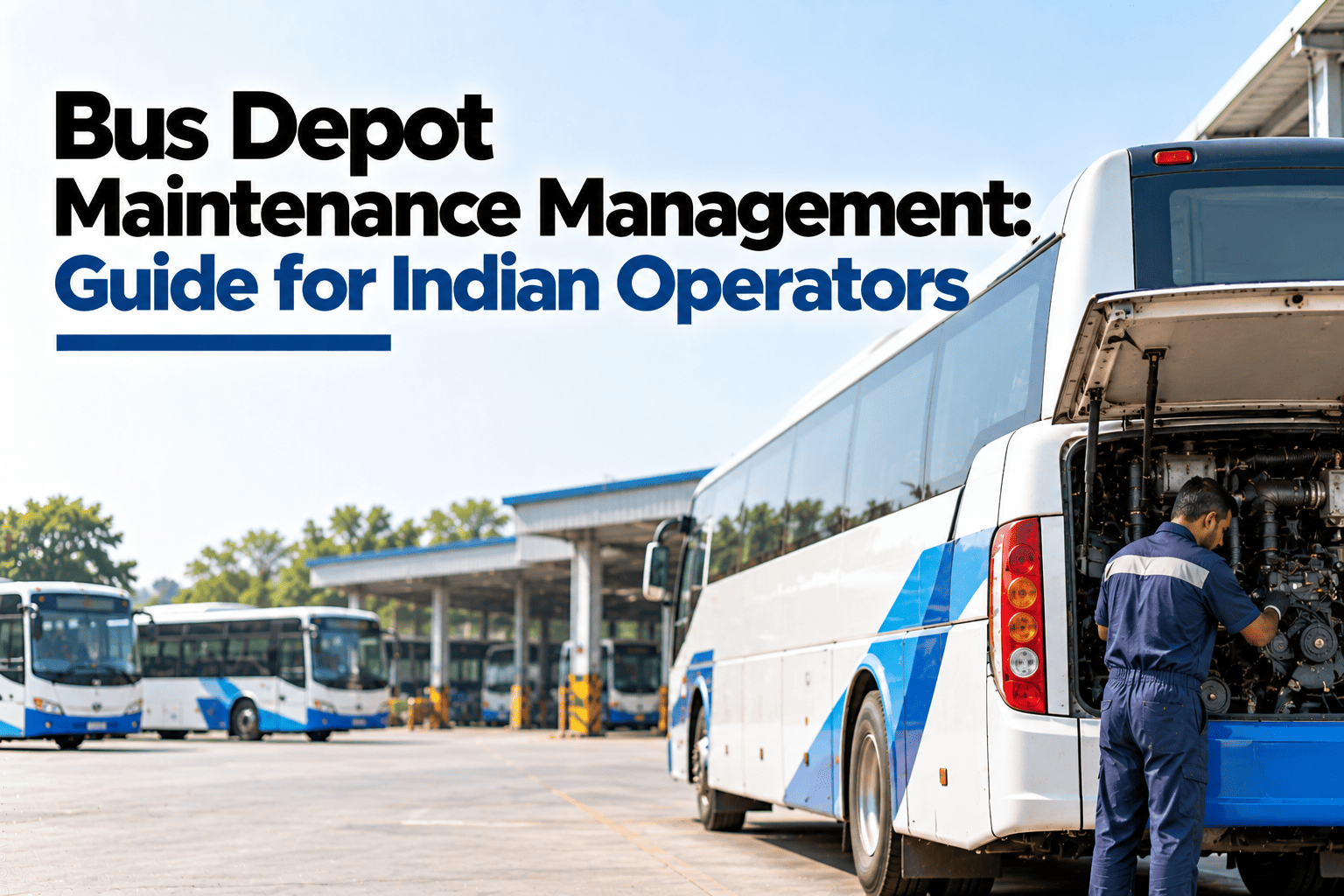
Every bus that misses its morning outshedding means stranded passengers, lost revenue and a scramble at the depot. In many Indian depots the reason is not a major failure but a small defect nobody recorded the night before, a docking that slipped or a tyre that should have been changed last week. A well-run depot works like a daily cycle, with clear checks at return, planned work overnight and a reliable morning release. This guide covers that cycle for STUs and private operators, and shows how depots replace paper registers with HVI.
Bus Depot Maintenance Management: Guide for Indian Operators
Plan the daily depot cycle, keep docking on schedule, manage tyres, batteries and spares, respond to breakdowns faster and measure what matters.
A Docking Schedule Every Depot Can Follow
Docking is planned preventive maintenance in layers. Each layer adds to the one before it. Set intervals by kilometres or days according to the bus maker's schedule.
What to Check When a Bus Returns
The return check is the most valuable 10 minutes in the depot. Defects found in the evening can be fixed overnight instead of delaying the morning.
Brakes and air system
Crew notes on pulling, noise or slow air build-up.
Doors and exits
Doors open and close smoothly, emergency exits work.
Tyres
Cuts, bulges, low pressure and stones between duals.
Lights and wipers
Headlights, indicators, destination board and wipers.
Safety equipment
Fire extinguisher, first aid kit and hammer for glass.
Interior
Seats, grab rails, floor and passenger complaints.
Tyres, Batteries and Fuel Systems
These three areas cause a large share of morning failures and on-road breakdowns. Each needs its own routine.
- Weekly cold pressure checks on every tyre
- Tread depth recorded at monthly docking
- Rotation and retreading on a set plan
- Tyre life tracked in kilometres per tyre
- Terminals cleaned and tightened weekly
- Voltage checked before winter and summer
- Charging system tested at docking
- Battery age and replacements recorded
- CNG cylinders and lines checked for leaks
- Cylinder testing done on the required cycle
- Electric bus charging planned around duties
- High-voltage work only by trained staff
Replace Depot Registers With One Live System
HVI records return checks, defects, docking schedules, tyre and battery history and breakdowns for every bus, so the depot manager sees tomorrow's fleet status tonight.
On-Road Breakdown Response
Breakdowns will happen. What matters is how fast passengers are moved and the bus is recovered, and whether the cause is fixed for good.
Report
Crew reports location and symptom to the depot.
Passengers
Arrange a relief bus or transfer passengers safely.
Attend
Breakdown van fixes on site or tows the bus.
Repair
Workshop fixes the fault and records the cause.
Prevent
Repeat causes go into the docking checklist.
Keeping the Spares Store Ready
A missing part can keep a bus off the road longer than the repair itself. Simple store rules prevent most delays.
Classify parts
Group parts by value and usage so the costly and critical ones get the closest watch.
Set minimum levels
Reorder fast-moving parts like filters, brake linings and bulbs before they run out.
Link to docking
Plan parts for next week's dockings so kits are ready before buses arrive.
Record every issue
Log each part against a bus to track cost and spot repeat failures.
Depot KPIs That Show Real Performance
Track these every month for each depot and compare depots fairly. Set targets from your own history and improve them step by step.
Tomorrow's Fleet Status in HVI
A sample evening view for the depot manager. Each bus shows whether it is ready for the morning, what is open and what is planned.
| Bus | Return check | Open defects | Next docking | Morning status |
|---|---|---|---|---|
| BUS-101 | Done | None | In 6 days | Ready |
| BUS-114 | Done | Door sensor, being fixed | In 12 days | Ready after repair |
| BUS-122 | Done | Brake air leak | Due tonight | Held for docking |
| BUS-130 | Not done | Unknown | In 3 days | Check before release |
Bus Depot Maintenance FAQs
What is docking in bus maintenance?
Docking is the planned preventive maintenance of a bus at set intervals of days or kilometres. Depots usually run several levels, from daily and weekly checks to monthly and major dockings, each adding more detailed work. The intervals should follow the bus maker's schedule and the depot's own experience.
How is bus fleet availability calculated?
Availability is the number of buses fit for service divided by the number of buses held, usually measured at the morning outshedding. Tracking it daily shows whether docking and repairs are keeping up with the schedule.
How do I reduce on-road breakdowns?
Make the evening return check thorough, keep docking on time, record the cause of every breakdown and add repeat causes to the docking checklist. Teams that record breakdowns in HVI can see repeat faults by bus and route straight away.
What is different about maintaining CNG and electric buses?
CNG buses need regular leak checks and cylinder testing on the required cycle. Electric buses need charging planned around duties, battery health monitoring and high-voltage work done only by trained staff. Both still need the usual brake, tyre, door and body maintenance.
Can a depot run without paper registers?
Yes. A digital system can record return checks, defects, docking, tyres, batteries, breakdowns and spares for every bus, and show the depot manager the next morning's fleet status. Book a demo to see a depot set up in HVI.
More Buses Out Every Morning, Fewer Breakdowns All Day
Run return checks, docking, tyres, batteries, breakdowns and spares from one system in HVI. Depot managers see tomorrow's fleet tonight, and every bus has a complete history.