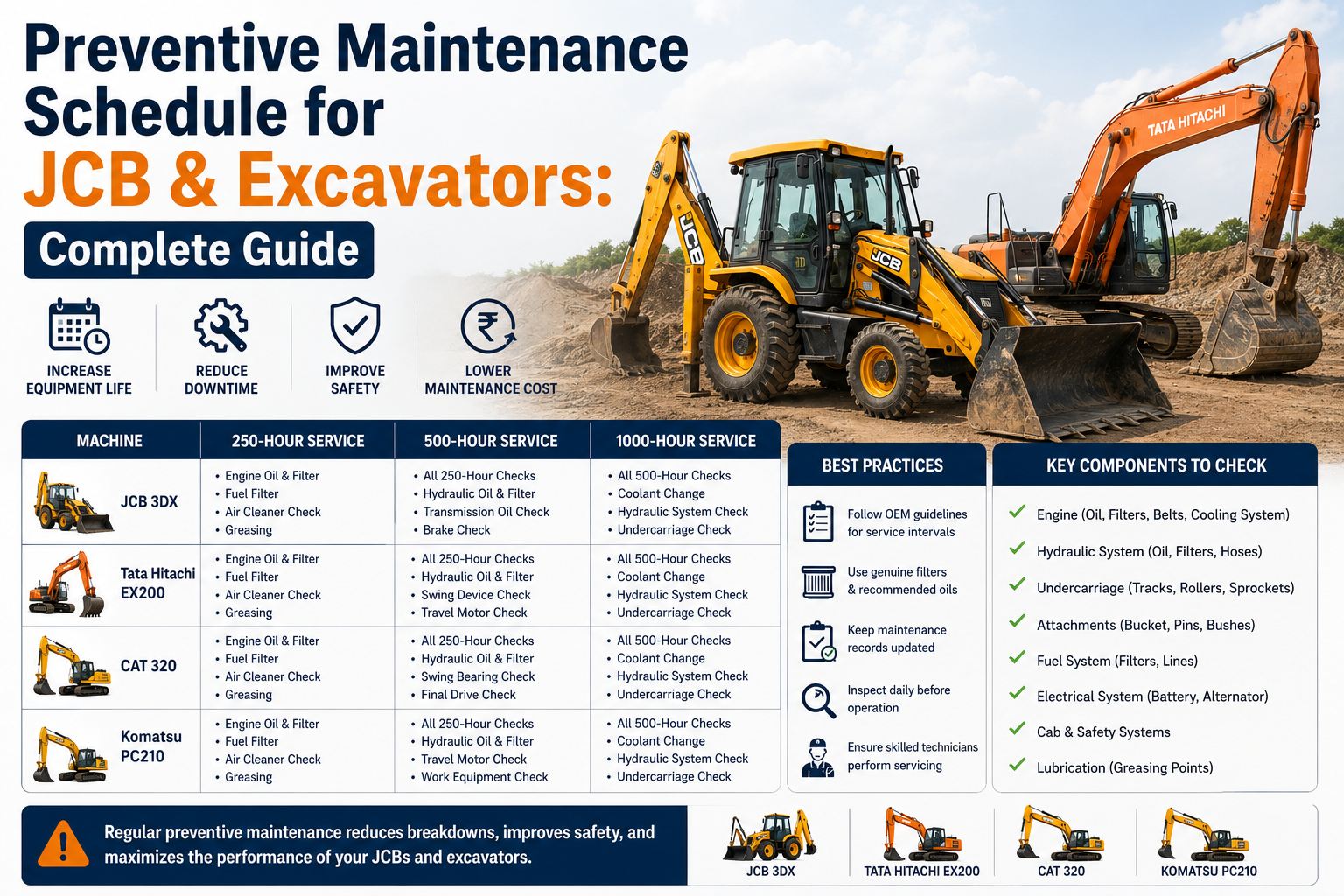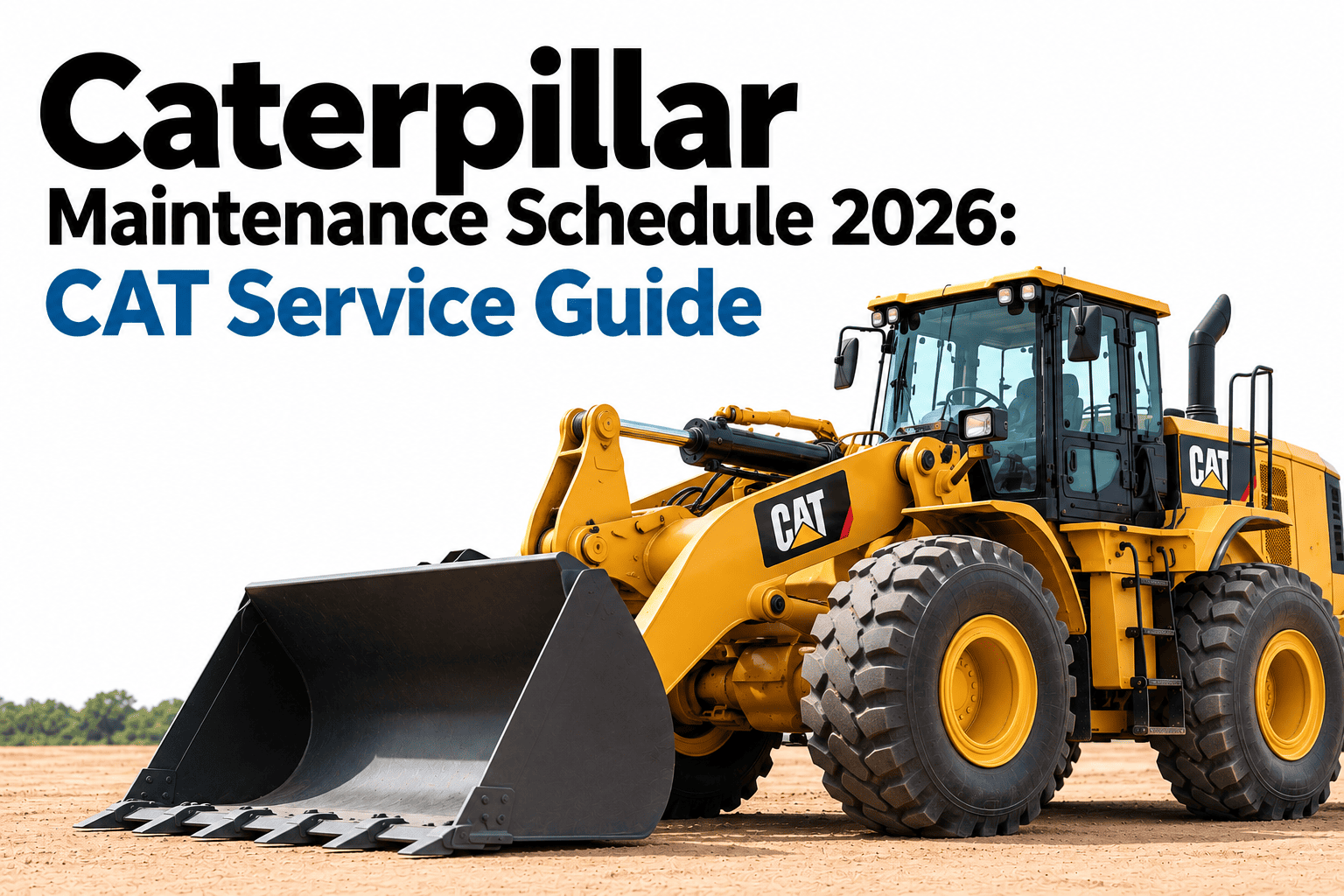
Caterpillar machines across Indian mines, highways, quarries and ports run to a tiered interval structure that most fleet managers know by its numbers — the daily walkaround, then 250, 500, 1000 and 2000 engine hours, with each tier including everything below it. The structure is consistent; the contents are not. Task lists, fluid specifications and part numbers differ by model, serial range, engine and application, which is why the useful skill is not memorising a list but getting your machine's own manual into a schedule that triggers on its own. You can work through your own CAT fleet in a free 30-minute session.
CAT Maintenance Intervals and How to Actually Run Them
The 250, 500, 1000 and 2000-hour tier structure, what changes in Indian dust, heat and double-shift conditions, and how to schedule every service from engine hours.
On sources and independence. The tiers below describe the standard interval structure. Exact task lists, fluid specifications, capacities and part numbers vary by model, serial range and application, and are revised over time — the Operation and Maintenance Manual for your specific machine and your authorised dealer remain the authoritative sources. HVI is an independent maintenance platform, not affiliated with or endorsed by Caterpillar Inc. Product names are used descriptively.
The Interval Tiers
Each tier carries forward everything from the tiers beneath it, which is why a 2000-hour service is a long day rather than a different kind of job.
Operator walkaround: fluid levels, leaks, visible damage, tyres or undercarriage, guarding and safety systems, restriction indicators, and anything that changed since yesterday.
No tools, no downtime, no parts. The tier that finds problems while they are still cheap.
The first tier needing the machine stopped properly. Typically engine oil and filter, lubrication points, and oil sampling where the fleet runs an analysis programme.
The tier most often shortened in severe conditions, and the one where dust and heat show up first.
Adds fuel and air filtration, hydraulic filtration, and closer inspection of systems that do not warrant attention every 250 hours.
Filtration-heavy. On dusty Indian sites the air side frequently needs attention well before this falls due.
Fluid changes on larger systems, cooling system attention, drivetrain and final drive service, and inspections requiring partial disassembly or measurement.
Needs planning: parts ordered ahead and a slot agreed with the site, or the machine sits waiting.
Component-level assessment, structural inspection, and the condition findings that shape rebuild or replacement decisions.
As much an assessment as a service. This is where accumulated condition data earns its keep.
What Indian Operating Conditions Change
Dust loading
Air filtration is the item most affected. On quarry, cement and opencast work the restriction indicator and actual filter condition tell you more than the 500-hour marker does.
Ambient heat
Cooling system condition, fluid degradation rate, and radiator or cooler cleanliness all move faster than temperate-climate assumptions allow.
Double and triple shift running
A machine can pass 250 hours in under a fortnight. Calendar-based scheduling falls behind immediately, which is the strongest argument for meter-based triggering here.
High load factor
Continuous high-load work ages a machine differently from the duty cycle standard intervals assume. The manual's severe-service guidance usually applies.
Monsoon and water ingress
Electrical connections, earth points, and greasing frequency at exposed pins deserve attention no standard interval specifically calls out.
Turn the Manual Into a Live Schedule
Intervals configured per machine and triggered from actual engine hours, with the task list attached so nothing is completed from memory.
From Manual to Working Schedule
One
Confirm the correct manual for each machine's model and serial range. Mixed fleets frequently run one schedule across machines the manual treats differently.
Two
Decide whether standard or severe-service intervals apply, based on your actual application rather than a general assumption about conditions.
Three
Enter the task list for each tier, not just the interval. A service recorded as complete with no task list is a date, not a service.
Four
Trigger from engine hours captured during the daily inspection, so the schedule follows use rather than the calendar.
Five
Record findings and consumption against the asset, so any later deviation from the standard interval rests on evidence.
Frequently Asked Questions
Where do I get the exact task list for my machine?
From the Operation and Maintenance Manual for that model and serial range, or from your authorised dealer. Contents differ enough between models and configurations that a generic list is not safe to work from, even where the interval numbers match. We can load whatever your manual specifies on a call with our team.
Should we shorten the 250 or 500-hour interval for Indian conditions?
Often the manual's own severe-service guidance already covers it, and applying that is safer than inventing a reduction. Where you go further, base it on filter condition and oil analysis rather than assumption.
Does deviating from the schedule affect warranty?
It can, and the specifics depend on your agreement with the dealer or manufacturer. Check the terms before changing anything, and keep records either way.
Can HVI work alongside dealer servicing?
Yes. Dealer-performed services are recorded against the asset like any other, so the machine keeps one continuous history regardless of who did the work.
What if hour meters are unreliable?
Fix that first, since every hour-based interval depends on it. Capturing readings during the daily inspection makes drift visible rather than silent. Start with a free trial.
Run to the Manual, Track It Automatically
Take the task list for each tier from your own machine's manual, decide standard or severe service on real application, trigger from captured engine hours, and record findings so future deviation rests on evidence rather than habit.