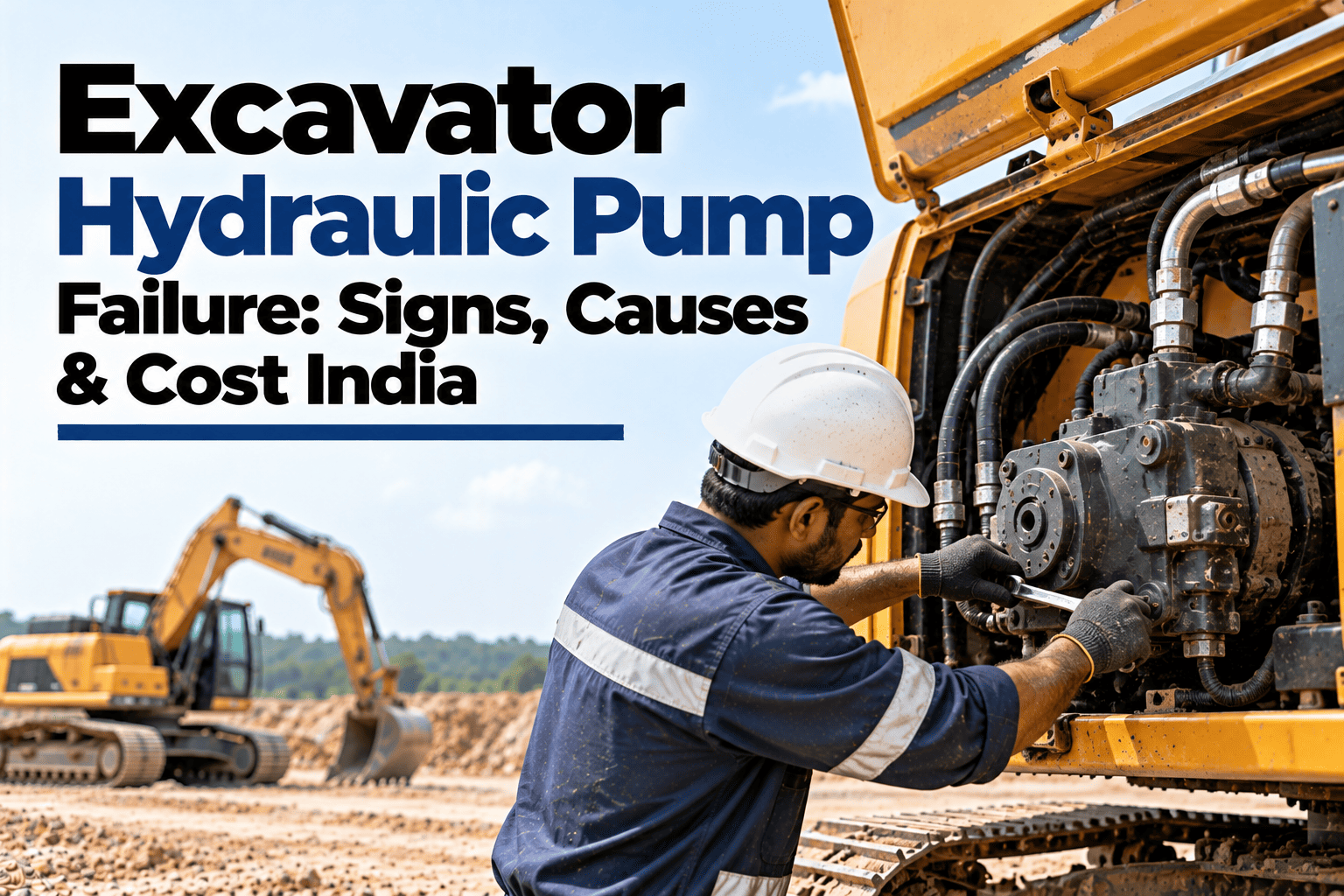
The main hydraulic pump is the heart of an excavator, and one of the most expensive parts on the machine. When it fails, the excavator stops and the repair bill can run into lakhs. Yet pumps rarely fail suddenly. Most give weeks of warning: a new whine, slower cycles, a weaker boom or oil running hotter than usual. The problem is that these signs are often ignored until it is too late. This guide explains the signs, the causes, testing and repair options, and how teams flag early pump symptoms and track every repair in HVI.
Excavator Hydraulic Pump Failure: Signs, Causes and Cost India
Spot pump problems early, understand what causes them, test the pump properly and decide whether to repair, exchange or replace it.
Early Warning Signs Operators Should Report
Operators notice pump problems first. Make it easy and expected for them to report any of these straight away.
What Causes Hydraulic Pump Failure
Pumps are built to last thousands of hours. When they fail early, one of these causes is usually behind it.
Contamination
Dirt and water in the oil wear precision surfaces inside the pump. This is the most common cause.
Cavitation
Low oil, a blocked suction strainer or air leaks starve the pump and damage it from inside.
Overheating
Hot oil thins out and stops protecting moving parts. Dirty coolers are a frequent cause.
Wrong oil
Oil of the wrong grade or mixed oils do not lubricate as designed.
Incorrect settings
Relief and pump settings outside the maker's values overload the pump.
Debris from other failures
A failed cylinder or motor can send debris into the pump if the system is not cleaned.
Testing the Pump Before Deciding
Do not replace a pump on a guess. Slow hydraulics can also come from valves, filters or settings. Proper tests confirm the cause.
Basic checks
Oil level, filters, suction strainer and oil temperature.
Oil analysis
A sample shows contamination and wear metals.
Pressure test
A trained technician compares readings with the maker's values.
Flow test
Checks whether the pump still delivers the rated flow.
Catch Pump Problems at the Early Stage
HVI lets operators flag noise, slow hydraulics and hot oil in their daily checks, raises a job straight away and records oil samples and test results for every excavator.
Clean Up Before Fitting the New Pump
A failed pump sends debris through the whole system. Fit a new pump without cleaning up and it may fail too.
- Drain and flush the hydraulic tank
- Replace all hydraulic filters and the suction strainer
- Check other components for debris damage
- Find and fix the original cause
- Fill with clean oil of the correct grade
- Prime the pump as the maker describes
- Check pressures and settings
- Take an oil sample after the first hours of work
Early Pump Symptoms Flagged in HVI
A sample view. Symptoms from daily checks and oil samples are grouped by machine, so early warning signs get attention before they become failures.
| Machine | Hour meter | Reported symptom | Oil sample | Status |
|---|---|---|---|---|
| EX-01 excavator | 6,240 h | None | Normal | Healthy |
| EX-05 excavator | 8,910 h | Slight whine, slower arm | Wear metals rising | Test pump this week |
| EX-08 excavator | 11,320 h | Loud whine, hot oil | High wear metals | Stop and inspect |
Excavator Hydraulic Pump FAQs
What are the signs of a failing excavator hydraulic pump?
Common signs are a new whining or grinding noise, slower boom and arm movement, weak digging force, hotter hydraulic oil, foamy oil and metal particles on filters. Report and test early, as these signs usually appear weeks before failure.
What causes hydraulic pump failure?
Contamination from dirt and water is the most common cause, followed by cavitation from low oil or blocked suction strainers, overheating, wrong oil, incorrect settings and debris from other failed parts.
Should I repair or replace an excavator pump?
Rebuilding usually costs least but takes longer, an exchange unit cuts downtime and a new pump suits severe damage. Get written quotes and warranty terms for each option, since costs in India vary widely by machine and supplier.
How is a hydraulic pump tested?
After basic checks of oil, filters and strainer, a trained technician runs pressure and flow tests and compares results with the maker's values. Oil analysis adds evidence of wear. Teams that record test results in HVI can compare readings over time.
How can I prevent hydraulic pump failure?
Keep oil clean and at the right level, change filters on time, clean coolers, use the correct oil grade, keep settings within the maker's values and act on early symptoms. Book a demo to see early symptom tracking in HVI.
Protect Your Most Expensive Hydraulic Part
Flag pump symptoms in daily checks, track oil samples and tests and keep a full hydraulic history for every excavator in HVI. Smaller repairs, less downtime and longer pump life.