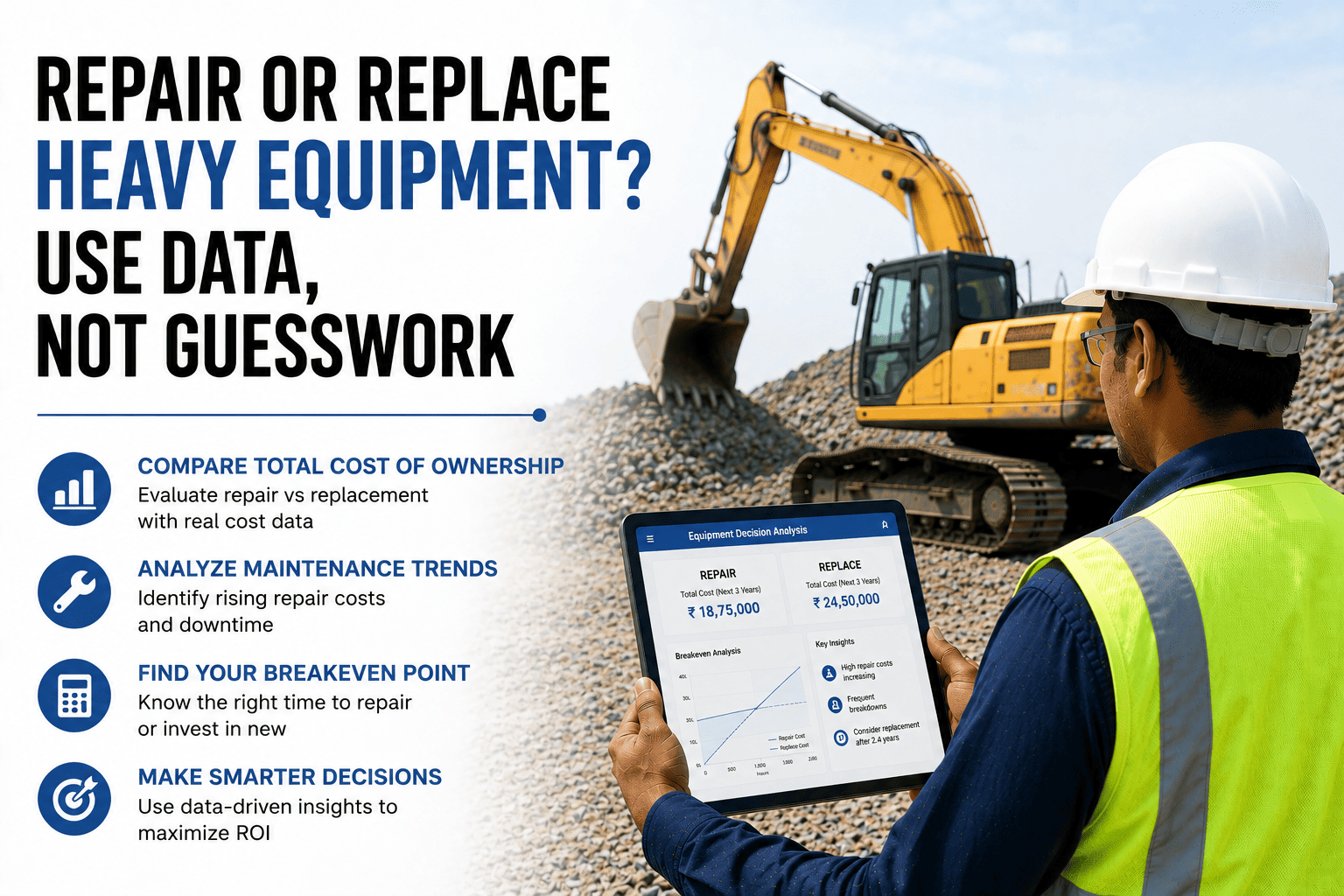
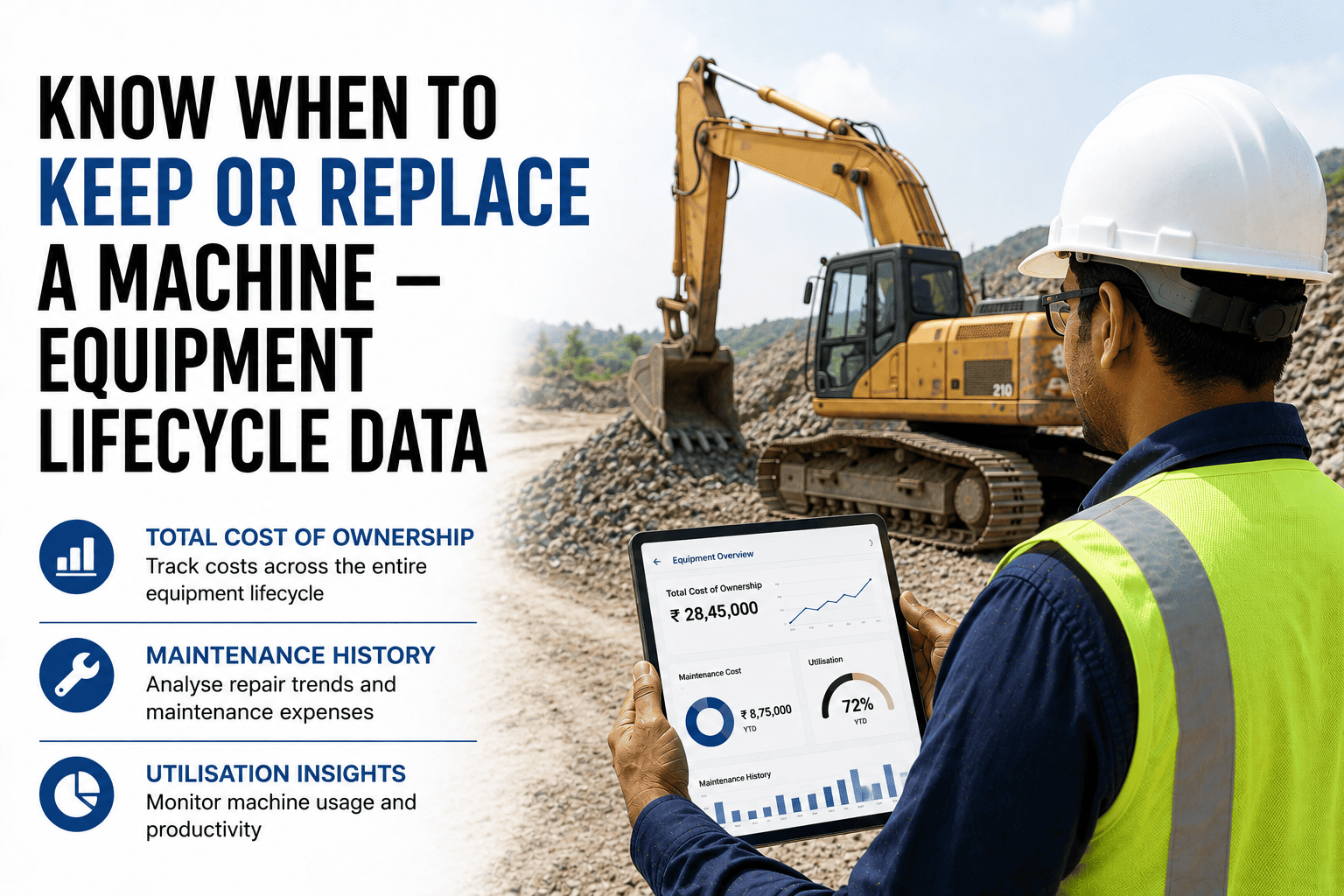
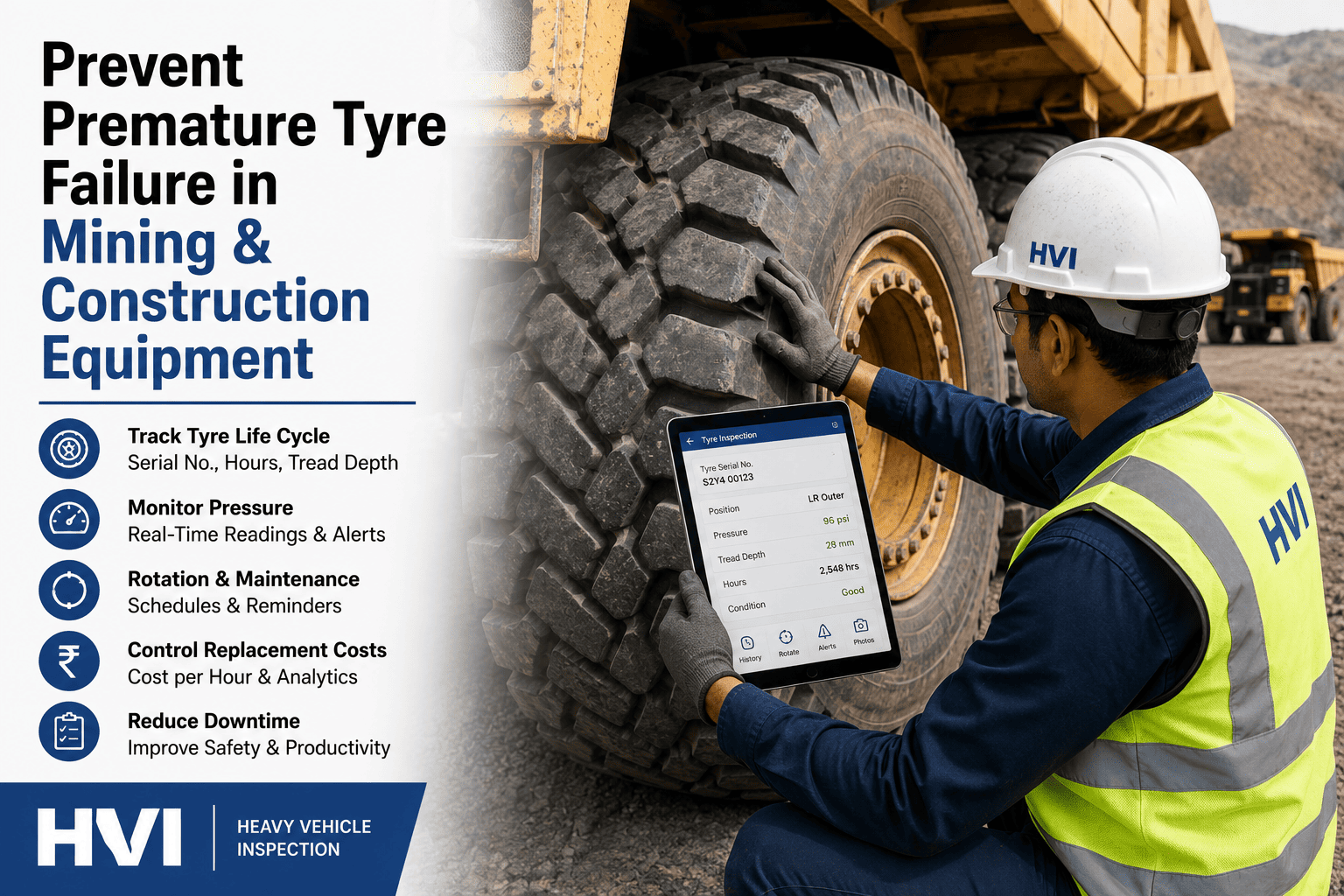
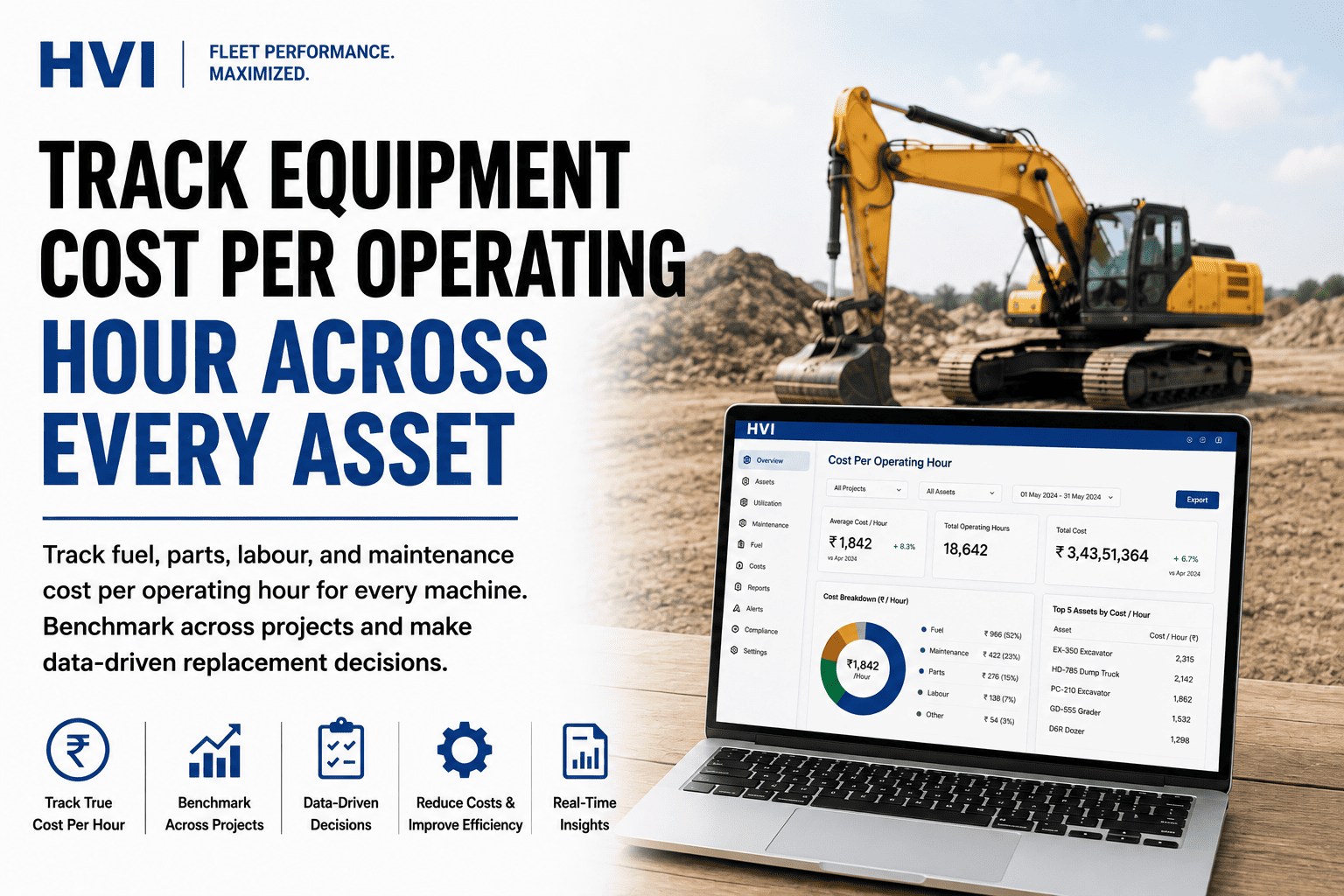
Every excavator on an Indian site eventually crosses an invisible line where the next hydraulic overhaul or engine rebuild costs more than the machine is actually worth keeping. Most fleet owners only spot that line in hindsight, after a third breakdown in one quarter, because repair costs are scattered across vendor invoices, WhatsApp threads, and a mechanic's memory instead of one running total per machine. Site engineers and finance teams end up arguing over gut feel instead of numbers, and the machine keeps eating budget while the argument continues. HVI tracks every repair against downtime and output for each excavator, so the breakeven point becomes a number you can see rather than a guess, and you can review it on a free 30-minute call with our team.
When Does an Old Excavator Start Costing More Than a New One?
HVI logs every repair, every hour of downtime, and every operating cost against each machine's ID, so the moment an old excavator's running cost overtakes a new one's EMI and maintenance plan, your team sees it before the next breakdown forces the decision for you.
The Repair Cost Curve Every Excavator Follows
Repair spend rarely rises in a straight line. It stays flat for years, then climbs sharply once seals, hydraulics, and the undercarriage all start failing in the same window.
Signs Your Excavator Has Crossed the Line
- Three or more unscheduled repairs on the same machine within a single quarter.
- Hydraulic and undercarriage work now recurring within months of each other, not years.
- Downtime hours climbing even though usage hours have stayed the same or dropped.
- Spare parts for this model getting harder or slower to source from your usual vendors.
- Fuel and operating cost per hour drifting noticeably above similar machines in your fleet.
Keep Repairing vs Replace: What Each Path Actually Costs
Keep Repairing
Ongoing hydraulic, engine, and undercarriage repairs stack up, each one billed separately and rarely compared against the machine's total output for the year.
Downtime keeps removing the machine from active work, and every idle day still carries operator, insurance, and site overhead cost.
Resale value keeps dropping the longer the decision is delayed, since buyers discount heavily for visible repair history.
Replace on Schedule
A new or newer machine carries a predictable EMI and warranty-covered maintenance, replacing unpredictable repair bills with a known monthly number.
Downtime drops sharply in the first two to three years, and that uptime translates directly into billable or productive hours.
Trading in before the steep repair years protects resale value instead of watching it erode further.
Know Your Machine's Breakeven Point Before the Next Breakdown
See your real repair cost trend, downtime hours, and operating cost per machine laid out clearly, in a session with our India team.
What Fleets Find Once They Track Cost Per Machine
Repair, downtime, and operating cost tracked individually, not as one fleet-wide average
Breakeven trends visible years before a machine becomes a daily liability
Finance and site teams working from the same repair and downtime numbers
Frequently Asked Questions
How does HVI calculate the breakeven point for an old excavator?
HVI totals logged repair costs, downtime hours, and operating expenses for each machine over time, then compares that trend against typical ownership costs for a replacement, so the crossover point is based on your own data. You can walk through your fleet's numbers on a call with our team.
Do I need every past repair invoice loaded before this works?
No. You can start logging from today and HVI will build the cost trend going forward, though loading past invoices where you have them makes the early trend more accurate.
Can this work across a mixed fleet of excavators, tippers, and loaders?
Yes. The same repair-versus-replace tracking applies to any HEMM, commercial vehicle, or plant equipment in your fleet, with each machine's numbers kept separate.
Does this replace the judgment of our own maintenance team?
No, it supports it. Your team still makes the final call, but instead of arguing from memory, they get a clear repair cost trend and downtime history to base that call on.
How quickly can we start tracking cost per machine?
Most fleets start logging repairs and downtime within hours of setup. You can begin with a free trial and add machines as you go.
Stop Guessing When to Replace. Start Tracking the Number.
Give your team one clear repair cost trend per machine, so the keep-or-replace decision is backed by data instead of debate.