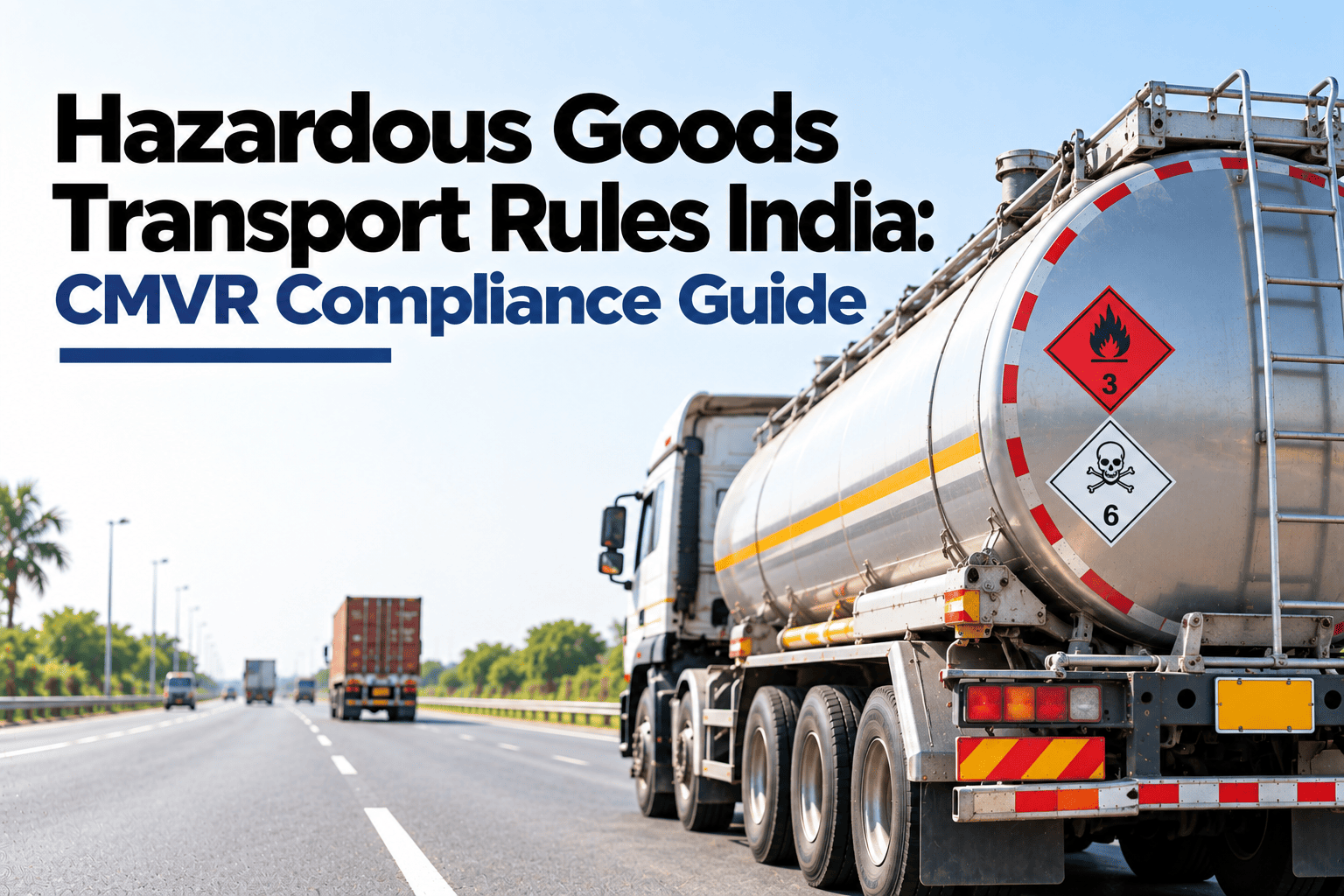
A tanker of solvent, a truck of LPG cylinders or a load of acid drums carries far more risk than ordinary cargo. That is why the Central Motor Vehicles Rules place specific duties on the consignor, the vehicle owner and the driver whenever dangerous or hazardous goods move by road. Most audit findings are not about the cargo itself but about missing labels, papers or checks. This guide covers the main requirements and how fleets keep hazardous goods records audit-ready in HVI.
Hazardous Goods Transport Rules India: CMVR Compliance Guide
Understand who is responsible for what, the labels and emergency information your vehicles must show, the papers drivers must carry and the daily checks that keep every trip safe.
The Nine Hazard Classes
Dangerous goods are grouped into nine classes, following the United Nations system that the CMVR class labels are based on. Every vehicle and package must show the label for its class.
Real class labels use set colours and symbols for each class. Use the official label designs from the rules and the consignor's safety data sheet.
What the Emergency Information Panel Shows
Vehicles carrying hazardous goods must display emergency information so police, fire services and the public know what is on board. A typical panel includes these fields.
Documents the Driver Should Carry
Keep these in the cab for every trip. Missing papers are one of the most common findings at checkpoints and customer audits.
Rule 9 of the CMVR requires drivers of dangerous goods carriages to complete a recognised training course and to have their licence endorsed for hazardous goods. Check current requirements with your state transport department.
Keep Every Hazardous Goods Record in One Place
HVI tracks driver endorsements, training certificates, vehicle licences and daily hazmat checks with photos, and alerts you before anything expires.
Daily Checks for Hazardous Goods Vehicles
Add these items to the normal pre-trip inspection for any vehicle carrying dangerous goods.
- Class labels fitted, clean and readable
- Emergency information panel correct for this load
- Emergency information in the cab
- Valves, caps and seals closed and secure
- No leaks, drips or smells
- Drums and cylinders secured and upright
- Fire extinguishers charged and in date
- Spill kit and protective equipment on board
- Spark arrester fitted where required
- Brakes, tyres and lights in good order
- Earthing strap or bonding fitted on tankers
- No fuel or electrical faults
If There Is an Accident or Spill
Drivers should know these steps by heart. Practise them in training, not for the first time on the highway.
Stop safely
Park clear of traffic and switch off the engine.
Keep people away
Move upwind and stop anyone smoking nearby.
Read the card
Follow the emergency information for the substance.
Report at once
Inform the nearest police station and the owner or transporter.
Contain if safe
Use the spill kit only if trained and protected.
Hand over
Give the emergency information to responders.
Other Rules That May Apply
The CMVR is the base for road transport, but many products have their own rules and licences too.
Petroleum products
Tankers usually need approvals from PESO under the petroleum rules.
LPG and compressed gases
Pressure vessels and cylinders fall under the gas cylinder and pressure vessel rules.
Explosives
Transport needs licences and vehicle approvals under the explosives rules.
Hazardous waste
Movements need authorisation and a manifest under the hazardous waste rules.
Rules and licensing change from time to time. Confirm current requirements with PESO, your state transport department and your consignor before each new product or route.
Hazardous Goods Compliance in HVI
A sample compliance view. Driver, vehicle and equipment records sit together, so gaps show up before an audit or a checkpoint does.
| Vehicle and driver | Licence endorsement | Training certificate | Extinguisher service | Today's hazmat check |
|---|---|---|---|---|
| TNK-03, Driver A | Valid | Valid | Valid | Passed |
| TNK-07, Driver B | Valid | Expires in 20 days | Valid | Renew training |
| TRK-15, Driver C | Valid | Valid | Overdue | Do not dispatch |
| TNK-09, Driver D | Valid | Valid | Valid | Passed |
Hazardous Goods Transport FAQs
Which rules cover hazardous goods transport by road in India?
The Central Motor Vehicles Rules, 1989 contain a set of rules on the transport of goods of a dangerous or hazardous nature, covering labelling, responsibilities of the consignor, owner and driver, emergency information and accident reporting. Product-specific rules, such as those enforced by PESO for petroleum, gases and explosives, may also apply.
Does a driver need special training for hazardous goods?
Yes. The CMVR requires drivers of goods carriages carrying dangerous or hazardous goods to complete a recognised training course and have their driving licence endorsed. The owner must also make sure the driver understands the specific goods, their risks and the emergency actions to take.
What is a TREM card?
A TREM card, or transport emergency card, is the common name for the written information about the goods that the driver keeps in the cab. It explains the hazards, the protective equipment needed and the actions to take in an emergency, and is usually provided by the consignor.
What must a driver do after an accident with hazardous goods?
The driver must report the accident to the nearest police station straight away and inform the owner or transporter. They should also keep people away, follow the emergency information and hand it to responders. Teams that log incidents in HVI can record photos and follow-up actions immediately.
How can a fleet stay audit-ready for hazardous goods?
Keep up-to-date records of driver endorsements and training, vehicle licences, extinguisher servicing and daily hazmat checks with photos, and review them before each audit. Expiry alerts prevent last-minute surprises. Book a demo to see hazardous goods compliance tracking in HVI.
Move Dangerous Goods Safely and Stay Audit-Ready
Track driver endorsements, training and vehicle licences, run daily hazmat checks with photos and keep incident records in one place. Fewer gaps at checkpoints, smoother customer audits and safer trips.