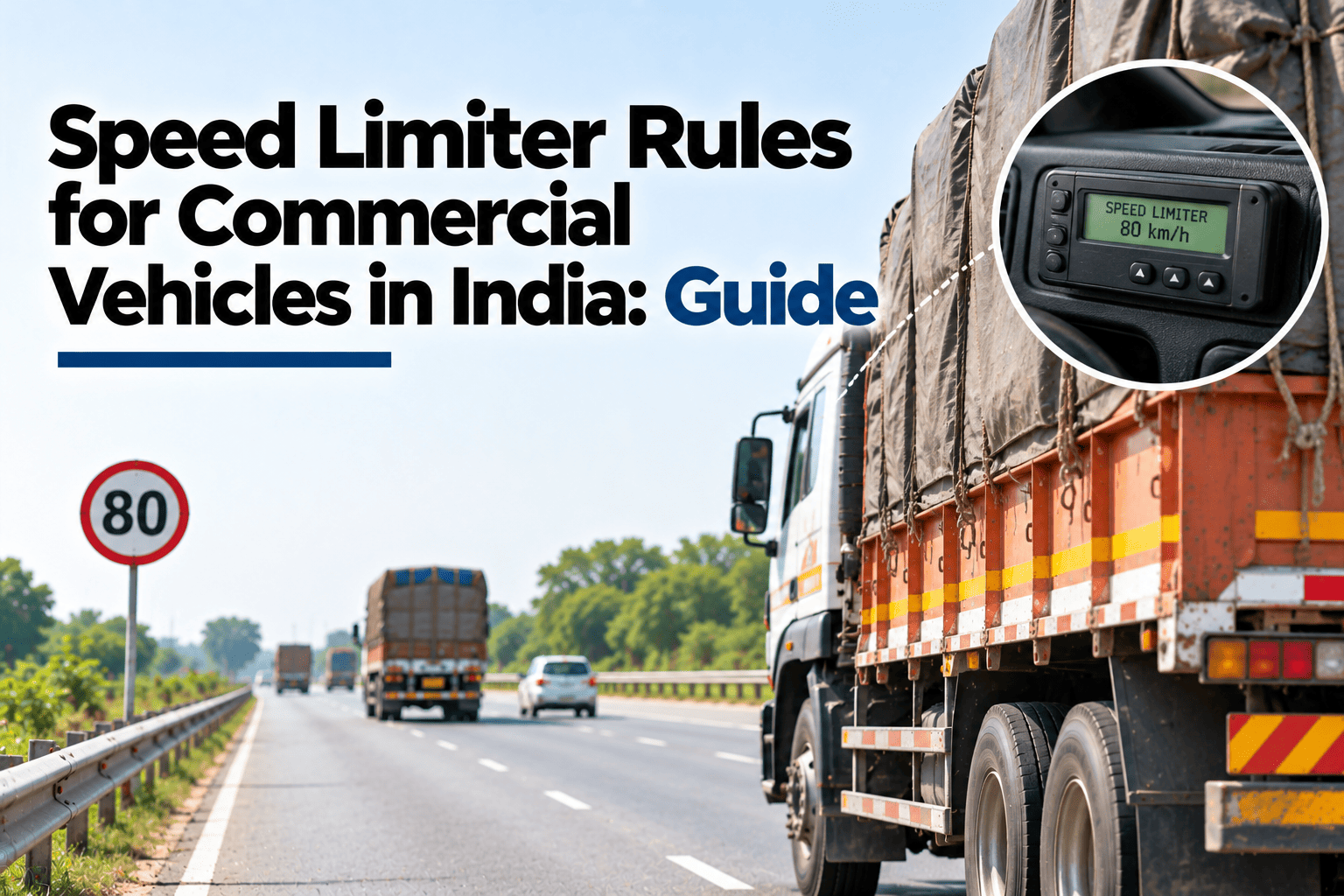
A truck that cannot go above its set speed is less likely to lose control on a bend, rear-end a slow vehicle or burn through brakes and tyres. That is why most transport vehicles in India must carry a working speed limiting device, often called a speed governor. Yet tampered seals, disconnected wiring and missing certificates remain common reasons for fitness failures and checkpoint trouble. This guide explains which vehicles need a limiter, the usual set speeds, certification, tampering risks and how fleets add limiter checks to inspections in HVI.
Speed Limiter Rules for Commercial Vehicles in India: Guide
Know which vehicles need a speed governor, the maximum set speeds, what fitness inspectors look for and how to keep every limiter working and untampered.
Which Vehicles Need a Speed Limiter
Rule 118 of the Central Motor Vehicles Rules requires speed governors on transport vehicles, with some categories exempted.
- Goods trucks and trailers used as transport vehicles
- Buses and coaches, including stage and contract carriages
- Dumpers and tippers
- Tankers and vehicles carrying hazardous goods
- School buses
- Two-wheelers, three-wheelers and quadricycles
- Small four-wheel transport vehicles with up to 8 passengers and not over 3,500 kg
- Fire tenders and ambulances
- Police vehicles
Certification and Fitness Testing
A speed governor must be an approved device, correctly set and sealed. Inspectors check these points during fitness testing and roadside checks.
Approved device
The governor conforms to the AIS-018 standard and has type approval.
Correct set speed
Set to the maximum speed for the vehicle category or lower.
Seal intact
The official seal on the device is unbroken and readable.
Certificate on board
The fitment or calibration certificate is kept with the vehicle papers.
Marking displayed
Many states require a "Speed Governor Installed" marking on the vehicle.
Tampering: Warning Signs and Consequences
Disabling a limiter may save a few minutes on a trip, but the risks far outweigh any gain for drivers, owners and the public.
- Broken, missing or replaced seal
- Loose or cut wiring near the device
- GPS or telematics speeds above the set limit
- Speedometer readings regularly above the limit
- Certificate missing or not matching the vehicle
- Fitness certificate refused or suspended
- Fines and the vehicle detained at checkpoints
- Higher crash risk, especially on descents and bends
- Insurance claims questioned after an accident
- Lost customer contracts and safety audits
Make Speed Limiter Checks Part of Every Inspection
HVI adds seal, marking and certificate checks with photos to routine inspections, and keeps calibration dates on file so nothing slips before fitness testing.
Simple Speed Limiter Checks for Fleets
Most problems can be caught with quick visual checks and a look at speed data. Leave calibration and repairs to authorised dealers.
- Marking visible and clean
- No warning lamps related to the governor
- Review maximum speeds from GPS
- Flag any trip above the set limit
- Seal and wiring inspected and photographed
- Certificate checked against the vehicle
- Calibration current and documents ready
- Any fault repaired by an authorised dealer
What Fleets Gain From Working Limiters
Beyond compliance, keeping speed in check pays back in everyday operating costs.
Lower fuel use
Steadier speeds reduce wind drag and hard acceleration.
Longer tyre life
Lower speeds mean less heat and wear on tyres.
Less brake wear
Less energy to stop means cooler brakes and longer linings.
Fewer serious crashes
Lower impact speeds reduce the severity of accidents.
Tracking Speed Limiter Compliance in HVI
A sample weekly view. Set speed, real maximum speed and seal checks sit together, so problems surface before a checkpoint or fitness test.
| Vehicle | Set speed | Max GPS speed | Seal check | Certificate | Status |
|---|---|---|---|---|---|
| TRK-08 | 80 km/h | 79 km/h | Intact | Valid | Compliant |
| TNK-02 | 60 km/h | 59 km/h | Intact | Expires in 25 days | Renew soon |
| DMP-05 | 60 km/h | 78 km/h | Broken | Valid | Inspect now |
| BUS-12 | 80 km/h | 80 km/h | Intact | Valid | Compliant |
Speed Limiter FAQs
Which vehicles need a speed limiter in India?
Under Rule 118 of the Central Motor Vehicles Rules, transport vehicles such as trucks, buses, dumpers, tankers and school buses must be fitted with a speed governor. Two-wheelers, three-wheelers, quadricycles, small four-wheel transport vehicles with up to eight passengers and not over 3,500 kg, fire tenders, ambulances and police vehicles are commonly exempted.
What speed is a speed governor set to?
The maximum pre-set speed is generally 80 km/h for most transport vehicles and 60 km/h for dumpers, tankers, school buses and vehicles carrying hazardous goods. State governments can specify lower limits for some categories, so check the notification for your state.
What standard must a speed limiter meet?
Speed governors must conform to the AIS-018 standard, and manufacturers need type approval for their devices. The fitted device should be sealed, and the vehicle should carry the related certificate for inspection.
What happens if a speed limiter is tampered with?
A tampered or non-working limiter can lead to a failed fitness test, fines, detention of the vehicle and problems with insurance claims after an accident. It also raises crash risk. Teams that record seal checks in HVI can spot tampering early.
How can I check that limiters are working across my fleet?
Compare each vehicle's maximum GPS speed with its set speed every week, and check seals, markings and certificates during routine inspections. Any vehicle running above its limit needs a dealer check. Book a demo to see limiter checks in HVI.
Keep Every Speed Limiter Working and On Record
Check seals and markings with photos, compare real speeds with set limits and keep certificates ready for fitness testing in HVI. Fewer fitness failures, fewer fines and safer speeds on every route.