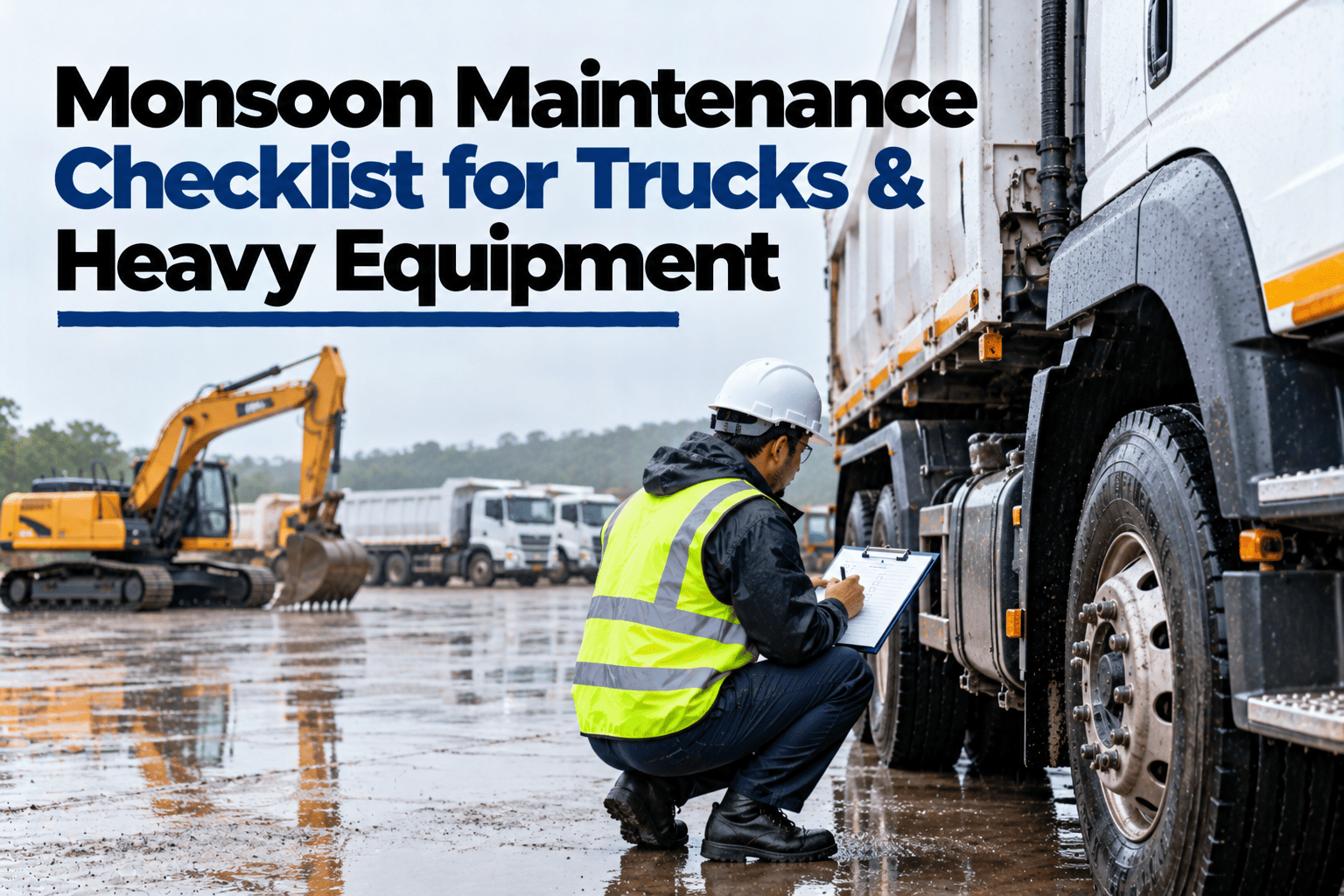
Every year the monsoon turns roads into rivers and work sites into mud. Brakes lose grip, wiring shorts out, batteries fail and water finds its way into engines that should never have been started. Equipment parked in the wrong place can be lost to a single night of flooding. Fleets that come through the rains with few breakdowns prepare before the first heavy shower, follow simple rules while it lasts and check everything again once it ends. This guide covers all three stages, and how fleets run monsoon checks as an inspection campaign in HVI.
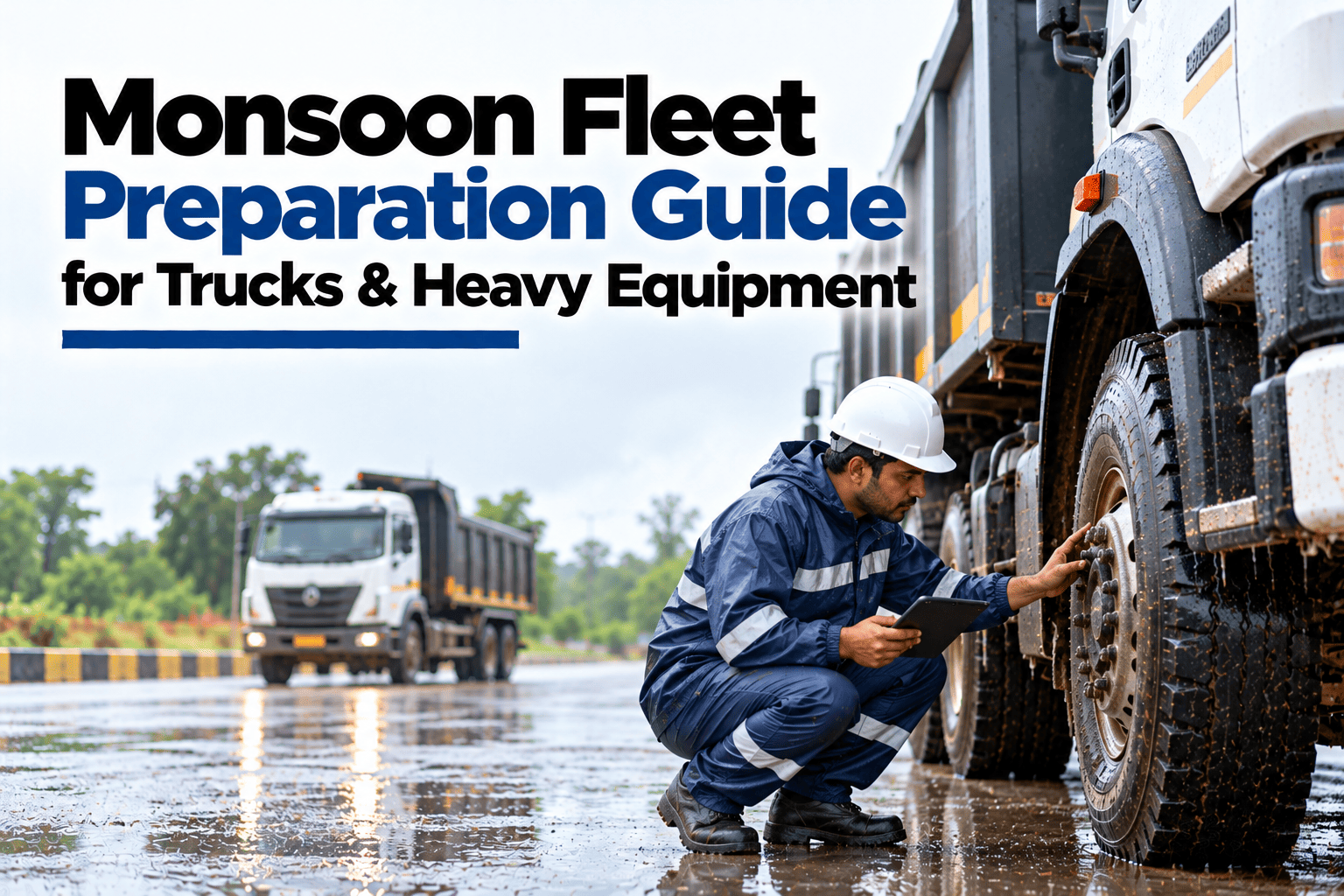
Monsoon Fleet Preparation Guide for Trucks and Heavy Equipment
Get brakes, tyres, electrics and bodies ready before the rains, keep vehicles and machines safe through floods and waterlogging, and know exactly what to do if one is flooded.
Pre-Monsoon Checks by System
Complete these checks on every vehicle and machine a few weeks before the rains are expected.
- Linings and pads within limits
- Air brake tanks drained, dryer working
- Parking brake holds firmly
- Enough tread depth to clear water
- No cuts, bulges or exposed cords
- Correct pressure on every tyre
- Wiper blades replaced if worn
- Washer system working
- All lights, indicators and fog lamps working
- Battery tested and terminals clean
- Connectors sealed and wiring not chafed
- Starter and alternator in good order
- Rust spots treated and painted
- Drain holes clear
- Underbody protection where needed
- Door and window seals intact
- Tarpaulins and covers in good condition
- Cargo body drains clear
Driving Through Waterlogged Roads
Water hides potholes, open drains and washed-out edges. Brief every driver on these rules before the season starts.
- Wait or take another route if the depth is unknown
- Drive slowly and steadily through shallow water
- Keep a bigger gap from the vehicle ahead
- Press the brakes gently afterwards to dry them
- Enter flowing water or flooded bridges
- Stop or change gear in the middle of water
- Restart an engine that stalled in water
- Drive faster than the visibility allows
Protecting Heavy Equipment on Sites
Excavators, cranes and loaders left in low ground can be submerged overnight. Plan where every machine goes when heavy rain is forecast.
Park on high ground
Move machines away from pits, trenches, river banks and low areas.
Lower attachments
Rest buckets, blades and booms on the ground as the maker advises.
Cover openings
Protect exhaust outlets and air intakes from driving rain.
Secure cranes
Follow the crane maker's guidance for high wind and storms.
Check ground stability
Wet slopes and trench edges can give way under heavy machines.
Keep pumps ready
Dewatering pumps serviced and fuelled before the rain arrives.
Get Every Vehicle Monsoon Ready on Time
HVI sends a pre-monsoon checklist to every vehicle and machine, tracks which ones are done by depot or site and follows each defect until it is fixed.
If a Vehicle or Machine Is Flooded
The biggest damage often happens after the flood, when someone tries to start the engine. Follow these steps in order.
Have a qualified mechanic inspect any engine that took in water before it is started again. Starting it can cause serious internal damage.
After the Rains: Catch Hidden Damage
Some monsoon damage only shows weeks later. A post-monsoon check finds it before it turns into a breakdown.
Rust and corrosion
Inspect chassis, brake parts and body for new rust and treat it.
Bearings and pins
Re-grease wheel bearings, pins and bushes that may hold water.
Electrical connectors
Clean and protect connectors showing signs of moisture.
Brakes
Check linings, drums and adjustment after months of wet running.
Monsoon Readiness Across the Fleet in HVI
A sample pre-monsoon campaign view. Each depot or site shows progress, open defects and readiness.
| Depot or site | Inspected | Open defects | Parking plan | Status |
|---|---|---|---|---|
| Mumbai depot | 58 of 58 | 0 | Approved | Monsoon ready |
| Konkan highway site | 21 of 24 | 5 | Approved | Fixing defects |
| Riverside bridge site | 9 of 18 | 7 | Not done | At risk |
Monsoon Fleet Preparation FAQs
When should fleets start monsoon preparation?
Start a few weeks before the rains are expected in your region, so there is time to replace tyres, linings, wipers and batteries and fix electrical faults. Monsoon timing varies across India, so plan around your local season.
What should I do if my truck is stuck in floodwater?
Do not try to restart the engine. Note how high the water reached, take photos, get the vehicle towed to dry ground, disconnect the battery and have a mechanic check the engine, fuel and electrics for water before starting it. Inform your insurer early.
How do I protect heavy equipment during heavy rain?
Park on high, stable ground away from trenches and river banks, lower attachments, cover openings where advised and follow the maker's guidance for cranes in high wind. Keep dewatering pumps ready before the rain starts.
Why do electrical problems increase in the monsoon?
Water gets into connectors, switches and damaged wiring, causing shorts and corrosion. Sealing connectors, fixing chafed wiring and keeping batteries healthy before the rains reduces these faults. Teams that record electrical checks in HVI can track which vehicles still need work.
How can a fleet run monsoon checks on every vehicle?
Build a monsoon checklist, schedule every vehicle and machine, track progress by depot or site and raise a repair job for every defect. A digital system shows who is ready and who is at risk. Book a demo to see monsoon campaigns in HVI.
Come Through the Monsoon Without the Breakdowns
Prepare every truck, bus and machine before the rains, follow safe driving and parking rules and catch hidden damage afterwards, all tracked as one campaign in HVI.