Toolbox talks have a particular failure pattern. The talk happens, the sheet goes round, everyone signs, and the paper goes into a folder that proves the session took place and nothing else. Six months later nobody can tell you what was covered, whether it related to anything happening on that site, or whether the hazard discussed ever came up again. The record satisfies the requirement to hold talks while capturing none of what would make them worth holding. Fixing that is less about better delivery than about where the topics come from and what gets recorded afterwards, and you can see how the data connects in a free 30-minute session.
Toolbox Talks Without the Paperwork Pile
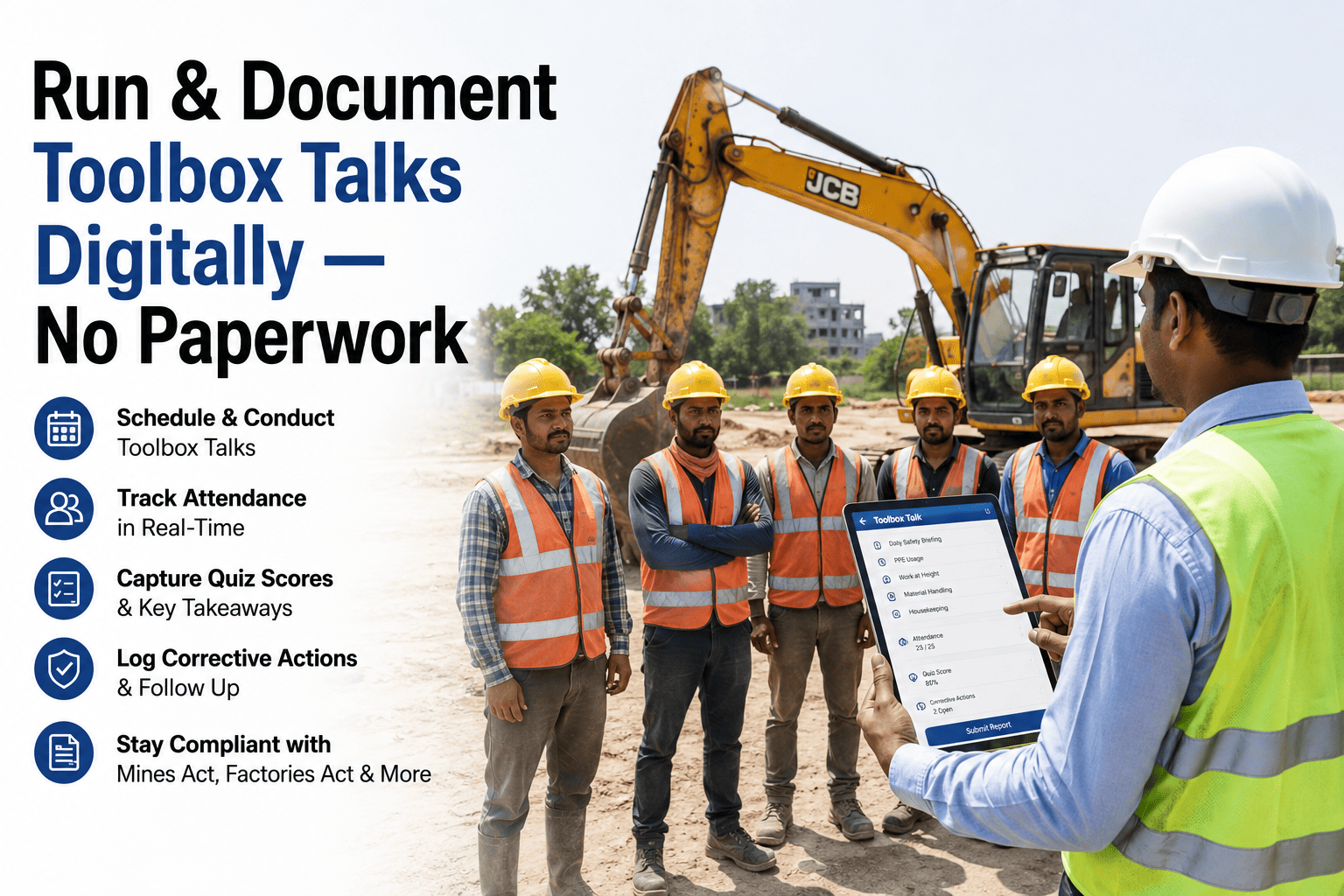
Run them from a phone, record who attended and what was covered, and draw the topics from what your own site actually reported last week.
What the Signature Sheet Proves, and What It Misses
A folder of signed sheets demonstrates compliance with the requirement. It does not demonstrate that the talks did anything.
Where Topics Should Come From
A generic library produces generic talks that crews stop listening to. These sources produce talks about their own site.
Last week's near-misses
Directly relevant, recent, and already known to some of the people in the room. Nothing holds attention like an event they heard about.
Critical defects found on inspection
If three machines failed on the same item this month, that is a talk topic sitting in your inspection data.
Repeat faults on specific equipment
Recurring problems often have an operating cause worth discussing with the people operating the machine.
Work starting this week
A new phase, unfamiliar equipment, or a changed site layout is the most useful timing for a talk about it.
Seasonal and site conditions
Monsoon ground conditions, heat, and dust each change the risk profile and are worth addressing when they arrive rather than on a fixed calendar.
Let the Site Tell You What to Talk About
Defect patterns and near-miss reports surfaced together, so topics come from evidence rather than from a list.
The Record Worth Keeping
Topic and why it was chosen
One line linking it to the defect, near-miss, or work that prompted it. This is what makes the record meaningful a year later.
Attendance, captured on the spot
Recorded at the talk rather than transcribed afterwards, which is where most attendance records lose accuracy.
Points raised by the crew
Often the most valuable output. Operators surface conditions in a talk that they would not file as a report.
Actions agreed
Anything committed to, with an owner. A talk that generates no action occasionally is fine; one that never does is a ritual.
Photos where relevant
A picture of the actual hazard being discussed, which is more use than a topic title in any later review.
Frequently Asked Questions
How long should a toolbox talk be?
Short enough that it holds attention at shift start, which for most crews means a matter of minutes on a single topic rather than a broad briefing. Covering one thing properly beats covering four superficially. You can see how short-form talks are structured on a call with our team.
Does this satisfy our statutory requirements?
It captures and retains the record. Whether your obligations require specific content, frequency, or documentation depends on your operation, so confirm that with your safety officer rather than assuming the system defines it.
What if operators do not engage?
Usually a relevance problem rather than an attitude one. Talks drawn from events on that site tend to get participation that generic topics never do.
Can talks be recorded without signal on site?
Yes. Attendance, notes, and photos capture offline and sync when the device reaches coverage, with the original time preserved.
How do we know whether talks are working?
By whether the hazards discussed stop recurring in defect and near-miss data. That is the only real measure, and it needs both datasets in the same place. Start with a free trial.
Talk About What Happened Here, Last Week
Draw topics from your own near-misses and defect patterns, capture attendance and crew input at the talk itself, record what was agreed, and check afterwards whether the hazard stopped appearing.