Carrying a few extra tonnes can look like easy money: same trip, same driver, more freight. But since the Motor Vehicles Act was amended in 2019, a single overloading check can cost far more than the extra load earns, and the truck may not be allowed to move until the excess is removed. The bigger bill often arrives later, as cracked springs, worn tyres, faded brakes and chassis damage. This guide explains the penalties, how weight limits work, the real cost to your vehicles and how fleets track overloading-related repairs in HVI.
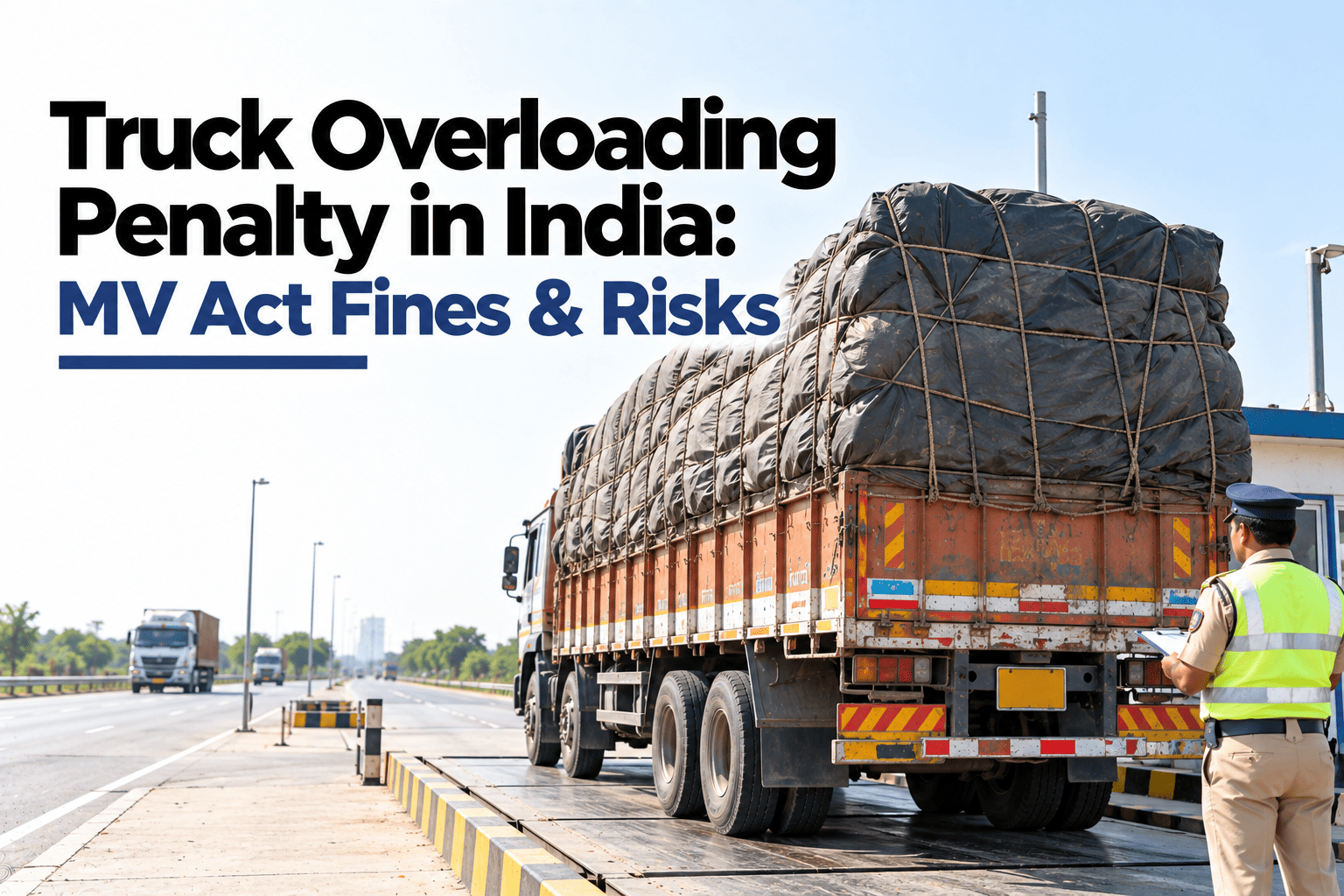
Truck Overloading Penalty in India: MV Act Fines and Risks
Understand the fines under Section 194, how your truck's weight limit is set and why overloading costs far more in repairs than it earns in freight.
Overloading Penalties Under the MV Act
The Motor Vehicles (Amendment) Act, 2019 raised overloading penalties sharply. These are the main provisions under Section 194.
| Provision | Offence | Penalty |
|---|---|---|
| Section 194(1) | Driving or allowing a vehicle to be driven above its permitted gross or axle weight | Rs 20,000 plus Rs 2,000 per tonne of excess load, plus charges for off-loading |
| Section 194(1A) | Load projecting beyond the sides, front, rear or permitted height | Rs 20,000 |
| Section 194(2) | Refusing to stop and have the vehicle weighed when directed | Rs 40,000 |
| After the fine | Excess load still on the vehicle | Vehicle not allowed to move until the excess is removed |
States can set compounding amounts and may take further action, such as suspending registration for repeat offences. Check current rules with your state transport department.
How the Fine Adds Up
Under Section 194(1), the fine grows with every extra tonne. Off-loading charges, detention time and lost delivery days come on top.
How Your Truck's Weight Limit Is Set
Overloading is judged against two limits. A truck can break the axle limit even when the total weight looks fine.
Gross vehicle weight
The maximum total weight of the truck and its load, shown on the registration certificate. Load beyond the registered laden weight is overloading.
Axle weight
Each axle has its own legal limit. Placing too much load over one axle overloads it, even if the gross weight is within limit.
See What Overloading Is Really Costing Your Fleet
HVI records weighbridge slips, inspections and repairs per vehicle, so you can link spring, tyre and brake failures back to how each truck is loaded.
The Hidden Repair Bill
Fines are only part of the cost. Overloading shortens the life of almost every major component on the truck.
Tyres
Extra heat and flexing cause shoulder wear, casing damage and blowouts.
Inspect: shoulders, sidewalls, pressureBrakes
More weight means longer stopping distances, hotter drums and faster lining wear.
Inspect: linings, drums, air systemSprings and suspension
Leaves crack, centre bolts shear and springs lose their arch.
Inspect: leaves, U-bolts, hangersChassis
Repeated overload can crack frame rails and cross members.
Inspect: frame rails and hangersClutch and driveline
Heavy starts on slopes burn clutches and stress gearboxes and axles.
Inspect: clutch slip, prop shaftFuel and engine
The engine works harder on every climb, using more fuel and running hotter.
Inspect: mileage, temperatureSafety and Insurance Risks
An overloaded truck is harder to stop, steer and keep upright. If it is involved in an accident, the consequences grow too.
On the road
- Longer braking distances and brake fade on descents
- Higher rollover risk on bends and uneven roads
- Tyre bursts at highway speed
- Damage to roads and bridges
After an incident
- Insurers may question claims where overloading played a part
- Owners can face action as well as drivers
- Customer contracts may be at risk
- Vehicle can be held until the excess is removed
Six Ways to Control Overloading
Overloading is usually a business habit, not a driver's choice. These controls work best when management backs them.
Linking Overloading to Repairs in HVI
A sample quarterly view. When weighbridge records and repairs sit together, the true cost of overloading becomes visible.
| Vehicle | Trips over limit | Spring repairs | Tyres replaced early | Action |
|---|---|---|---|---|
| TIP-11 | 9 | 3 | 4 | Stop overloading |
| TIP-04 | 4 | 1 | 2 | Review loading |
| TRK-22 | 0 | 0 | 0 | On track |
| TRK-30 | 1 | 0 | 1 | Watch |
Truck Overloading FAQs
What is the fine for truck overloading in India?
Under Section 194(1) of the Motor Vehicles Act, as amended in 2019, the fine is Rs 20,000 plus Rs 2,000 for each tonne of excess load, along with charges for off-loading. The vehicle is not allowed to move until the excess load is removed. States can set their own compounding amounts, so check local rules.
What is the penalty for refusing to stop for weighing?
Section 194(2) sets a fine of Rs 40,000 for refusing to stop and submit the vehicle for weighing when directed by an authorised officer. Some states also take action against the vehicle's registration for repeated offences.
How do I know my truck's legal weight limit?
The registered gross vehicle weight and laden weight are shown on the registration certificate. Each axle also has a legal limit, so a truck can be overloaded on one axle even if the total weight is within limit. Check the RC and fitness certificate, and use a weighbridge before departure.
Does overloading affect insurance claims?
It can. If overloading contributed to an accident, an insurer may question or reduce a claim depending on the policy terms. Read your policy wording and avoid running overloaded, as the risk falls on the owner as well as the driver.
How can I see the repair cost of overloading in my fleet?
Record weighbridge slips for each trip and log every spring, tyre, brake and chassis repair against the vehicle. Comparing the two shows which trucks are paying for overloading. Teams that keep these records in HVI can see the pattern quickly. Book a demo to learn more.
Carry Within Limits, Keep Trucks Earning
Check weight before every trip, inspect the parts overloading damages first and link repairs to loading habits in HVI. Fewer fines, fewer breakdowns and trucks that last longer.