No fleet wants the call that one of its trucks has been in an accident, but every fleet needs to be ready for it. What happens in the first few hours shapes almost everything that follows: whether injured people get help quickly, how the insurance claim goes, the legal exposure and how soon the truck returns to work. Fleets that handle accidents well are not luckier. They have a clear process that drivers and staff know before anything goes wrong. This guide sets out that process step by step, and shows how fleets record every accident step in HVI.
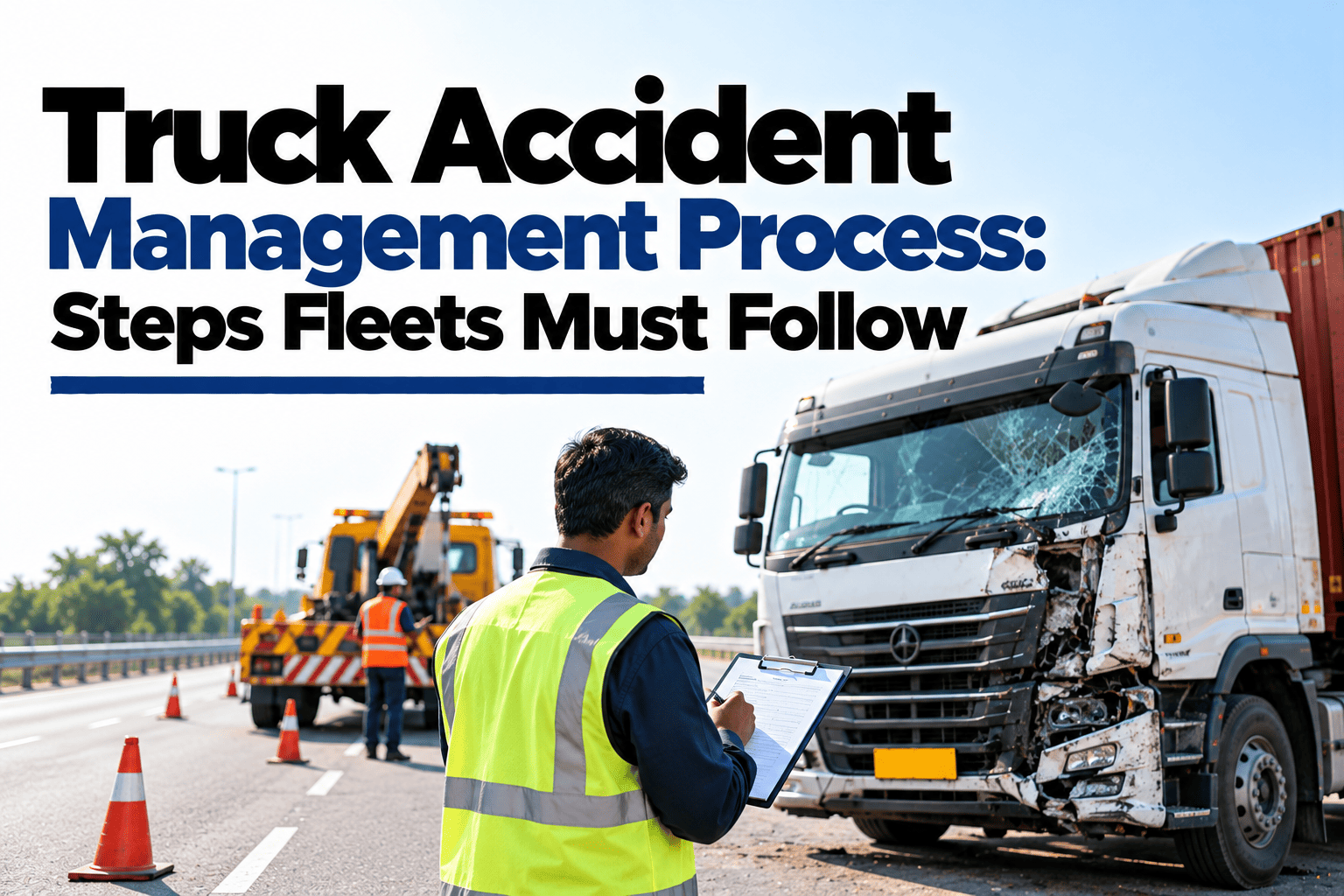
Truck Accident Management Process: Steps Fleets Must Follow
On-scene actions, driver support, police and insurer intimation, evidence, towing, repair and root cause review, in the order they should happen.
What the Driver Should Do at the Scene
Train every driver on these steps and keep a printed card in each cab. People come first, paperwork later.
Drivers involved in an accident have a legal duty to help injured people get medical attention and to inform the police. Do not move the vehicle unless it creates danger or the police allow it.
What Fleet Control Should Do
While the driver handles the scene, the office should act quickly on two fronts at once.
- Check the driver is safe and get medical help if needed
- Send a supervisor or local contact to the scene
- Arrange legal support where required
- Give the driver time and support afterwards
- Inform the insurer as soon as possible
- Inform the customer about the load and delay
- Arrange towing and safe storage of goods
- Collect documents and evidence in one place
Documents and Evidence to Collect
Missing papers are a common reason claims get delayed. Gather these early and keep them together.
| Item | Why it matters | Who collects it |
|---|---|---|
| Police report or FIR | Needed for injury, death, theft and many damage claims | Driver or supervisor with police |
| Photos and videos | Show positions, damage and road conditions | Driver at the scene |
| Dashcam footage | Strong evidence of what happened | Fleet control, saved the same day |
| Vehicle documents | RC, permit, fitness, insurance and PUC valid on the date | Fleet office |
| Driver licence | Must be valid for the vehicle class | Fleet office |
| Inspection and service records | Show the vehicle was roadworthy | Fleet office |
One Record for Every Accident
HVI lets drivers report accidents with photos from their phone, keeps documents and inspection history ready for insurers and tracks every follow-up step until the case is closed.
Getting the Truck Back on the Road
A clear repair process avoids claim disputes and gets the vehicle earning again sooner.
Survey first
Wait for the insurer's surveyor before repairs.
Vehicle release
Get police release if the vehicle was held.
Approved repair
Repair at a network or approved garage.
Full inspection
Check brakes, steering and lights before return.
Finding the Root Cause
Every accident is a lesson. Review each one within two weeks and decide what will stop it happening again.
Driver factors
Fatigue, speed, distraction or lack of training.
Vehicle condition
Brakes, tyres, lights or steering defects.
Route and conditions
Road, weather, night driving or blind spots.
Load and schedule
Overloading, poor securing or tight delivery times.
Accident Cases in HVI
A sample view of open and closed cases. Each one shows where it stands and what still needs to happen.
| Case | Vehicle | Stage | Root cause | Status |
|---|---|---|---|---|
| ACC-031 | TRK-06 | Repaired and inspected | Rear-end in fog, speed coaching done | Closed |
| ACC-034 | TIP-02 | Awaiting survey | Under review | In progress |
| ACC-035 | BUS-09 | FIR and insurer pending | Not started | Action needed today |
Truck Accident Management FAQs
What should a truck driver do immediately after an accident?
Stop safely, switch on hazard lights and place warning triangles, call 112 for help, help injured people get medical care, inform the fleet control room and take photos of the scene. Safety and medical help always come first.
When should the insurer be informed?
As soon as possible, ideally the same day. Late intimation is a common reason for claim problems. Check your policy for any specific time limits and keep the claim reference number safe.
Is an FIR needed for every truck accident?
An FIR is usually needed when there is injury, death, third-party damage or theft, and insurers often ask for it. For minor own-damage incidents, check with your insurer what they require.
Can we repair the truck before the survey?
It is best not to. Starting repairs before the insurer's surveyor inspects the damage can lead to the claim being reduced or disputed. Teams that track accident cases in HVI can see when the survey is complete.
How can fleets reduce repeat accidents?
Review every accident to find the root cause, act on driver, vehicle, route or schedule factors, and track whether the actions work. Book a demo to see accident case tracking in HVI.
Be Ready Before the Call Comes
Give drivers a clear accident process, keep documents and records claim-ready and track every case from the scene to root cause in HVI. Faster claims, safer drivers and fewer repeat accidents.