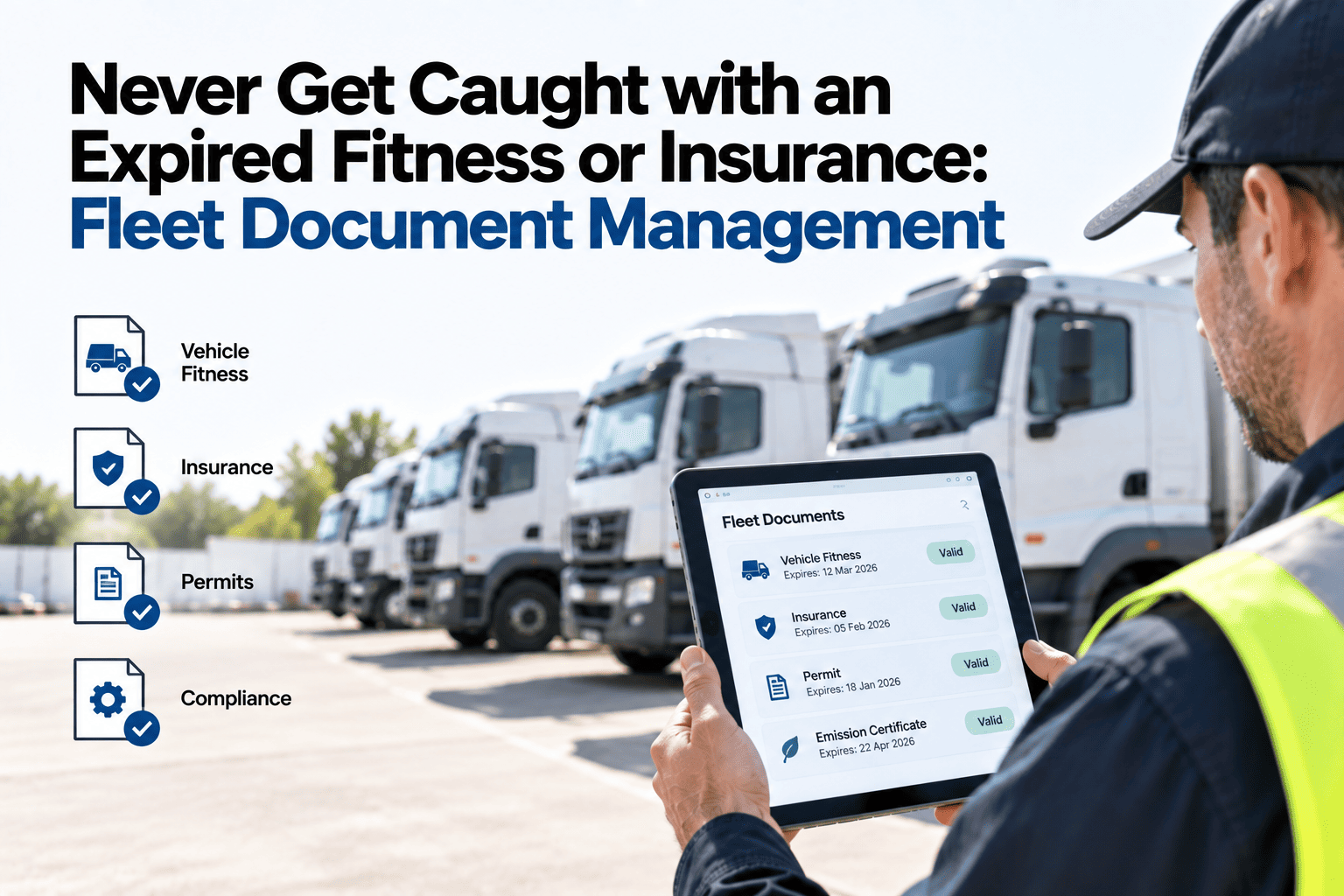
An alert thirty days before a document expires sounds sensible until you try to act on it. Some renewals take an afternoon. Others need an inspection appointment, a queue, a rectification, and a second visit, and thirty days is not enough to start. The result is a fleet that receives its warnings on time and still ends up with vehicles off the road, because the warning was calibrated to the expiry date rather than to how long the renewal actually takes. Fixing that means knowing the lead time for each document type, not just its end date. You can review your own renewal cycle in a free 30-minute session.
Expiry Dates Are Not the Same as Deadlines
Alerts built around how long each renewal actually takes, so the reminder arrives when there is still time to complete it.
Renewals Are Not All the Same Length
Set your alert window per document type based on your own experience of how long each one takes locally. These broad categories are a starting point.
Renewals that are essentially a transaction, such as insurance where the policy and vehicle details are unchanged.
Risk: complacency, because these are easy and therefore left latest.
Anything requiring an appointment, a physical inspection, or a third party's availability. The queue is the constraint rather than the paperwork.
Risk: the alert arrives with enough notice to worry and not enough to book.
Renewals that can fail and require rectification before a second attempt. The timeline depends on what is found.
Risk: treating the first appointment as the finish line when it is the midpoint.
Documents that cannot be renewed until a prior one is current, so a delay on the first cascades into the second.
Risk: two documents expiring together because nobody mapped the dependency.
Documents Do Not All Belong to the Vehicle
Filing everything against the machine is the most common structural mistake, because several of these move independently of it.
Attached to the vehicle or machine
Registration, fitness, insurance, permits, and emission-related certification. These follow the asset wherever it goes.
Attached to the person
Driving licences, operator authorisations, and competency records. These move with the individual across machines and sites.
Attached to the equipment item
Statutory examination and test certificates for lifting gear, pressure systems, and similar. Often on attachments rather than the base machine.
Attached to the site or contract
Site approvals and client-specific requirements that apply while the machine is at that location and not afterwards.
Attached to the hire arrangement
For hired-in equipment, where responsibility for each document needs establishing at the start rather than during an inspection.
Get Every Certificate in One Place
Documents attached to the right asset, person, or site, with alerts timed to the renewal rather than the expiry.
What Each Document Record Should Carry
The document itself, not a reference to it
A scan or photo retrievable on a phone at a gate, which is where it is usually needed and where a filing cabinet is no help.
Issue and expiry dates as separate fields
Both matter. Issue date tells you the validity period actually granted, which is not always what was expected.
Renewal lead time for that document type
The field that makes the alert useful rather than merely punctual.
Named owner of the renewal
A document with no owner gets chased by whoever notices, which is usually too late.
Renewal status once started
In progress is different from not started, and a system that cannot tell them apart generates alerts for work already under way.
Frequently Asked Questions
How far ahead should alerts fire?
Far enough to complete the renewal, which differs by document and by region. The practical approach is recording how long each one actually took last time and setting the window from that rather than using a single figure for everything. You can set this up per type on a call with our team.
Which documents does our fleet legally need?
That depends on vehicle category, where it operates, and the client or site requirements that apply. Confirm the list with your compliance officer rather than working from a generic set, since the consequences of a gap fall on you.
Can documents be accessed without connectivity?
Yes, which matters because the moment a certificate is demanded is often at a gate or a checkpoint rather than in an office.
What about hired-in equipment?
Track it the same way, with the responsibility for each document recorded. Assuming the hire company handles everything is a common and expensive assumption.
Where should we start?
By finding what is already expired, which most fleets discover is more than they expected. That first audit is usually the strongest argument for doing the rest. Start with a free trial.
Alert on the Renewal, Not the Expiry
Record how long each document type actually takes to renew and set the alert from that, attach each document to the asset, person, or site it really belongs to, give every renewal a named owner, and keep the document itself retrievable on a phone.