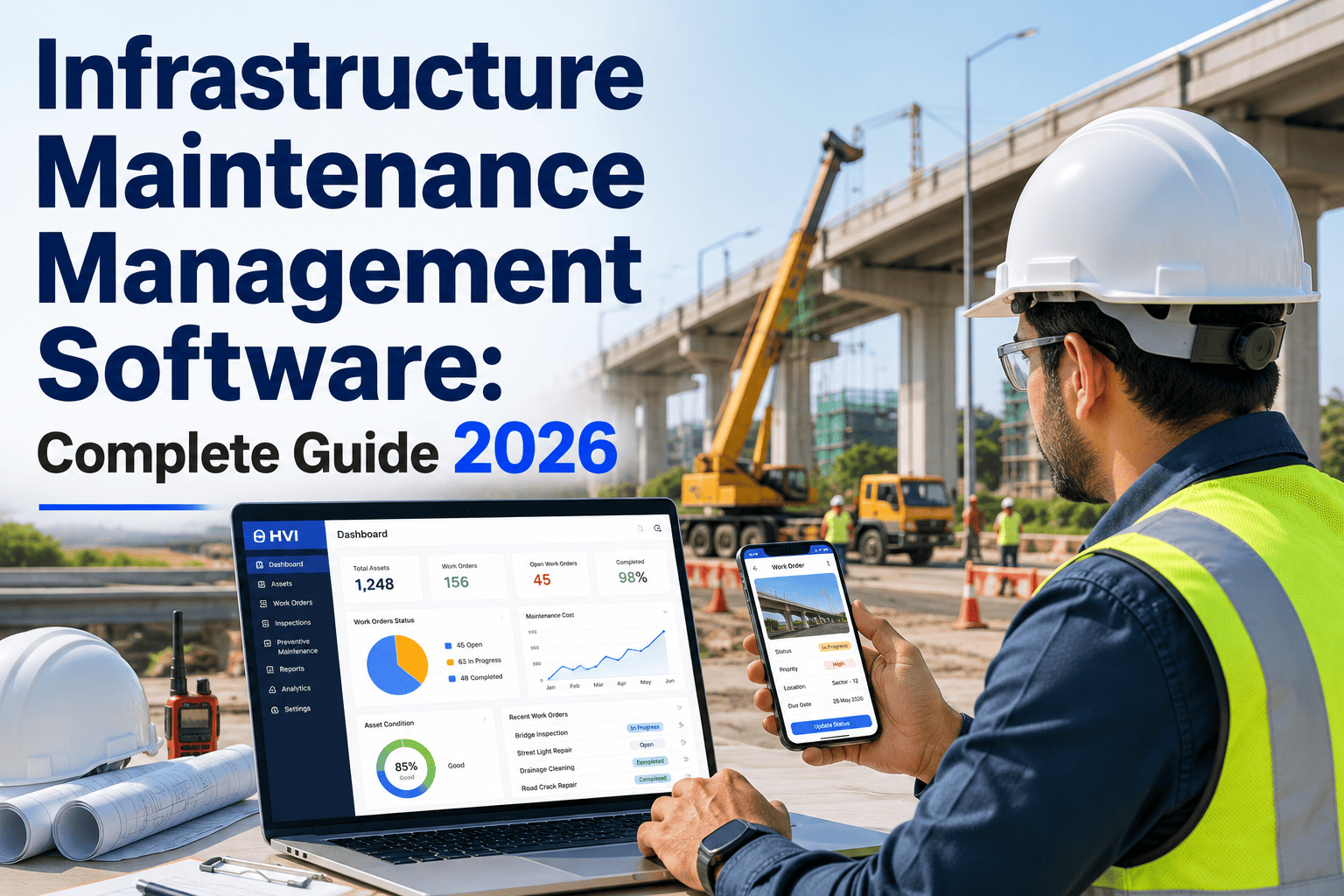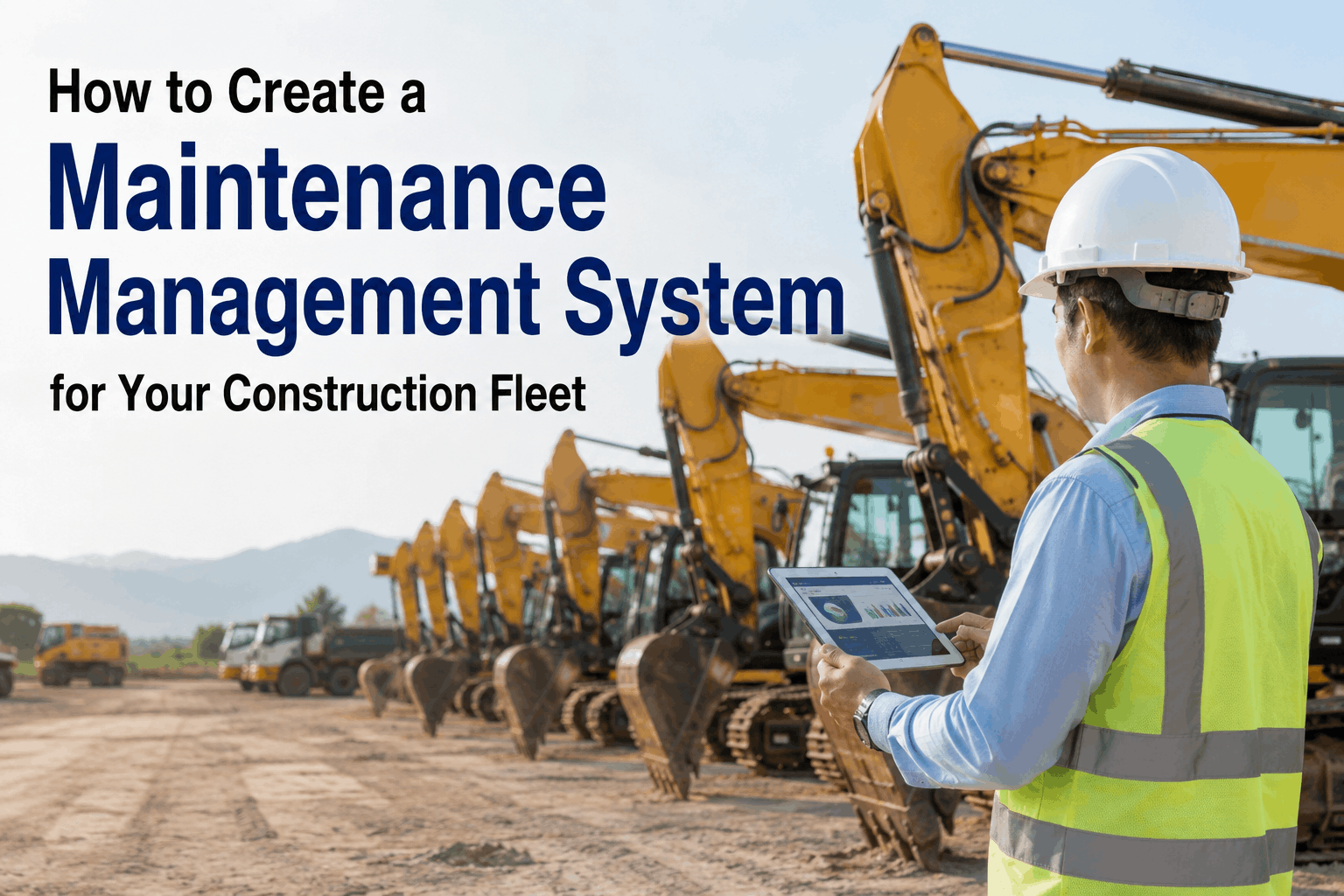
Every EPC contractor and infrastructure operator in India runs a fleet of expensive, hard-working assets — excavators, dumpers, gensets, batching plants, cranes, and hundreds of smaller tools that keep a project moving. Most of these assets are still tracked the way they were tracked a decade ago: a spreadsheet updated whenever someone remembers, a purchase file in a cupboard, and a site engineer's memory of which machine is parked where. That gap between what a company owns and what it actually knows about those assets is where money quietly disappears — in idle machines nobody redeploys, in renewals missed by weeks, in assets written off the books years after they stopped being useful. Infrastructure asset management software closes that gap by giving every asset a digital record that follows it from purchase to retirement, and platforms built for Indian field conditions like HVI make that record usable from the first day of deployment.
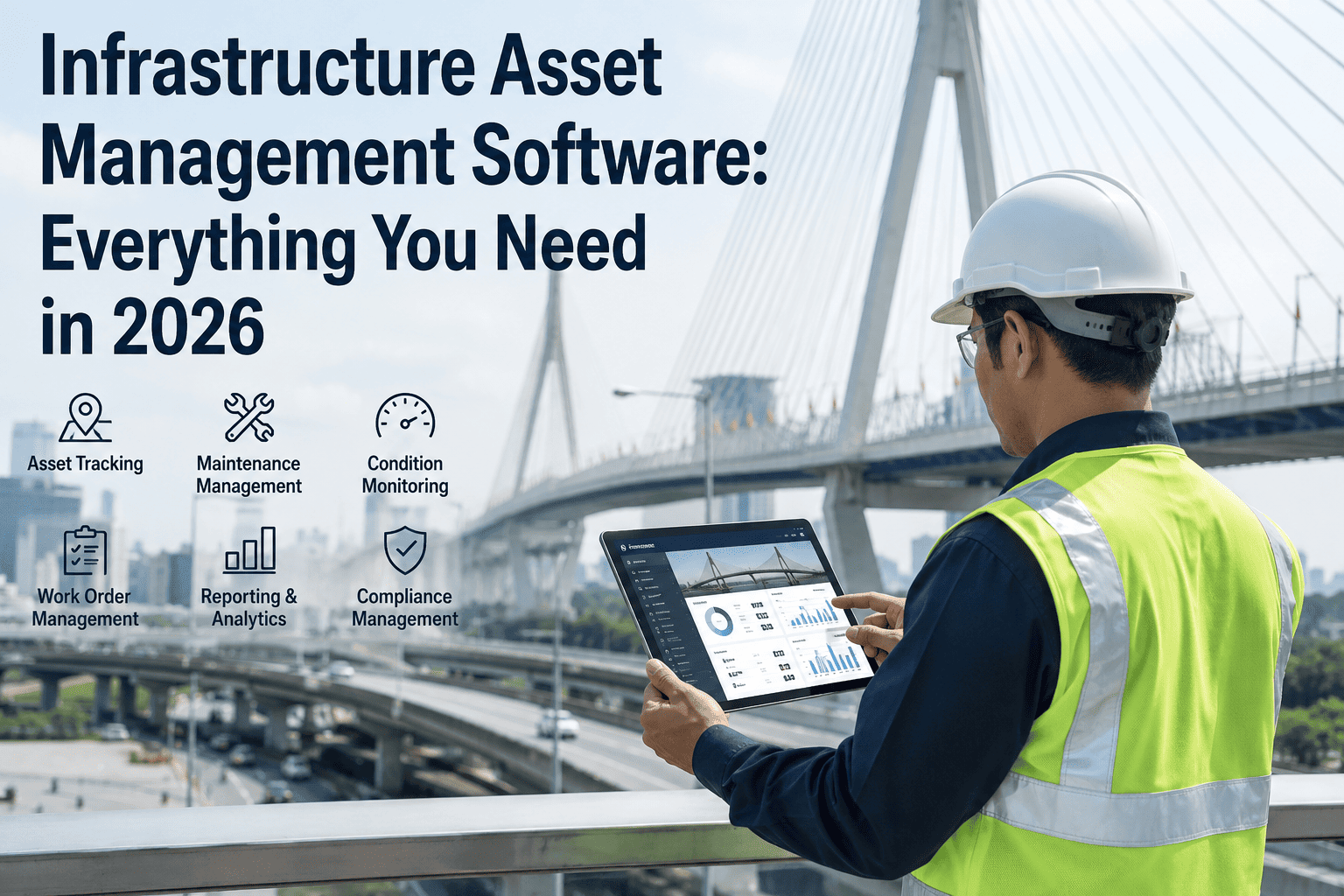
Infrastructure Asset Management Software: Everything You Need in 2026
What asset management software actually tracks, how it changes the way EPC and O&M teams run their fleets, and what it takes to get a working asset register live across your sites this quarter.
Why Asset Registers Break Down On Real Projects
Asset management sounds simple on paper — know what you own, know where it is, know what it cost. In practice, most EPC and O&M organisations lose that thread within months of a project starting, because equipment moves between sites faster than paperwork does. These are the four gaps that show up on almost every fleet audit.
A grader finishes its scope on one package and sits parked while a nearby package rents an identical machine, because nobody had visibility into what was already available and free.
Book value is updated once a year during audit season instead of continuously, so replace-or-repair decisions get made on numbers that are already stale by the time they reach a manager.
Insurance, fitness certificates, and statutory renewals live in separate files with separate owners, and a lapsed certificate is usually discovered only when an inspector asks for it.
Without a running maintenance-cost history tied to each asset, the decision to retire an ageing machine is made on gut feel rather than on what it has actually cost to keep running.
The Asset Lifecycle, Mapped Stage By Stage
Asset management software earns its value by covering the entire life of a machine, not just the maintenance middle. Here is what a complete lifecycle record looks like when it is tracked properly from day one.
Purchase date, vendor, cost, warranty terms, and specification sheets are captured once, at the point of acquisition, instead of being reconstructed later from scattered invoices.
Every transfer between sites, packages, or contractors is logged with a timestamp, so utilisation and location are always current rather than reconstructed from memory.
Running hours, fuel consumption, and operating condition are captured from the field, giving planners real usage data instead of the theoretical availability shown on a schedule.
Every repair, part, and labour hour is tied back to the specific asset, building a true cost-of-ownership figure that spreadsheets built for accounting purposes never capture.
Book value updates automatically against the depreciation method your finance team uses, and the disposal decision is backed by a documented cost and condition history.
What Asset Management Software Actually Does
Strip away the sales language and an infrastructure-ready asset management platform reduces to five concrete capabilities. Each one solves a specific gap identified above rather than adding generic dashboard clutter.
Every excavator, genset, batching plant, and hand tool sits in a single searchable register with a unique ID, current site, and current custodian — regardless of how many packages or sub-contractors are running in parallel.
Transfers, idle time, and running hours update from the field as they happen, so a regional manager deciding whether to rent new equipment can first check what is already sitting unused nearby.
Repairs and part consumption roll up against the specific machine, not a general expense head, giving you a running cost-per-asset figure without a separate reconciliation exercise.
Book value, insurance status, and statutory certificate expiry are calculated and flagged automatically, so renewals are handled proactively instead of during a surprise inspection.
Once cost, downtime, and utilisation history exist in one place, deciding whether an ageing machine is worth another repair becomes a data question rather than a debate in a site meeting.
Stop Reconstructing Asset History From Old Invoices
HVI gives every asset a single digital record — procurement, deployment, maintenance, depreciation, and disposal — built for how EPC and O&M fleets in India actually move between sites.
Spreadsheet Tracking vs Digital Asset Management
The comparison below is the same one most fleet managers run through in their heads before deciding to move off Excel — laid out side by side so the actual gap is visible rather than assumed.
| Aspect | Spreadsheet / Manual Tracking | Digital Asset Management Software |
|---|---|---|
| Asset Visibility | Updated whenever someone remembers to update it | Live location and status from field entries |
| Depreciation Calculation | Recalculated manually during annual audits | Calculated continuously against your chosen method |
| Maintenance Linkage | Repair costs sit in general ledgers, not per asset | Every repair and part tied to the specific machine |
| Compliance Documentation | Scattered across files with separate owners | Centralised with automatic renewal alerts |
| Multi-Site Reporting | Requires manual consolidation from each site | Consolidated dashboard across all sites instantly |
What Better Asset Tracking Is Worth
Fleet-heavy organisations that move to a proper asset register are not chasing a technology upgrade for its own sake — they are chasing four specific, measurable returns.
Before we digitised our register, we genuinely could not tell you how many machines we owned without calling every site engineer individually. Within the first quarter of using HVI, we found six pieces of equipment marked as deployed that were actually sitting idle, and redeployed all of them instead of placing new rental orders. The register alone paid for the platform.
Frequently Asked Questions
Know Exactly What You Own, Where It Is, And What It Is Worth
HVI brings procurement, deployment, maintenance, depreciation, and disposal into a single asset record built for how Indian EPC and O&M fleets actually operate.