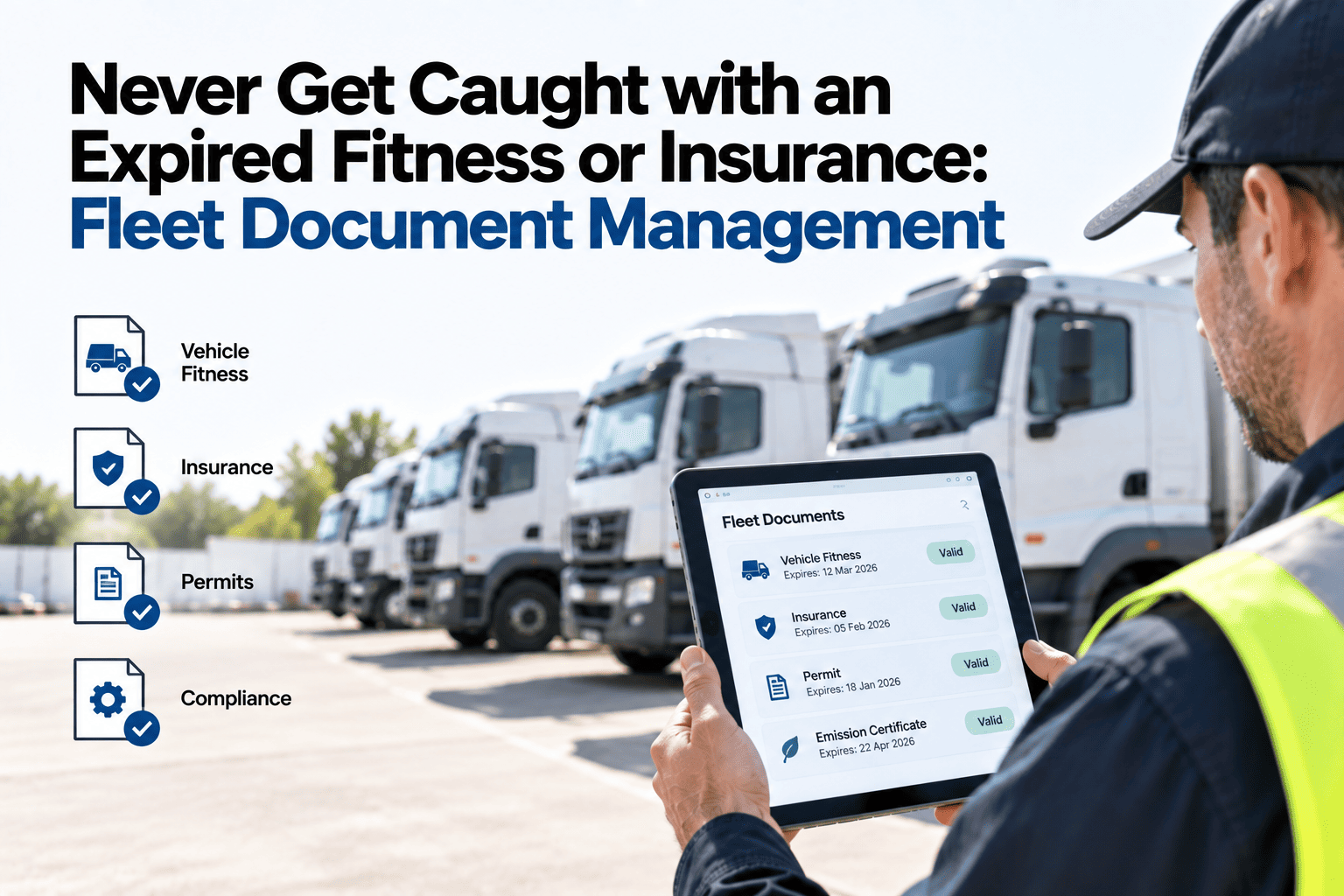
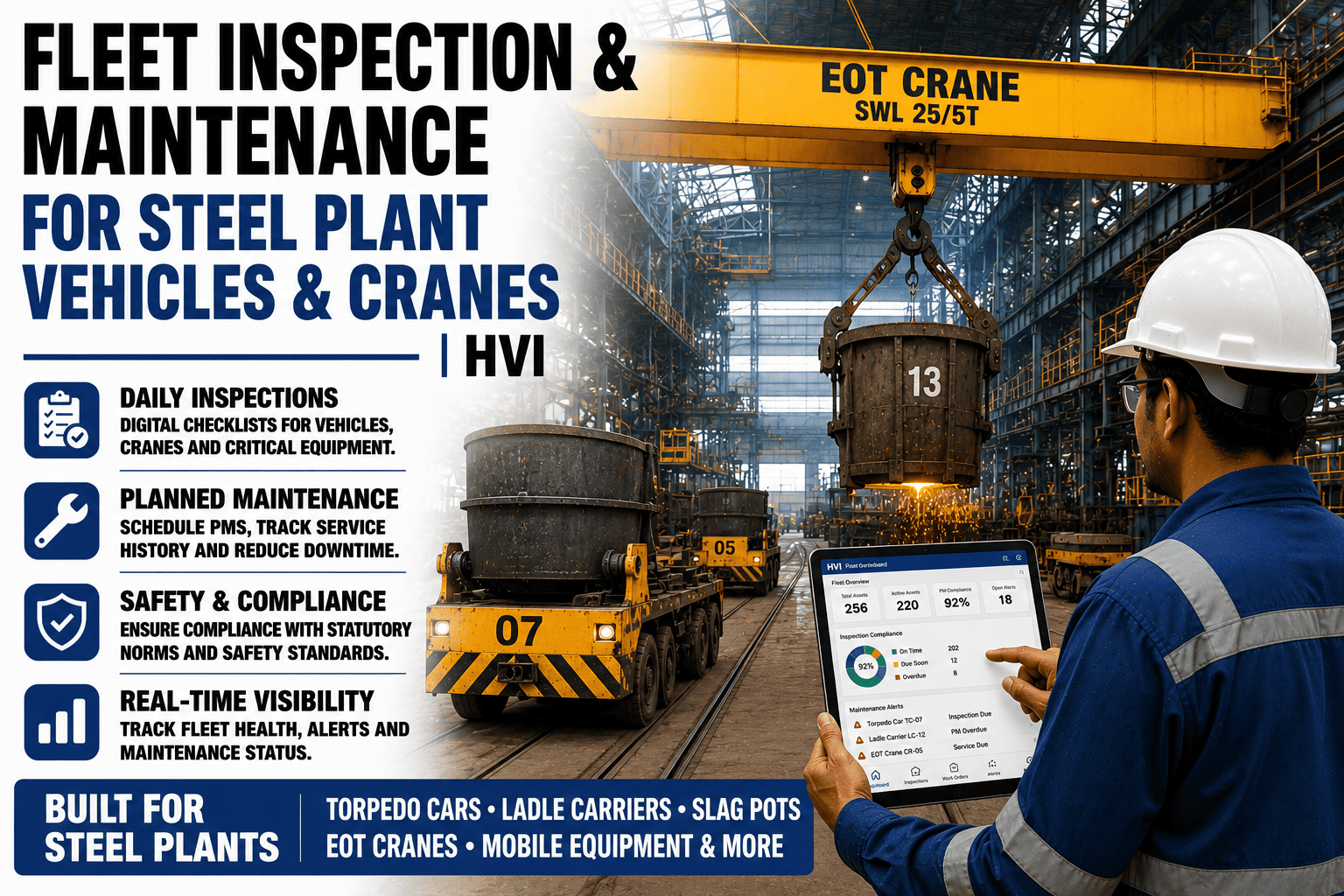
Running a logistics fleet in India in 2026 means juggling AIS-140 GPS mandates, Vahan-linked fitness certificates, daily DVIR-style inspections, and maintenance scheduling across trucks, trailers, and last-mile vehicles spread across multiple states. Most operations teams still track this through a mix of spreadsheets, RTO paperwork, and WhatsApp messages from drivers, which means compliance gaps surface only when a vehicle is stopped at a checkpoint or a permit renewal gets rejected. This guide breaks down what a logistics fleet actually needs in place to stay compliant and keep trucks moving, and how a connected CMMS like HVI turns scattered records into one operational system. Sign up free to see your fleet's compliance status in one place.
The Four Compliance Layers Every Indian Logistics Fleet Must Manage
Vehicle fitness, GPS tracking, daily inspections, and maintenance records are no longer separate paperwork tasks handled by different people. In 2026, RTOs cross-check them together — and a gap in any one layer can ground a vehicle.
Vehicle Fitness & Vahan Records
Every commercial vehicle needs a valid fitness certificate linked in the Vahan database. Renewal depends on documentation being current, and increasingly, on AIS-140 device status being active. A lapsed fitness certificate stops a truck from operating legally, no matter how good its maintenance history is.
AIS-140 GPS & Panic Button Compliance
Goods carriers, fleet trucks, and commercial vehicles need a certified Vehicle Location Tracking Device transmitting to government servers, not just any GPS unit. Several states now tie fitness renewal and permit issuance directly to AIS-140 fitment status, so this is no longer a one-time install and forget item.
Daily Pre-Trip & Post-Trip Inspections
Brakes, tyres, lights, and load securing checks need to happen before every trip and get logged somewhere auditable. Paper logs go missing or get filled in after the fact, which means the inspection record exists but the inspection itself may not have happened properly.
Maintenance Scheduling & Work Order History
Preventive maintenance intervals, parts replacement records, and repair history need to be tied to each vehicle so that when an auditor or insurer asks for service history, it can be pulled up instantly rather than reconstructed from invoices in a drawer.
Where Logistics Fleets Actually Lose Time and Money
These are the recurring patterns operations managers report across mixed fleets of tractors, trailers, and delivery trucks. None of them show up as a single dramatic failure — they compound quietly until a breakdown or audit forces the issue.
of logistics fleet maintenance budgets go toward emergency repairs that preventive scheduling would have caught earlier, based on industry maintenance cost patterns.
of total operating cost in a logistics fleet is maintenance alone, which means even small improvements in scheduling accuracy move the bottom line.
higher error rate in paper-based inspection and fitness paperwork compared to digital records tied to the vehicle and driver automatically.
One Dashboard for Fitness, AIS-140, Inspections, and Maintenance
HVI ties vehicle fitness status, inspection records, and maintenance history to each registration number, so your operations team sees what is expiring, what failed inspection, and what is due for service without switching between five spreadsheets.
Mixed Fleet, Mixed Maintenance Needs
A 200-vehicle logistics fleet rarely runs one type of asset. Tractors, refrigerated trailers, flatbeds, and local delivery trucks each carry different inspection points and service intervals. Treating them as one undifferentiated group is where most maintenance plans break down.
| Vehicle Type | Primary Inspection Focus | Typical PM Interval | Compliance Priority |
|---|---|---|---|
| Long-haul tractors | Brakes, tyres, engine, coupling | Every 10,000-15,000 km | Fitness + AIS-140 |
| Refrigerated trailers | Reefer unit, door seals, insulation | Every 200-250 engine hours | Cargo temperature log |
| Flatbed trailers | Load securing points, deck condition | Every 15,000-20,000 km | Load safety inspection |
| Local delivery trucks | Brakes, lights, tyres, mirrors | Every 5,000-8,000 km | Daily DVIR-style check |
What Changes When Compliance Moves Into One System
The biggest shift is not removing paper for its own sake. It is connecting fitness status, AIS-140 device health, daily inspections, and maintenance work orders to the same vehicle record, so a problem in one layer is visible to everyone responsible for the others.
Driver runs a guided pre-trip inspection on a phone before the truck leaves the yard. Failed items are logged with a photo automatically.
A failed brake or tyre item creates a work order instantly and routes it to the maintenance team, instead of waiting for the driver to mention it verbally.
Fitness certificate expiry and AIS-140 device status are tracked against the same vehicle ID, so renewal deadlines surface weeks ahead, not the day a checkpoint flags them.
Compliance officers pull a complete, timestamped record for any vehicle in seconds when an auditor, insurer, or client asks for it.
Frequently Asked Questions
Does AIS-140 compliance affect fitness certificate renewal for logistics vehicles?
How often should daily inspections happen on a logistics fleet?
What maintenance records do auditors typically ask for?
Why do mixed fleets need different maintenance schedules per vehicle type?
Can a small logistics fleet benefit from a digital compliance system, or is it only for large fleets?
Stop Tracking Compliance Across Five Different Places
HVI brings vehicle fitness, AIS-140 status, daily inspections, and maintenance history into one system built for Indian logistics and transportation fleets. Get audit-ready records and fewer surprises at the checkpoint.