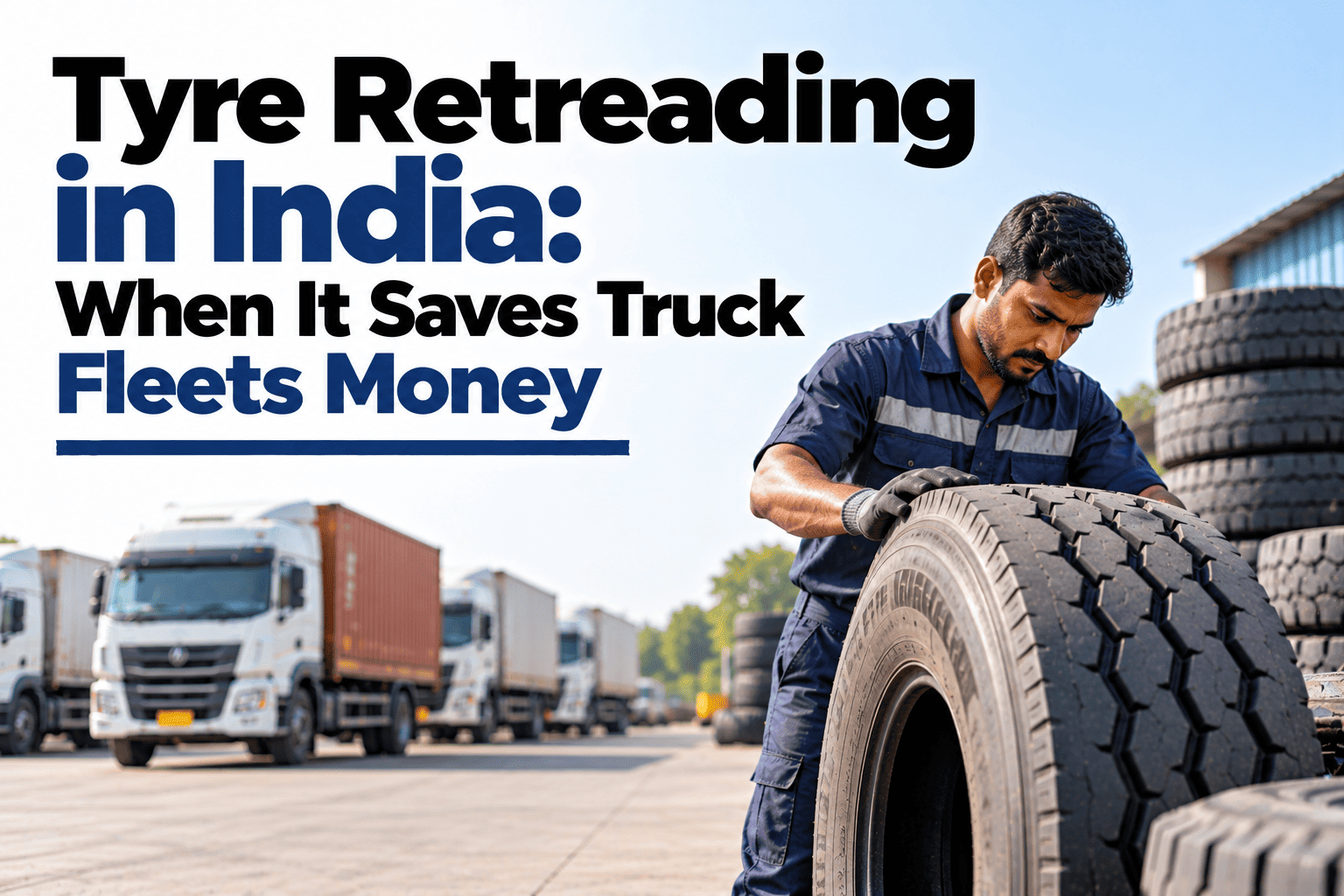
Tyres are one of the biggest running costs for any Indian truck or bus fleet, and retreading can cut that cost sharply. A good casing can carry a new tread several times for a fraction of the price of a new tyre. But retreading only pays when the casing is sound, the retreader does quality work and the fleet has clear rules on where retreads are fitted. Done badly, it brings blowouts, roadside delays and wasted money. This guide explains how to do it well, and how fleets track every casing through its life in HVI.
Tyre Retreading in India: When It Saves Truck Fleets Money
Understand hot and precure retreading, choose the right casings, decide where retreads belong and compare the real cost per km against new tyres.
Hot and Precure Retreading Compared
Both methods are widely used in India. The right one depends on your tyres, routes and the quality of your local retreader.
| Factor | Hot retreading | Precure retreading |
|---|---|---|
| How it works | Uncured rubber is moulded and cured on the casing at high temperature | A ready-cured tread is bonded to the casing at a lower temperature |
| Tread pattern | Set by the mould | Wide choice of ready-made patterns |
| Heat on the casing | Higher | Lower |
| Typical use | Common for many truck and tipper tyres | Often chosen for long-haul and bus fleets |
| What matters most | Mould condition and curing control | Bonding quality and cleanliness |
Casing Inspection: Accept or Reject
The casing decides everything. A retread on a weak casing is money wasted and a safety risk.
- Even wear with tread removed before the cords show
- Sound beads with no damage
- Small repairable punctures within limits
- Clean sidewalls with no bulges or cracks
- Cuts or damage reaching the steel belts
- Bead damage or separation inside the tyre
- Signs of running flat or overheating
- Exposed, rusted steel cords
Pull tyres for retreading before the tread wears too low. Running a tyre to the cords often destroys a casing that could have been retreaded.
Where Retreads Belong
Most fleets set clear rules on which axle positions can use retreaded tyres. Follow your own policy and any rules that apply to your vehicles.
Trailer axles
The most common place for retreads, with lower stress on the tyre.
Drive axles
Widely used with good casings and a suitable tread pattern.
Steer axle
Many fleets fit only new tyres here for safety and steering control.
Track Every Casing From New to Retired
HVI records each tyre and casing, every retread, its fitment position and kilometres run, so you can see real cost per km and which retreaders give the best results.
Cost per Km: New Only vs New Plus Retreads
Retreading pays when the extra kilometres cost less per km than a new tyre. The figures below are illustrative.
In this example, retreading cuts tyre cost per km by around a quarter. A retread that fails early wipes out that saving, so quality matters more than price.
Why Retreads Fail Early
Most retread failures come back to the casing, the process or how the tyre is used.
Weak casing
Hidden damage or a casing run too low before retreading.
Poor bonding
Dirty buffing or poor curing lets the tread separate.
Under-inflation
Low pressure builds heat that breaks the bond.
Overloading
Extra load stresses both casing and new tread.
Casing Life Tracking in HVI
A sample view of casings in a fleet. Each one shows its retread count, kilometres and status.
| Casing | Position | Retreads | Total km | Status |
|---|---|---|---|---|
| CS-1042 | Trailer, axle 3 | 2 | 2,48,000 km | Running well |
| CS-1187 | Drive, axle 2 | 1 | 1,62,000 km | Pull for retread soon |
| CS-0965 | Trailer, axle 2 | 1 | 1,31,000 km | Casing rejected |
Tyre Retreading FAQs
Does tyre retreading really save money?
It usually does when casings are sound and the retreader does quality work, because a retread costs much less than a new tyre for a good share of the kilometres. Compare cost per km over the casing's whole life to see the real saving.
How many times can a truck tyre be retreaded?
It depends on the casing quality, how the tyre was used and the inspection results each time. Many fleets get one to three retreads from a good casing. Each casing should pass inspection before every retread.
What is the difference between hot and precure retreading?
Hot retreading moulds and cures uncured rubber on the casing at high temperature. Precure retreading bonds a ready-cured tread to the casing at a lower temperature. Both work well when done by a skilled retreader.
Can retreaded tyres be used on the steer axle?
Many fleets fit only new tyres on the steer axle for safety and steering control, and use retreads on drive and trailer axles. Follow your fleet policy and any rules that apply. Teams that track tyre positions in HVI can enforce this easily.
How do I compare retreaders?
Record which retreader did each casing, the kilometres each retread ran and any early failures. Over a few months, the data shows which retreader gives the lowest cost per km. Book a demo to see casing tracking in HVI.
Get More Kilometres From Every Casing
Inspect casings properly, fit retreads where they belong and track every tyre's life and cost per km in HVI. Lower tyre costs without risking safety.