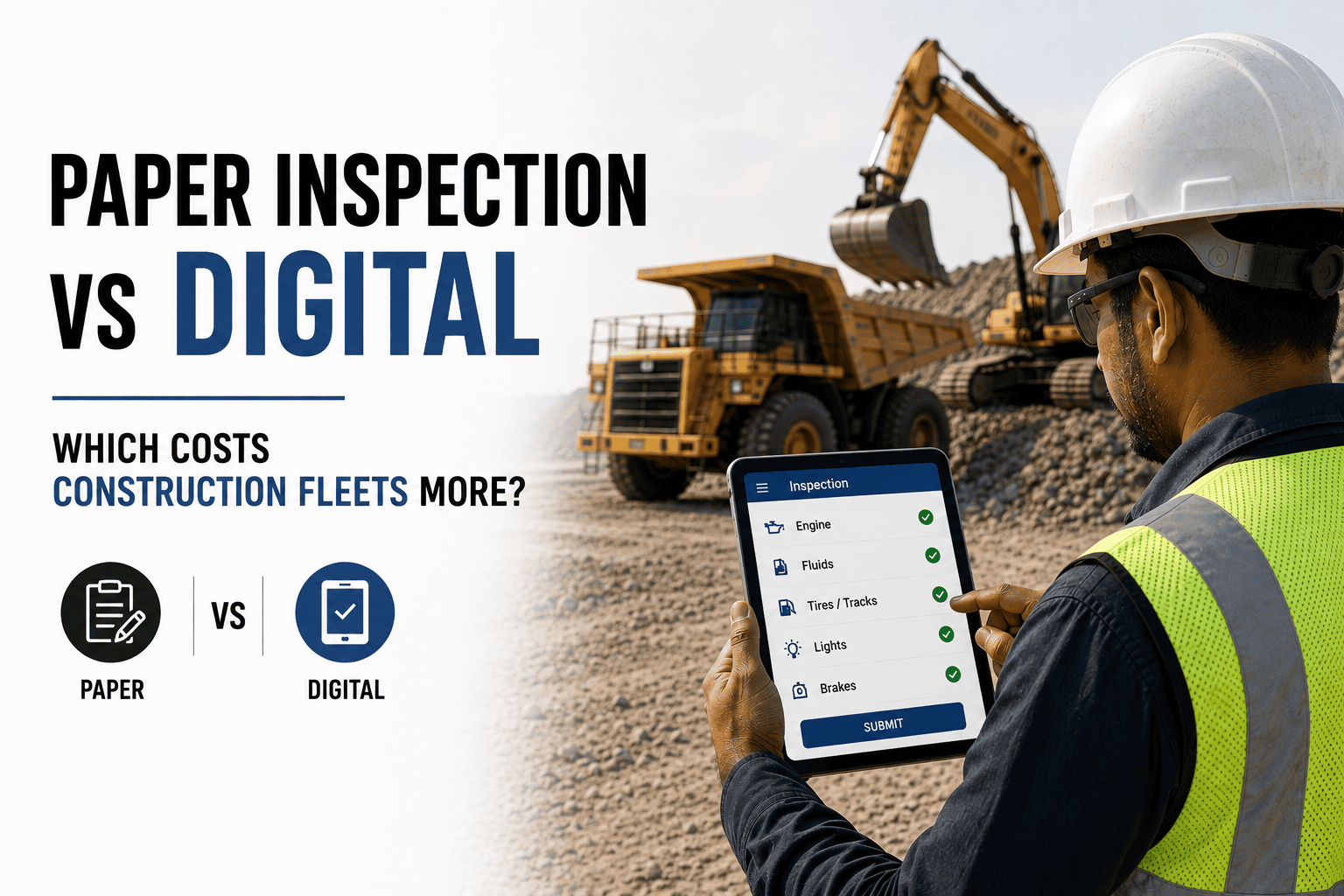
Paper inspections feel free — a photocopied checklist, a clipboard, done. The real bill arrives elsewhere: defects that never reached the workshop, breakdowns ticked "OK" the same morning, audit weeks hunting bundles, and years of fleet data that exists only as ink. The trick is that none of it ever gets charged to "paper" — it lands in the breakdown budget, the overtime column, and the audit prep, so the clipboard keeps looking innocent. Add the lines up for a mid-sized fleet and the total commonly runs into lakhs a year, against software that costs a fraction of any single line. This page puts numbers on that bill, line by line, then shows the one-day switch that ends it — sign up free and run your first digital inspections this week.
Still Running Paper Equipment Inspections? Here's What It's Costing You
Missed defects, transcription hours, audit scrambles, and invisible trends — the costs paper never itemises, calculated — and the one-day switch that ends them.
The Five Costs Paper Never Itemises
The defect that never travelled: the operator saw the leak, marked the sheet, and the sheet reached a file three days later — or never. The breakdown it became cost more than a year of any software.
The pencil-whipped morning: paper cannot demand a photo or reject an impossible meter reading, so ticked columns quietly replace actual checks — and nobody can tell the difference until the machine can.
The transcription tax: someone at every site spends hours daily turning sheets into Excel — paid time producing a copy of a copy, with fresh errors added at each step.
The audit scramble: DGMS, Factories Act, or client audits turn into staff-weeks of hunting bundles — and the sheet that matters most is always the one moisture, mud, or a transfer misplaced.
The data that never existed: years of inspections that can answer no question — which machine fails most, which defects repeat, what a machine truly costs per hour. Paper records the past without ever informing the future.
Rough Math for a 40-Machine Fleet
| Cost Line | Typical Assumption | Annual Cost |
|---|---|---|
| Transcription & filing labour | ~2 staff-hours/day across sites | ₹1.2–1.8 lakh |
| Breakdowns from missed/unchecked defects | Even 2 extra majors a year at ₹1–2 lakh each, downtime included | ₹2–4 lakh |
| Audit & compliance preparation | 2–3 audits × several staff-days of reconstruction | ₹0.5–1 lakh |
| Disputes without evidence | Hire bills, damage claims, warranty arguments settled by the louder voice | ₹1–2 lakh |
| Decisions made blind | Keep-or-replace and PM tuning without per-asset data | The largest line — and unbounded |
These are conservative, hedged patterns — your numbers vary with fleet size and discipline — but the shape holds everywhere: paper's visible cost is a photocopy bill, and its invisible cost runs into lakhs a year for a mid-sized fleet. The software that replaces it costs a fraction of any single line above.
Run This Math on Your Own Fleet — Live
Bring last quarter's breakdown list and your audit-prep story to a 30-minute session — our India team walks the same cost lines against your actual numbers, then shows the digital flow end to end: operator's phone to workshop to dashboard to audit export. Most fleets find the paper bill was larger than they guessed and the switch smaller.
Paper vs Digital, Where It Actually Matters
A Critical Defect Is Found
An Impossible Reading Is Entered
A Check Is Skipped
The Auditor Asks for Records
A Trend Question Is Asked
The Site Has No Signal
The One-Day Switch
Morning — Load the Fleet
Machines imported from your Excel register, checklists picked from the Indian template library and tuned to your models in the no-code editor.
Midday — One Toolbox Talk
Operators install the app and walk one inspection together, in Hindi or English — the screen is deliberately simpler than the paper form it replaces.
Afternoon — First Real Inspections
Pre-starts run on actual machines, photos attach, and a seeded critical fail shows everyone the escalation reaching the workshop in seconds.
Next Morning — The Dashboard Habit
The site opens the day on completion status and open defects instead of a clipboard pile — and the transcription clerk gets a better job.
Frequently Asked Questions
Our operators use basic phones and limited English. Will this work?
Yes — the operator screen runs in Hindi or English with large targets and photo-first flows on ordinary Android devices, and shared crew phones with individual logins work where personal devices don't. Fleets consistently find operators adopt it faster than supervisors expect.
What happens to years of old paper records?
Keep them archived as-is for their retention periods — history starts fresh in the system from day one, and within months the digital record is already deeper than the paper ever was. Scanning old bundles is optional, not required.
Do we have to convert every machine on day one?
No — most fleets start with one site or one machine class, prove the rhythm in a week, and extend from there. Running paper and digital in parallel for long is the one approach to avoid; it doubles work and halves belief.
Our sites barely have signal. Isn't that paper's advantage?
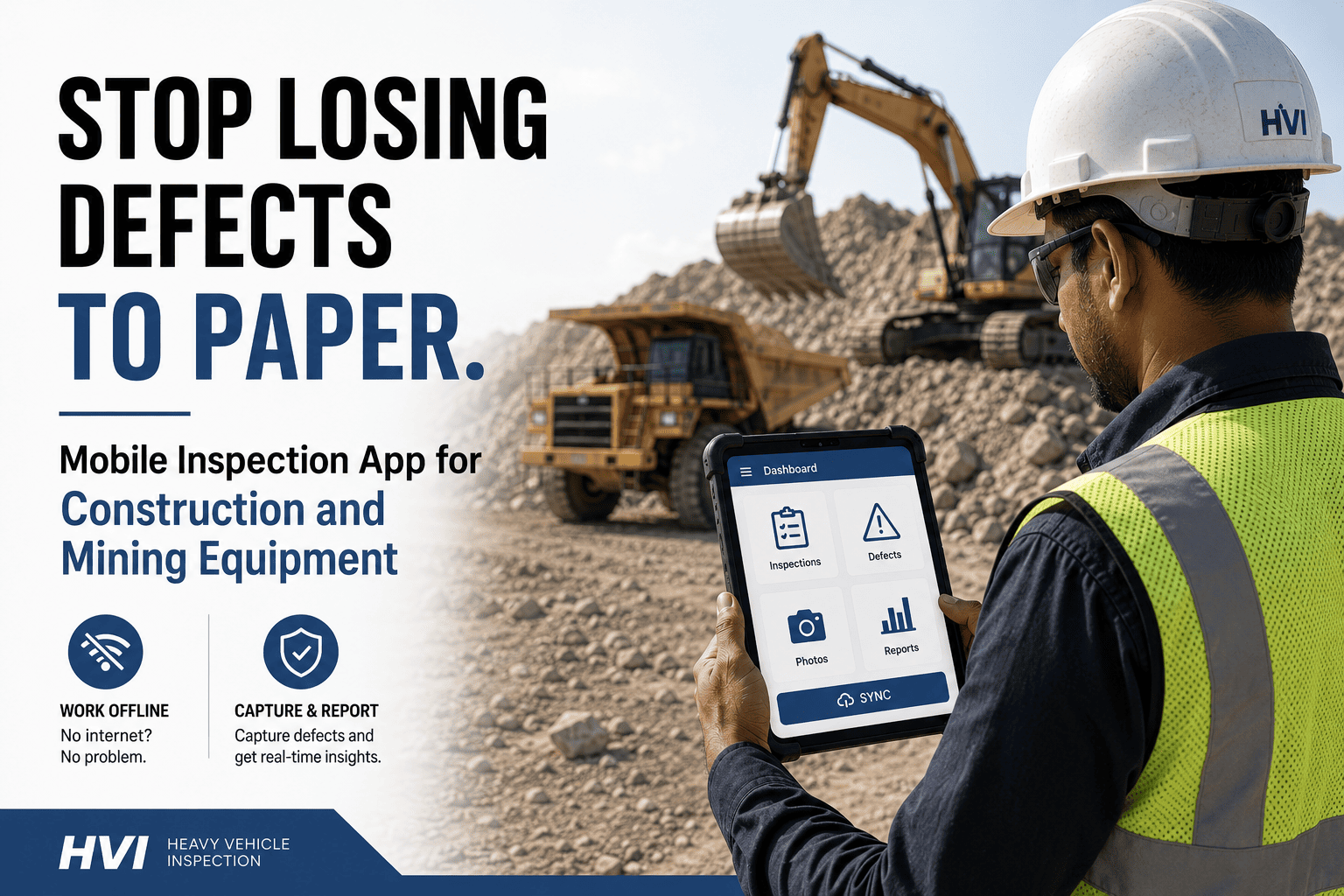
It was — the app works fully offline: checklists, photos, and defects save on the device with capture-time stamps and sync when coverage returns, so the remotest bench keeps records the head office can read; sign up free and test it in airplane mode first.
What does it cost against the paper it replaces?
A fraction of any single line in the cost table above — and unlike paper, the spend buys prevention, evidence, and data rather than filing. Run the comparison on your own numbers in a 30-minute demo with our India team.
Paper's Bill Arrives Every Month. It Just Never Says "Paper" On It.
It says breakdown, overtime, audit scramble, and a dispute lost for want of a photo — while the fix costs a fraction of any one of them, installs in a day, and starts paying back with the first defect that reaches the workshop in time. From that day, every inspection becomes a record that prevents, proves, and teaches — three jobs paper never did. Start free and run your first digital inspections this week, or bring your breakdown log to a 30-minute session and see the math on your own fleet.