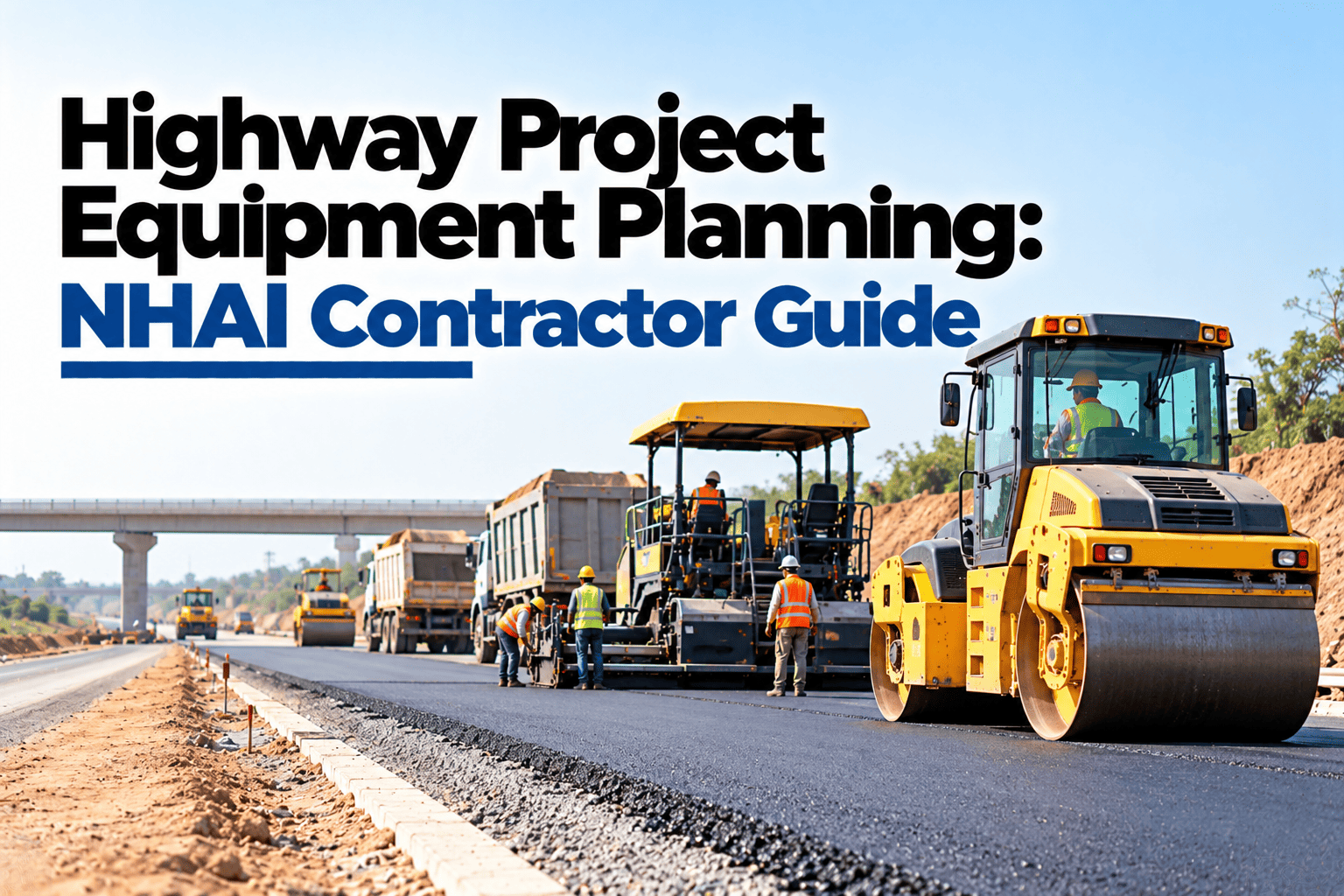
On a highway project, the bid price is fixed but equipment costs are not. Too few tippers and the excavator stands idle. Too many rollers and you pay for machines that wait. A paver that breaks down on a laying day can cost a full day of progress. The contractors who protect their margins plan the equipment mix layer by layer, match machines to each other, and watch utilisation and cost per kilometre every week. This guide covers that planning for NHAI and state highway projects, and how contractors manage equipment across packages in HVI.
Highway Project Equipment Planning: NHAI Contractor Guide
Choose the right machines for each pavement layer, balance excavators with tippers, decide hire or buy, and keep utilisation and cost per kilometre under control.
Balance Machines That Work Together
A fleet only moves as fast as its slowest link. The classic example is matching tippers to an excavator so neither waits. The figures below are illustrative.
With 4 tippers the excavator waits a third of the time. With 8, tippers queue. Check again whenever haul distance changes.
Hire or Buy: How to Decide
Most highway contractors mix owned and hired machines. These factors usually tip the decision.
| Factor | Leans towards buying | Leans towards hiring |
|---|---|---|
| How long it is needed | Across several projects or years | Short phase of one project |
| Expected utilisation | High and steady | Low or seasonal |
| Type of machine | Core machines used on every job | Specialised machines used rarely |
| Capital and cash flow | Funds available, finance in place | Cash needed for working capital |
| Maintenance capability | Own workshop and mechanics | No local workshop support |
Mobilisation Checklist
Machines that arrive with faults or missing papers lose days before they start earning. Check these before each machine moves to site.
Know What Every Machine Is Doing on Every Package
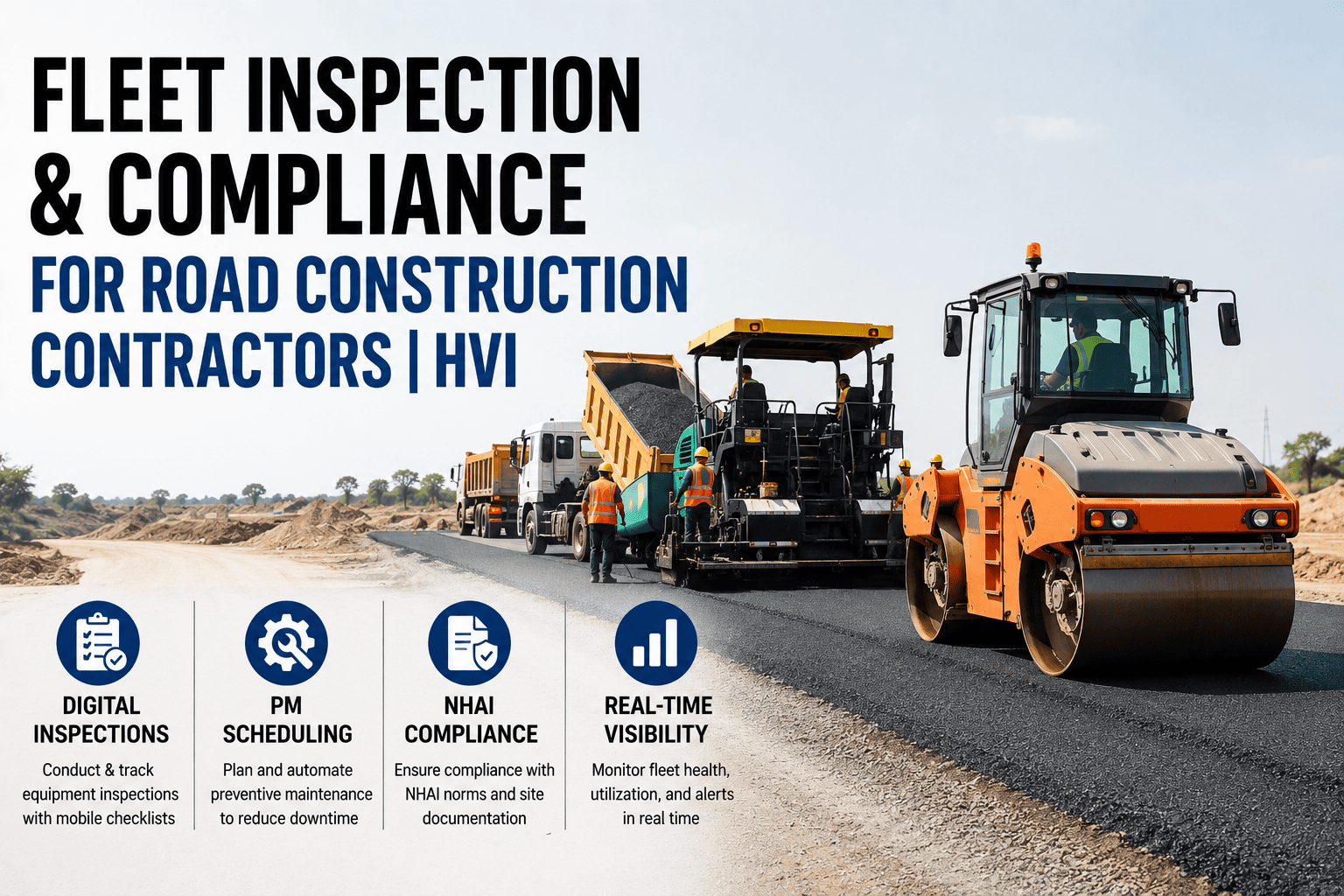
HVI records mobilisation checks, daily inspections, hour meters, breakdowns and repairs for owned and hired equipment, so planners see utilisation and cost across every package.
Where Machine Hours Really Go
On many highway sites, machines lose more time waiting than breaking down. The split below is an example for one excavator over a month.
Equipment Cost per Kilometre
Cost per kilometre ties equipment spending to progress. Track it by package and by layer. The figures below are illustrative.
How to bring it down
- Release idle hired machines quickly
- Match fleet size to the work front available
- Cut breakdowns with daily checks and PM
- Track fuel per hour for every machine
A Multi-Package Equipment View in HVI
A sample monthly view for a contractor running three packages. Utilisation and breakdowns sit next to each other for fast decisions.
| Package | Machines | Utilisation | Breakdowns | Action |
|---|---|---|---|---|
| Package 1, 4-lane | 42 | 71% | 3 | On track |
| Package 2, bypass | 35 | 52% | 2 | Release 4 hired tippers |
| Package 3, 6-lane | 58 | 64% | 9 | Review maintenance |
Highway Equipment Planning FAQs
What equipment is needed for a highway project?
Typical needs include excavators, dozers and tippers for earthwork, graders and compactors for subgrade and sub-base, WMM and hot mix plants with pavers and rollers for pavement layers, and water tankers throughout. Bridges and structures add cranes, piling rigs and concrete equipment.
How many tippers should work with one excavator?
Divide the tipper round trip time by the time the excavator takes to load one tipper. For example, a 30-minute round trip with 5 minutes of loading needs about 6 tippers. Recalculate whenever haul distance or road conditions change.
What is a good equipment utilisation on a highway site?
It varies by machine type and project stage, so set targets from your own history. More important is knowing why machines are not working, whether waiting for a work front, material or repairs. Teams that record machine status in HVI can see these reasons clearly.
Should highway contractors hire or buy equipment?
Buying usually suits core machines with high, steady use across projects. Hiring suits short phases, specialised machines and situations where cash is needed elsewhere. Most contractors use a mix and review it as each project moves through its stages.
How can equipment cost per kilometre be reduced?
Match fleet size to the available work front, release idle hired machines, reduce breakdowns through daily checks and PM, and monitor fuel use. Tracking all of this by package shows where money is leaking. Book a demo to see multi-package equipment tracking in HVI.
Plan Smarter, Build Faster, Protect Your Margin
Track every owned and hired machine across all your highway packages in HVI, with inspections, utilisation, breakdowns and costs in one place. Better fleet decisions and steady progress on every kilometre.


.png)