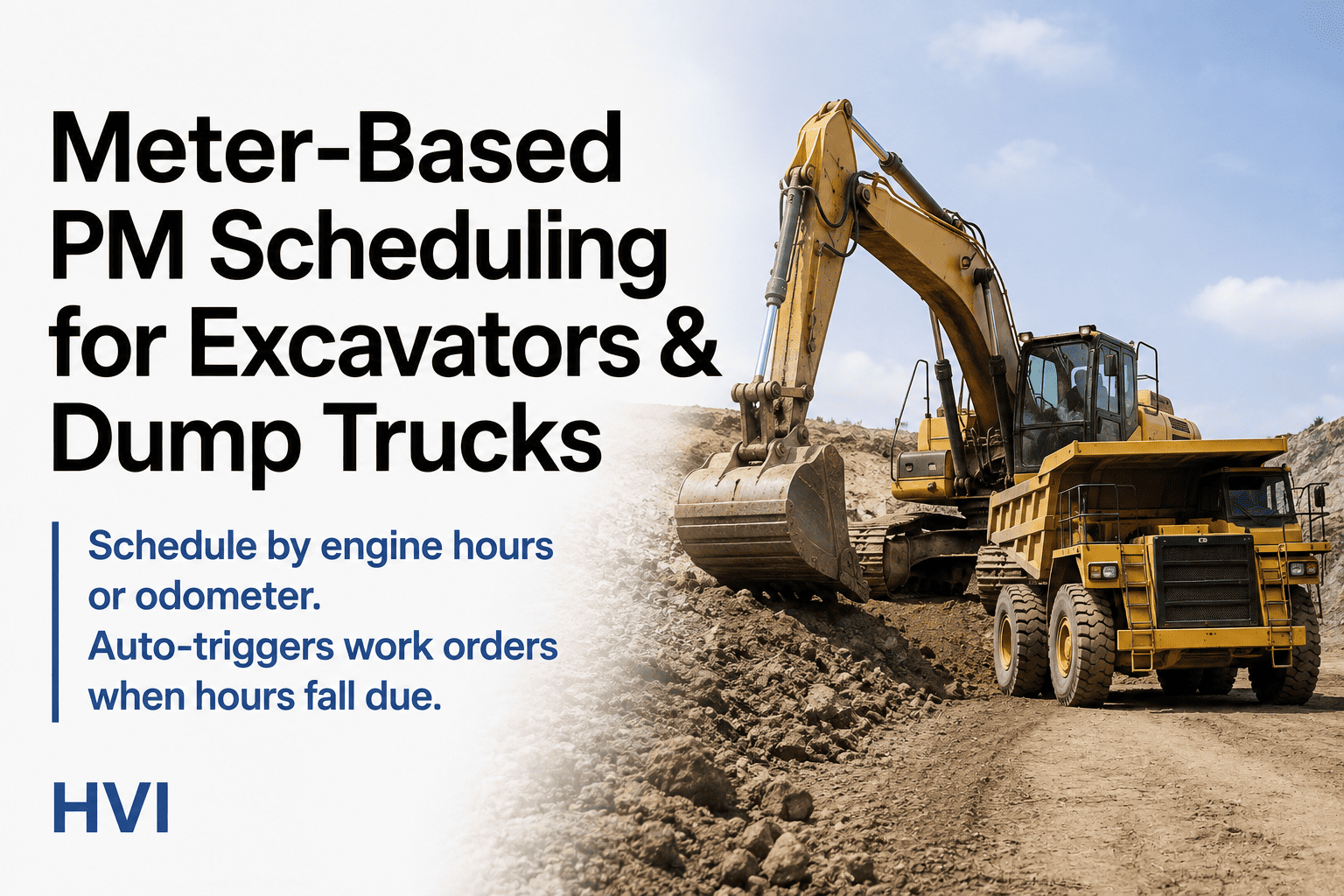
An excavator's engine hours tell a truer story than its calendar age ever will. A Tata Hitachi or Komatsu machine run hard on a mining bench hits its 250-hour service in barely three weeks, while the same model idling on a light site might take two months. Scheduling by date alone gets both of these wrong. HVI's meter-based PM scheduling reads the number that actually matters, hours or kilometres, and triggers the work order the moment it comes due.
Auto-Trigger Work Orders the Moment Excavator and Dump Truck Hours Fall Due
Every OEM, whether it's Tata Hitachi, BEML, Komatsu, or another brand running in your fleet, publishes hour-based service intervals for a reason: components wear on usage, not on the calendar. HVI reads each machine's hour meter or odometer automatically, tracks it against the correct interval ladder for that model, and fires a fully specified work order the instant the threshold is reached, so the person deciding when a machine gets serviced is the meter itself, not whoever remembered to check it last.
Two Machines, Same Age, Completely Different Wear
Picture two identical excavators bought the same month for two different sites. One works a mining bench flat out, twelve hours a day, six days a week. The other sits on a construction project that only needs it three or four hours a day. A calendar-based schedule treats them the same and gets both wrong. A meter-based schedule treats them exactly as differently as their engines have actually been used, which is the only fair way to protect either machine.
Heavy-Use Machine
Hits 250 hours in roughly three weeks on a mining bench. A monthly calendar check misses this entirely, letting the machine run 100 hours or more past its filter change.
Light-Use Machine
Might take two months to reach the same 250 hours on a smaller site. A rigid monthly service schedule pulls it in for work it doesn't need yet, wasting technician time and parts.
Mixed Fleet
Most operators run both types side by side. Without meter-based tracking per asset, someone has to manually work out which machine is actually due, every single week.
Every OEM Service Interval Is Additive, Not Standalone
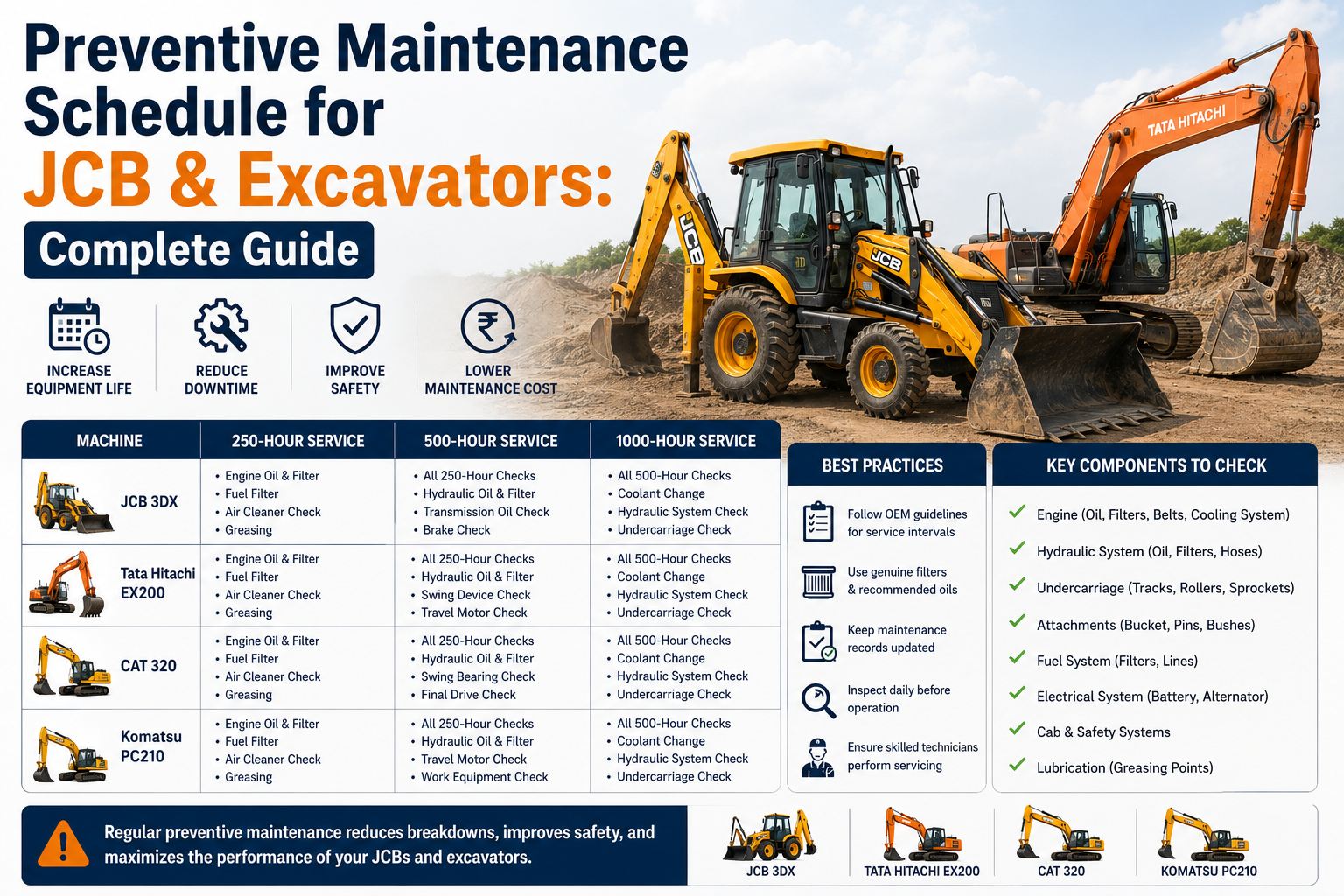
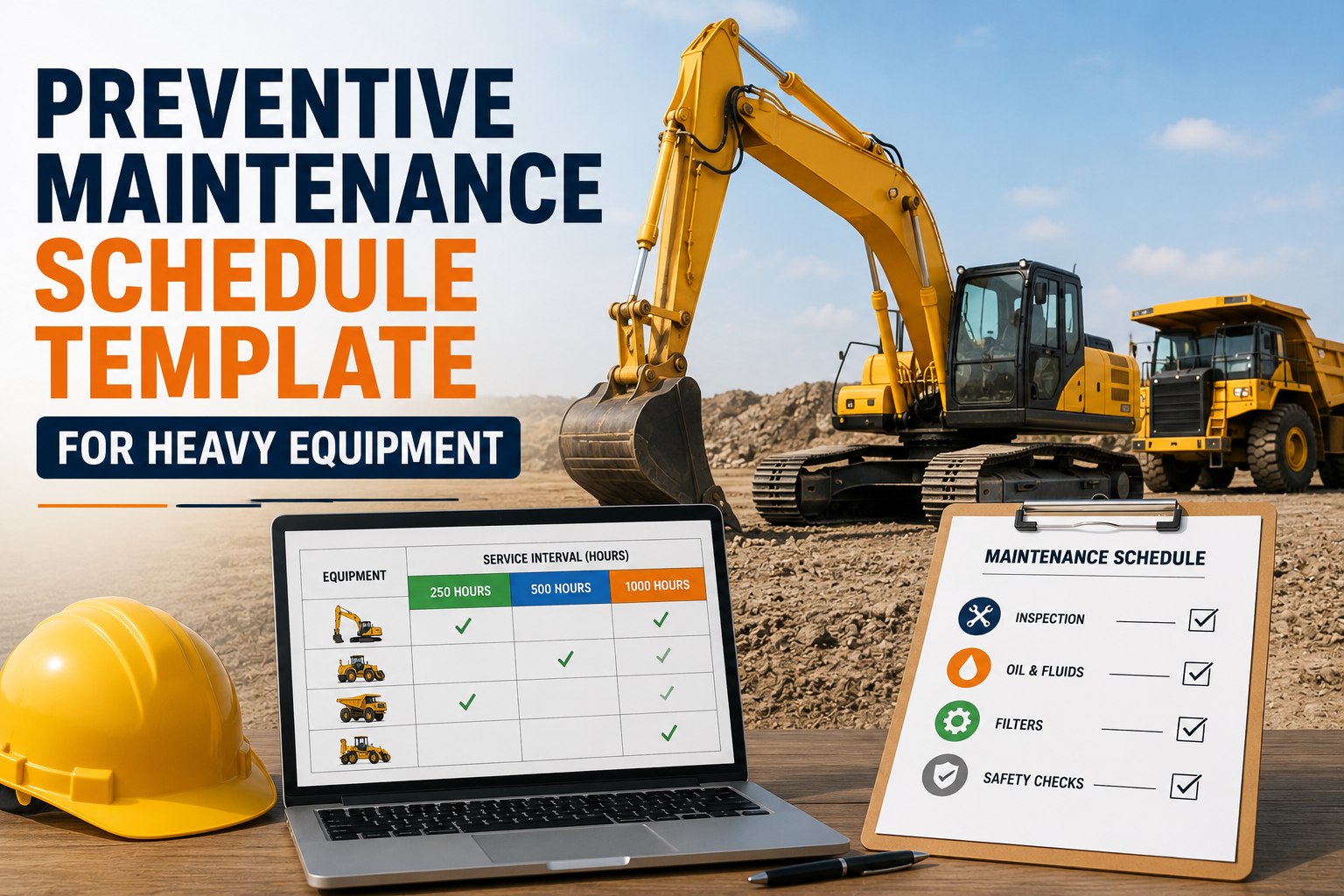
Tata Hitachi, Komatsu, and most other excavator and dump truck manufacturers structure their service intervals the same way: 250, 500, 1,000, and 2,000 hours, with each tier building on the one before it. The 500-hour service isn't a separate list, it's every 250-hour task plus the additions specific to 500 hours. Skip a 250-hour service and the 1,000-hour tier doesn't compensate for it, the risk simply carries forward. HVI tracks each machine's position on this ladder automatically and generates the correct combined task list every time, so nothing gets left out because a tier was rushed.
Routine Service
Engine oil and filter change, grease all pin points, visual inspection of hoses and belts, fluid level checks across the machine.
250 Hr Tasks Plus
Hydraulic filter replacement, oil sampling for wear metals, track tension check and adjustment on crawler machines.
500 Hr Tasks Plus
Full major service with diagnostic scan, fuel filter replacement, detailed inspection of belts, hoses, and electrical connections.
1,000 Hr Tasks Plus
Comprehensive audit including undercarriage measurement, swing bearing inspection, and full structural check of boom and arm.
Exact tasks vary by model
The specific list at each interval depends on the machine, whether it's a compact excavator or a large mining dump truck, and the manufacturer's operator manual for that serial number range remains the definitive source. HVI's schedules are built to mirror that structure per model, not applied as one generic list across every machine in the fleet.
The Same 250-Hour Interval Arrives at Very Different Speeds
How often a service interval actually comes due depends entirely on how many hours a machine racks up, and mining and construction fleets run at very different paces. This is exactly why hour-based tracking matters more as fleet size and site variety grow.
| Site Type | Typical Annual Hours | 250 Hr Interval Frequency |
|---|---|---|
| Mining, heavy-use bench operation | 5,000 to 7,000 hours a year | Roughly every two to three weeks |
| Construction, standard site work | 1,500 to 2,500 hours a year | Roughly every five to eight weeks |
| Light-duty or standby equipment | Under 1,000 hours a year | Every few months, tracked by meter not date |
Dust, heat, vibration, and sustained maximum load on a mining site accelerate component wear well beyond what a construction site puts a machine through, which is why many operators tighten OEM intervals rather than simply following them as published. HVI lets you configure a shorter interval per model or per site without losing the additive tier structure underneath it.
Let Every Machine's Hour Meter Set Its Own Schedule
Configure the correct 250/500/1,000/2,000-hour ladder for each excavator and dump truck model in your fleet, and HVI generates the combined task list automatically every time a tier is reached.
Hour-Based Records That Hold Up Under DGMS and Factories Act Review
An auditor reviewing mining or plant equipment doesn't just want to know a service happened, they want to see it happened at the correct hour reading, with the correct combined task list for that interval tier. A manually logged register makes this hard to prove after the fact. HVI ties every completed work order to the exact meter reading it was triggered at, so the record itself demonstrates the interval was respected.
DGMS
Mining equipment service history tied to hour meter readings at each interval, ready for inspection without reconstructing a timeline from memory.
Factories Act
Plant machinery maintenance intervals tracked against actual usage hours, satisfying statutory inspection timing requirements by default.
CMV Rules
Odometer-based service records for dump trucks and commercial vehicles, kept current so fitness renewal never depends on a paper trail search.
Meter Data That Flows Into SAP, Oracle, and Tally Without Manual Entry
Fleet managers get a live dashboard showing exactly where every excavator and dump truck sits on its interval ladder, across every site at once. Operators get a mobile checklist that already knows the correct combined task list the moment it opens. Finance teams get parts and labour costs per interval flowing straight into the systems they already reconcile against, without a second data entry step.
Meter-Based PM Scheduling: Frequently Asked
Does HVI support the specific interval structure for Tata Hitachi, BEML, and Komatsu machines?
Yes. HVI's scheduling engine is built around the additive 250/500/1,000/2,000-hour tier structure that these and most other major OEMs use, and the specific task list at each tier can be configured per model to match the operator's manual for that machine. This means a Tata Hitachi excavator and a BEML dump truck on the same fleet can run correctly different task lists at the same hour interval.
How does HVI read hour meter or odometer data without manual entry?
Where a machine has telematics or an OEM monitoring system already fitted, HVI can sync hour readings automatically. Where it doesn't, operators log the reading through the mobile app as part of the daily pre-shift check, and that single entry updates the machine's position on its interval ladder immediately, rather than sitting in a separate paper log that has to be cross-checked later.
What happens if a machine's hours jump unexpectedly between readings?
If a machine crosses an interval threshold between one logged reading and the next, HVI flags the service as due immediately based on the latest reading rather than waiting for the next scheduled check-in. This matters most on mining sites where a machine can log 40 or 50 hours in just a few days of heavy use, and a delayed reading could otherwise let the interval slip unnoticed.
Can construction and mining machines on the same fleet run different interval rules?
Yes, each asset is configured independently, so a mining excavator running 5,000 to 7,000 hours a year can carry a tightened interval to account for dust and heavy load, while a lighter construction machine on the same account follows the standard OEM schedule. You can review and adjust these settings anytime through the HVI dashboard.
Does meter-based scheduling replace the OEM operator's manual?
No, the operator's manual for a specific model and serial number range remains the definitive source for exact fluid specifications and torque values. HVI's role is to track hours automatically, apply the correct interval structure, and generate the work order at the right time, so the manual's requirements actually get executed on schedule instead of drifting. Our India team can walk through how this maps to your specific fleet during a demo call.
Stop Guessing Which Machine Is Actually Due for Service
Configure the correct hour-based interval ladder for every excavator and dump truck in your fleet, and let HVI trigger the work order the moment each meter crosses its threshold.