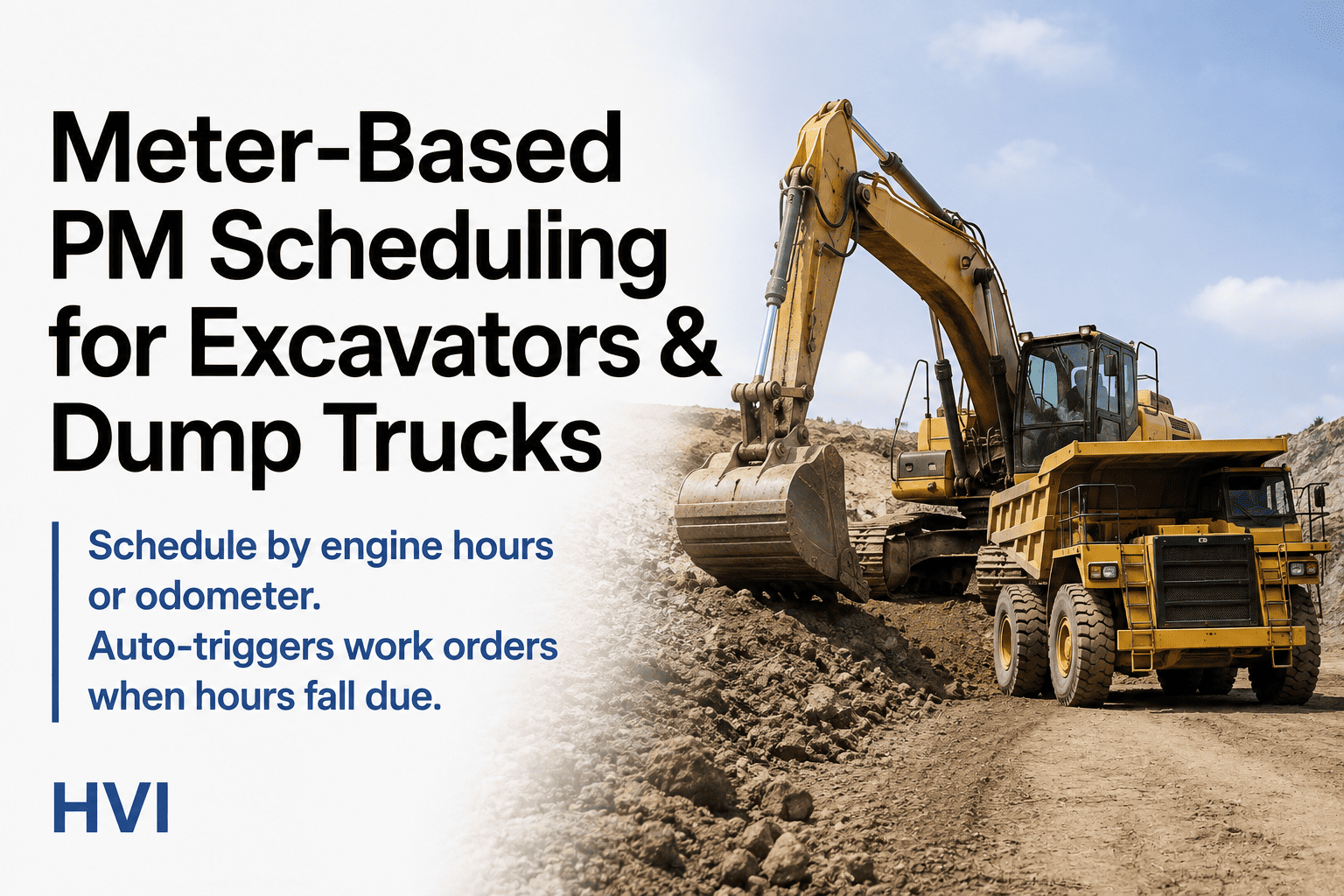
Excavators and dump trucks in Indian mines follow engine hours, not calendar dates. A BEML 100T dumper in a Jharkhand coal mine clocks 600 hours monthly while the same model on a low-activity site may clock only 150. Calendar-based PM means either over-servicing or missing critical windows entirely. HVI tracks actual engine hours and odometer readings, automatically triggering maintenance tasks when your equipment hits exact hour thresholds. Start tracking equipment hours with HVI.
PM Scheduling by Actual Engine Hours — Not Guesswork
Trigger maintenance tasks, work orders, and compliance checks when your excavators and dump trucks hit exact hour-meter thresholds. Built for Tata Hitachi, BEML, Komatsu, and L&T fleets.
Why Calendar-Based PM Destroys Excavator and Dump Truck Reliability
Hour Accumulation Varies Wildly Across Sites
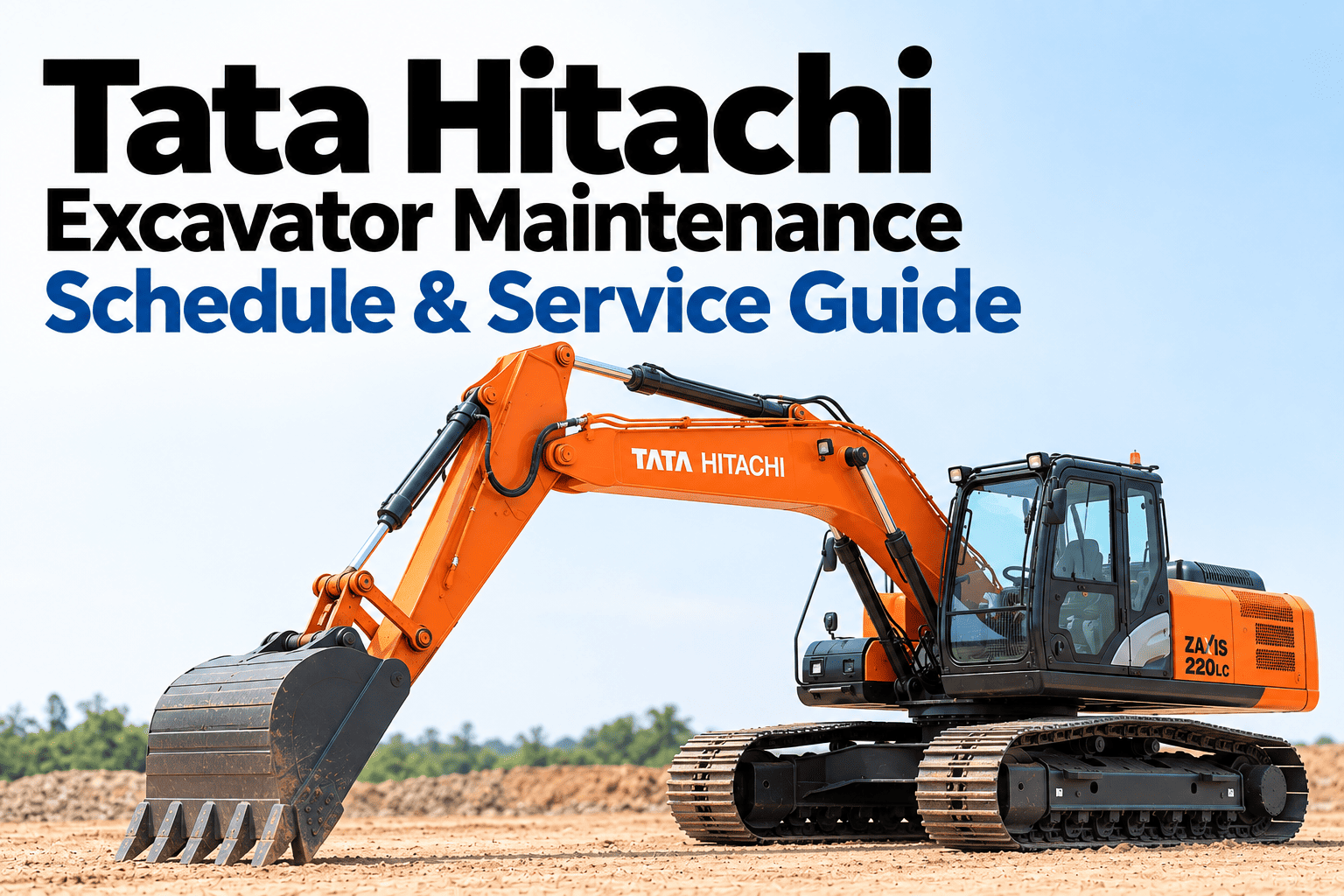
A Tata Hitachi ZX210LC on a Delhi metro project runs 18 hours daily, hitting 500 hours in under 30 days. The same model on a Bengaluru layout runs 6 hours daily, taking 80 plus days. Monthly calendar PM over-services one and critically under-services the other.
Mining Dumpers Outpace Every Calendar Schedule
BEML 100T and 190T dumpers in Coal India SECL and NMDC Bailadila run continuous three-shift cycles accumulating 500 to 600 hours per month. A quarterly schedule means 1,500 to 1,800 hours between services.
No Trigger Mechanism in Manual Systems
With Excel or paper, there is no automatic alert when a machine crosses a threshold. The maintenance team discovers an overdue service only during a breakdown investigation. By then the damage has already occurred.
Multiple Meter Types Create Confusion
Excavators track engine hours. Dump trucks track both hours and kilometres. Some tasks are hour-based, some kilometre-based, some calendar-based. Manual systems cannot reconcile three trigger types simultaneously.
How HVI Meter-Based PM Scheduling Works
Set Hour Thresholds Per Machine
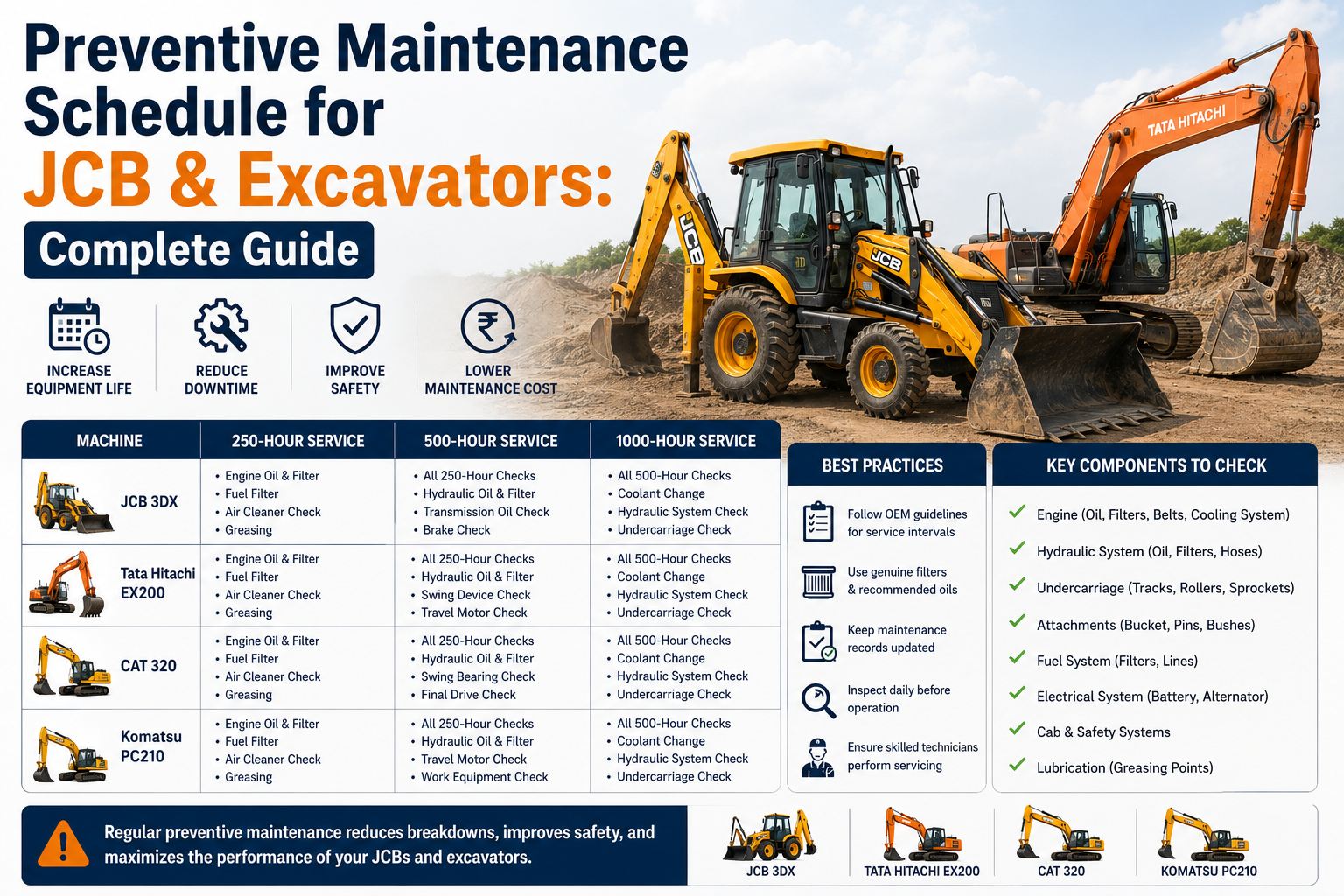
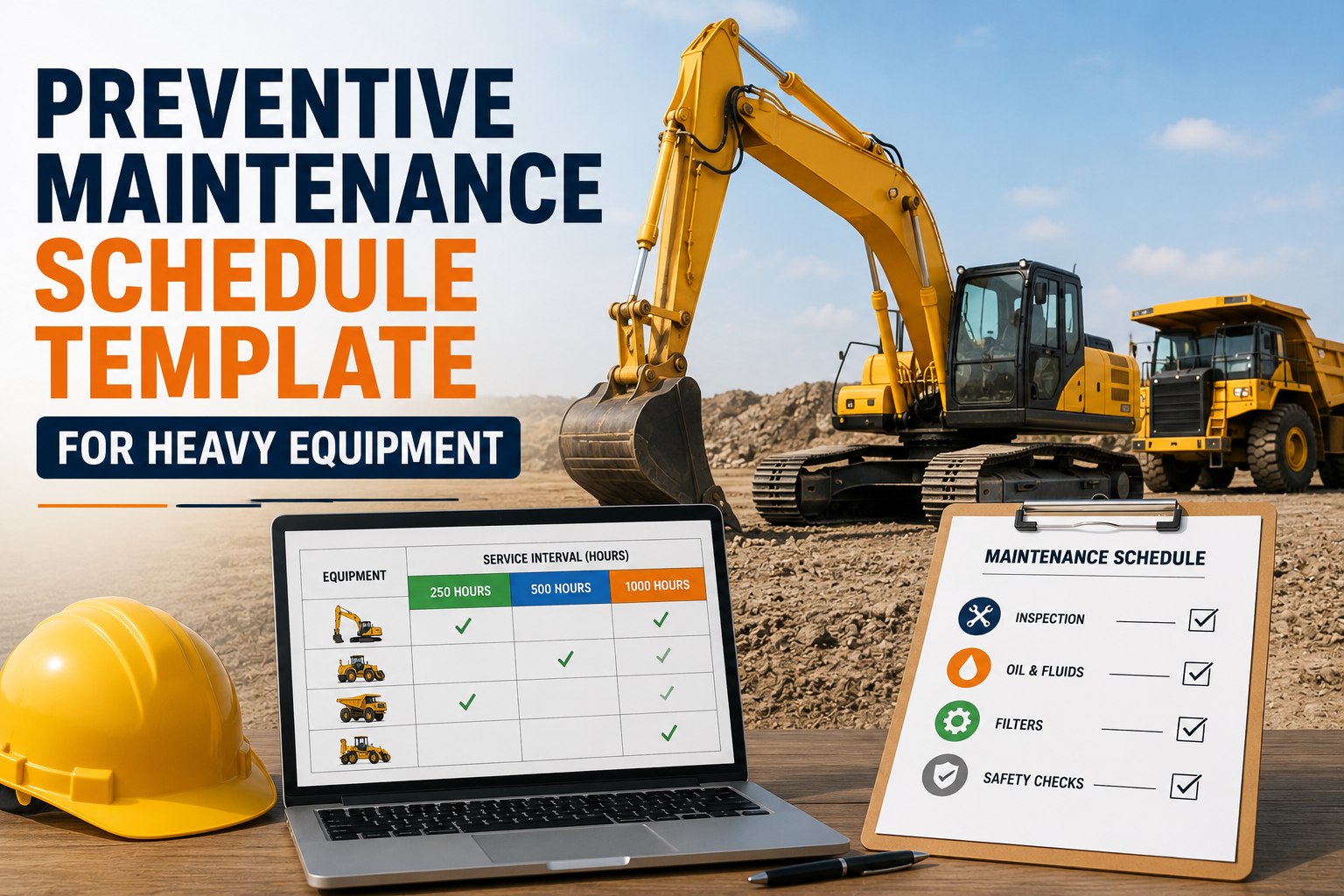
A Komatsu PC200-8 gets engine oil at 500 hours, hydraulic filters at 1,000 hours, undercarriage inspection at 2,000 hours. Each machine carries its own schedule regardless of fleet averages.
Capture Meter Readings Daily
Operators submit hour-meter and odometer readings through the pre-shift checklist. Readings are validated against historical consumption rates — impossible jumps get flagged immediately.
Auto-Trigger PM Tasks and Work Orders
When a reading crosses a threshold, HVI generates the PM task, assigns it to the mechanic, and creates a work order with the full task list and required parts.
Escalate Overdue Services Automatically
If a task is not completed within the defined window, the system escalates to the site supervisor, then to the maintenance manager. DGMS tasks get a red-flag alert.
OEM Hour Intervals Pre-Configured for Indian Machines
Capabilities Built for Indian Mining and Construction Realities
Dual Trigger: Hours Plus Calendar Running Simultaneously
Engine oil is hour-based, coolant is calendar-based. HVI tracks both for every machine and fires whichever threshold is reached first — an idle machine still gets its 24-month coolant change on time.
Hour-Meter Reading Validation Against Historical Rates
The system compares each new reading against the machine's historical hourly consumption. Impossible jumps are rejected and the operator is asked to re-enter, preventing data corruption.
PM Task Bundling to Minimise Production Downtime
When multiple services fall due within a 50-hour window, HVI bundles them into a single maintenance event. One production stoppage instead of three separate ones.
DGMS Compliance Tasks Embedded in the PM Schedule
DGMS Regulation 106 brake and steering tests are tagged to the hour-based schedule and generate audit-ready reports with inspector details and pass-fail results.
Remaining Hours Dashboard for Instant Prioritisation
Every machine shows current hours, next PM task, and hours remaining. Green means safe, amber means approaching due, red means overdue — prioritise in seconds.
Multi-Site Hour Aggregation for Moving Equipment
Dump trucks moving between sites aggregate readings across all locations into one record with no gaps in the PM timeline or lost data between transfers.
Meter-Based PM vs Calendar-Based PM: Real Indian Scenario
Frequently Asked Questions
What happens if an operator forgets to enter the hour-meter reading?
HVI sends automatic reminders to the operator and supervisor if a daily reading is missed. The system also calculates estimated current hours based on average daily usage to flag if any PM thresholds may have been crossed. Set up automated reading reminders.
Can I set different PM intervals for the same model on different sites?
Yes. A Komatsu PC200-8 on a high-dust Rajasthan site can have a 350-hour oil interval while the same model on a normal site keeps 500 hours. The system applies the correct schedule based on current site assignment.
How does it handle odometer and hour-based services on the same dump truck?
Both triggers run in parallel. Tyre rotation fires at 15,000 km, engine oil at 250 hours, coolant at 24 months. Whichever is reached first generates its PM task independently. See dual-trigger scheduling in a demo.
Can I defer a PM task if the machine is critical to production?
Non-critical tasks can be deferred with a documented reason and maximum window. DGMS-tagged safety tasks cannot be deferred without formal risk acknowledgement to protect against compliance violations during audits.
Does this work for older machines without electronic hour meters?
Operators read mechanical dials and enter values through the same digital flow. For machines with no meter, HVI calculates estimated hours from daily operating hours entered by the operator. Start with manual entry and upgrade later.
Stop Servicing by Calendar. Start Servicing by Hours.
Every missed service window is a bet against a hydraulic pump, a turbocharger, or a final drive. HVI ensures your excavators and dump trucks get serviced at exactly the right hour — automatically.