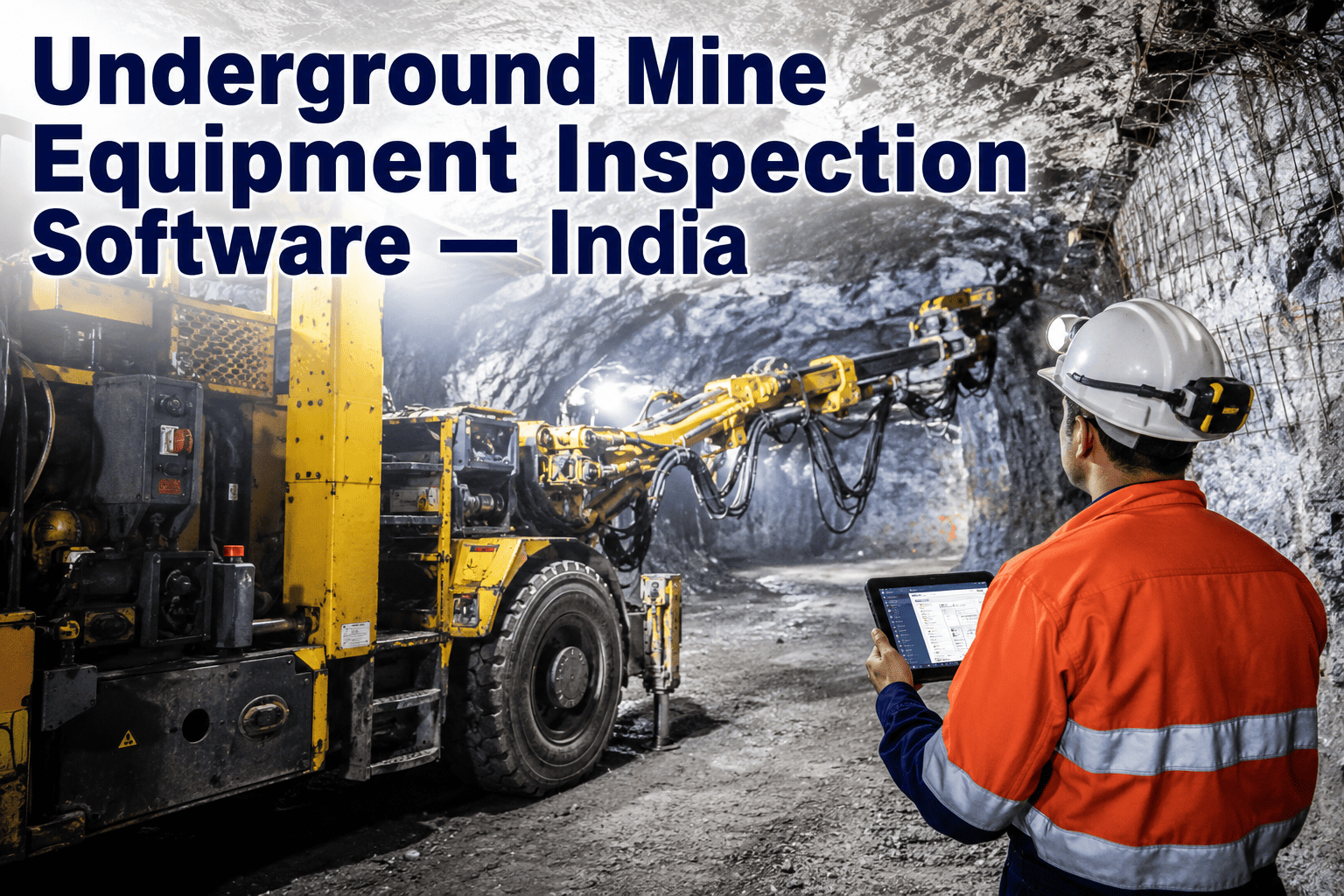
If you manage equipment at a coal mine, open-cast quarry, or underground mineral project in India, you know that equipment inspection is not optional — it is a regulatory and safety imperative. The Directorate General of Mines Safety (DGMS) mandates pre-shift inspections for all mining machinery, and failure to maintain proper inspection records can result in show-cause notices, halted operations, and serious liability in the event of an accident. Yet most Indian mining operations still manage these inspections through paper registers, WhatsApp photos, and handwritten shift logs. Mining equipment inspection software changes this completely — and in 2026, the gap between mines using digital inspection tools and those still on paper is growing fast. This guide covers the top features that matter most when evaluating mine inspection software, with specific reference to Indian DGMS requirements, CIL operations, and the harsh digital realities of underground and open-cast sites. Start your free HVI trial to see how inspection-first software works on mining fleets.
Mining Edition — Updated 2026
Mining Equipment Inspection Software: Top Features You Need in 2026
From DGMS compliance to real-time defect tracking — here is what separates the right mining inspection platform from a generic checklist app. Built for Indian coal, mineral, and open-cast mining operations.
DGMS Compliance
Offline Capability
Real-Time Reporting
Work Order Automation
Multi-Site Management
Why Mining Equipment Inspection Is Different From Other Industries
Mining operations run under a completely different risk and regulatory environment compared to highway construction or urban infrastructure. Machines operate underground in confined spaces, on steep haul roads, in blast-adjacent zones, and under constant dust and vibration stress. A single failed brake on a 50-tonne dumper on a mine haul road, or a hydraulic failure on an underground LHD loader, can kill people. This is not theoretical — the DGMS Annual Statistical Report for 2022-23 recorded 241 fatal accidents in Indian mines, with machinery and transport accidents accounting for a significant share.
According to the Ministry of Mines, India operates over 1,200 coal mines and more than 3,500 non-coal mines. Coal India Limited alone manages 350+ mines across subsidiaries including SECL, BCCL, MCL, ECL, NCL, and WCL. The scale of equipment involved is enormous — CIL operates more than 30,000 pieces of heavy mining equipment including dumpers, dozers, draglines, shovels, drills, and underground LHD loaders. For organisations at this scale, paper inspection registers are not just inefficient — they are a compliance liability and a safety failure waiting to happen.
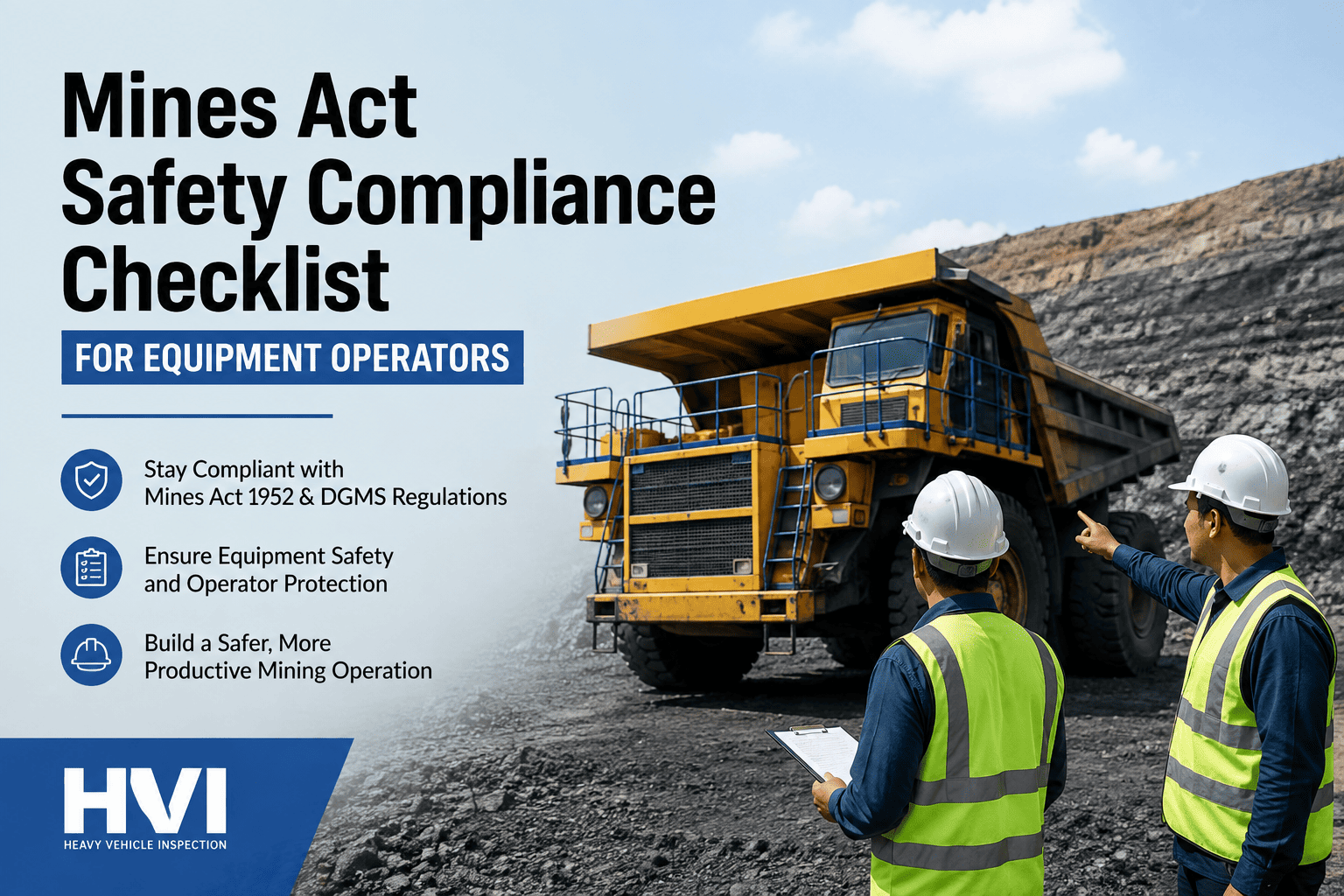
The Mines Act 1952 and the DGMS regulations require that every piece of mining machinery be inspected before each shift, that inspection records be maintained and available for inspection by DGMS officers, and that defects be reported immediately and machinery taken out of service until repaired. Mining equipment inspection software must be built to meet these specific requirements — not adapted from a generic maintenance tool designed for factories or office facilities.
1,200+
coal mines operating in India (Ministry of Mines)
30,000+
heavy equipment units operated by Coal India Limited
241
fatal mine accidents in India in 2022-23 (DGMS Annual Report)
68%
of Indian mining sites still use paper-based inspection registers (CII, 2023)
Top Features to Look For in Mining Equipment Inspection Software
Not all inspection platforms are suitable for mine sites. Here are the features that genuinely matter for Indian mining operations — evaluated against the DGMS regulatory framework, the operational realities of coal and mineral mines, and the connectivity challenges of underground and remote open-cast sites.
01
DGMS-Aligned Pre-Shift Inspection Checklists
Critical — Non-Negotiable for Indian Mines
Under DGMS regulations, every mining machinery operator must complete a pre-shift examination and certify the machine is in safe working condition before operating it. The inspection software you choose must support structured digital checklists that match DGMS-prescribed examination points for each machine category — dump trucks, surface miners, underground LHD loaders, drilling rigs, conveyors, and winding engines all require different examination protocols. The checklist must capture the operator's digital certification, timestamp the inspection to the second, and lock the record so it cannot be altered after submission. A generic form builder cannot replicate this — you need a platform where DGMS-aligned inspection logic is built in, not configured from scratch by your IT team.
Machine-category-specific checklists (dumper vs LHD vs drill rig)
Operator digital signature and certification capture
Immutable, time-locked inspection records
Shift-wise inspection scheduling and compliance tracking
02
True Offline Mode for Underground and Remote Sites
Essential — Most Mine Sites Have Zero or Patchy Network
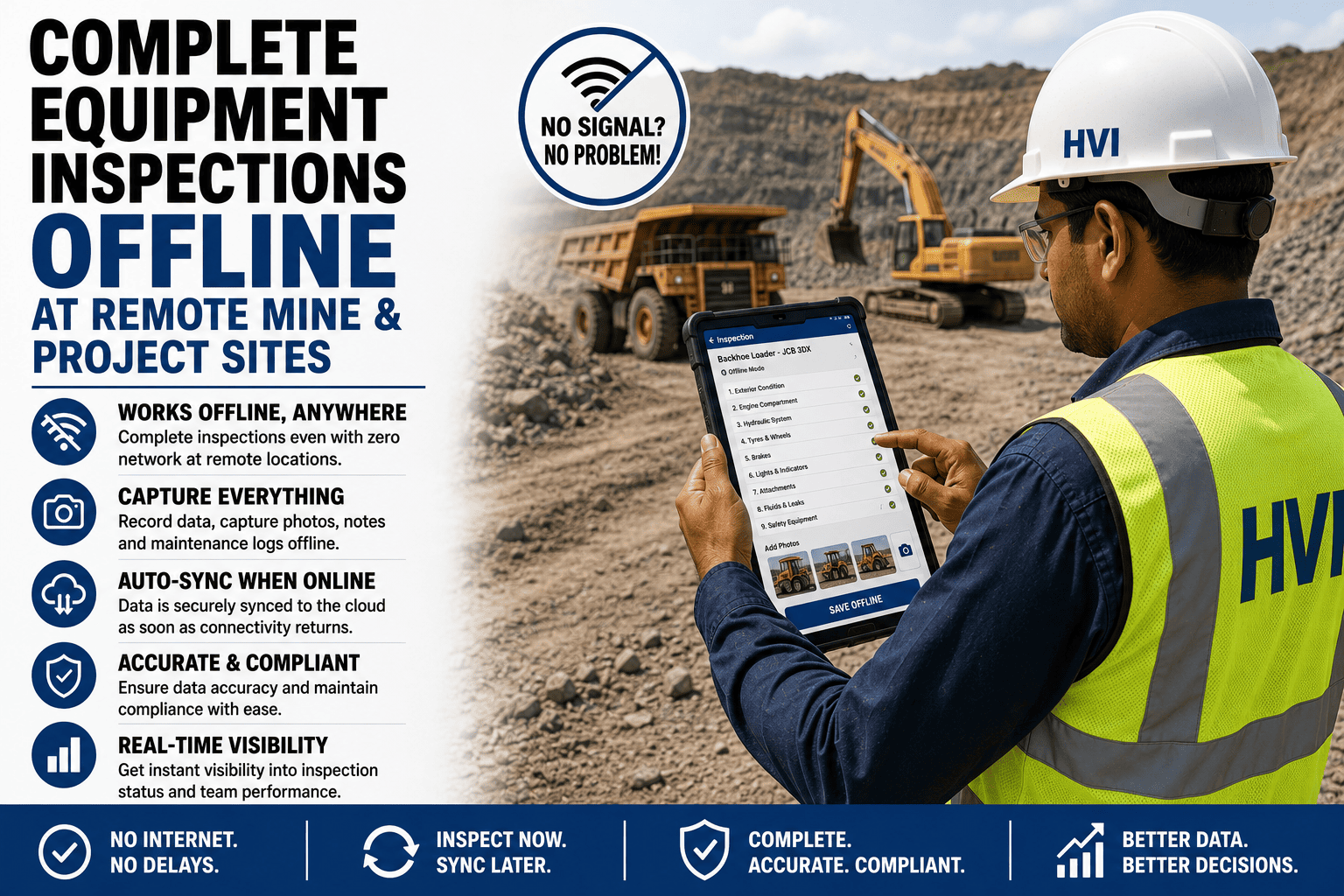
Underground mines have no mobile network below surface. Remote open-cast mines in states like Odisha, Jharkhand, Chhattisgarh, and Meghalaya frequently have poor or no data connectivity even on surface. Any mine inspection software that relies on a live internet connection is unusable in these conditions. True offline mode means the app stores inspection data, photos, GPS coordinates, and operator inputs locally on the device and synchronises everything automatically the moment any network connection becomes available. This is fundamentally different from apps that partially cache data — the entire workflow from checklist start to defect flagging to supervisor notification must complete fully offline, with sync happening transparently in the background. Look for platforms that explicitly state and demonstrate full offline capability, not just "offline-friendly" or "limited offline" functionality.
Complete inspection workflows function with zero network
Photos and GPS data stored locally until sync
Automatic background sync when any connection returns
Works on basic Android devices common among mine operators
03
Photo-Verified Defect Capture with GPS Timestamp
High Priority — Protects the Mine Against Liability
In any DGMS inquiry or accident investigation, the quality of your inspection records determines whether your mine is found compliant or negligent. Text-only defect records are easy to dispute. Photo evidence with a GPS location and an exact timestamp is nearly irrefutable. Mining equipment inspection software must allow operators to attach one or more photos to any defect flagged during a pre-shift or periodic inspection, with the photos automatically tagged with location coordinates and time. This creates an evidence trail that satisfies DGMS inquiry standards and provides your mine management with unambiguous documentation of the machine's condition at the moment of inspection. For Indian mines, where proximity to Inspection Officers under the DGMS regional offices means unannounced visits are common, having this documentation instantly available is not just useful — it is critical.
Multiple photos per defect, embedded in inspection report
Automatic GPS coordinate and timestamp on every photo
Immutable photo records — cannot be deleted after submission
Instant PDF report generation including all photos
04
Automatic Defect-to-Work-Order Escalation
High Priority — Closes the Loop Between Inspection and Repair
In too many Indian mines, a defect flagged during a morning inspection gets verbally communicated to the workshop, forgotten through the shift, and the machine goes back into service the next day without repair. DGMS regulations explicitly require that machines with identified defects be taken out of service until repaired — but without a system that enforces this, it depends on individual discipline. Mining inspection software with automatic defect-to-work-order escalation means that the moment an operator flags a defect on any machine, a repair work order is automatically created in the maintenance system, the workshop supervisor is notified, and the machine is flagged as unavailable for the next shift. The inspection app becomes a hard checkpoint that prevents a defective machine from re-entering service without documented repair. This is the single feature that most directly prevents accidents caused by known but unrepaired equipment defects. Try HVI free to see automatic defect-to-work-order escalation in action.
Defect flagged → work order auto-created, no manual step
Workshop supervisor notified instantly via app
Machine locked from deployment until repair confirmed
Full repair closure documented against original defect record
05
Real-Time Dashboard for Mine Management and Safety Officers
High Value — Gives Management Visibility Without Site Visits
A Mine Manager, Safety Officer, or DGMS Inspector who needs to verify inspection compliance today must either physically visit the site or wait for someone to compile a report from paper registers. Mining inspection software with a real-time dashboard eliminates this delay entirely. Mine management can see from any device — in the mine office, at regional headquarters, or on a phone in Delhi — exactly which machines have been inspected in the current shift, which defects are open, which work orders are pending, and which machines are cleared for operation. For CIL subsidiaries managing multiple mines across a region, this visibility across sites simultaneously is transformative. Safety Officers can verify morning shift inspection completion by 7 AM from their desk rather than by calling each mine supervisor individually.
Live fleet inspection status per shift, per mine
Open defect and work order tracker across all equipment
Multi-site roll-up view for regional managers
Mobile-accessible — works on any smartphone or tablet
06
Audit-Ready Report Export for DGMS Inspections
Essential — Must Produce Records That Satisfy Statutory Requirements
When a DGMS Inspection Officer visits a mine, they can ask for inspection records going back six months or more. Under the Mines Act 1952, these records must be maintained and produced on demand. Paper registers get damaged, go missing, or are simply incomplete. Mining inspection software must generate audit-ready reports that can be exported as PDFs instantly — covering any date range, any machine, any shift — with operator details, inspection points, defect records, and repair closure all in one document. The best platforms allow you to filter by machine number, inspection type, defect category, or date range and produce a complete compliance package in under two minutes. This is the difference between a confident DGMS audit response and a panicked scramble through filing cabinets.
Instant PDF export for any machine, any date range
Complete records including photos, timestamps, operator ID
Filter by machine, shift, defect type, or inspector
Cloud storage — records never lost, never damaged
07
Preventive Maintenance Scheduling by Hours, Shifts, and Calendar
Important — Reduces Breakdown Frequency on Mining Equipment
Mining equipment runs around the clock across three shifts, seven days a week. Engine hours, not calendar days, are the primary maintenance trigger for most mining machinery — a 100-hour service on a dumper engine is due when the hourmeter hits the threshold, not because thirty days have passed. Mining CMMS and inspection platforms should support maintenance scheduling triggered by engine hours, shift counts, calendar intervals, or a combination of all three. When a machine's service interval is approaching — say, 90 hours out of a 100-hour service cycle — the system should alert the maintenance supervisor automatically, so the service can be planned without disrupting production. This proactive approach dramatically reduces the frequency of emergency breakdowns and unplanned downtime, which is the single largest source of production loss in Indian coal and mineral mines.
PM triggers by engine hours, shift count, and calendar
Advance alerts when service intervals are approaching
Service history tracked per machine number
Parts consumption and cost tracked per work order
DGMS Compliance: What Your Inspection Software Must Cover
Many mine operators ask whether a generic inspection app is sufficient for DGMS compliance. The answer is: it depends on what you configure it to do, but the configuration risk is significant. DGMS regulations specify not just that inspections must happen, but the format and content of records, the requirement that operators certify their examination, and the obligation to maintain records for statutory periods. Here is a quick reference for what your mining inspection software must capture to satisfy DGMS requirements under the Coal Mines Regulations and Metalliferous Mines Regulations.
| DGMS Requirement | What the Software Must Do | Risk if Missing |
|---|---|---|
| Pre-shift operator examination | Structured digital checklist per machine type, operator login, and timestamp | Regulatory violation — show-cause notice |
| Operator certification of safe condition | Digital signature or confirmed acknowledgement before machine deployment | Statutory non-compliance — potential prosecution |
| Defect reporting and machine withdrawal | Defect flag triggers automatic work order and machine status lock | Machine operated with known defect — accident liability |
| Maintenance of inspection records | Cloud-stored, date-filtered, exportable records for any inspection period | Unable to produce records during DGMS inspection — penalty |
| Periodic statutory inspections | Scheduled inspection reminders for quarterly, half-yearly, and annual checks | Missed statutory inspection — licence risk |
| Safety officer oversight | Real-time dashboard showing inspection completion across all equipment | Safety officer cannot verify compliance without site visit |
Mining Equipment Inspection Software: Top Features You Need in 2026
HVI is configured for mining fleet inspection requirements — shift-wise checklists, defect escalation, and audit-ready PDF reports for DGMS compliance reviews.
Common Mining Equipment Types and Their Inspection Needs
Mining fleets in India are diverse — a CIL open-cast mine operates a completely different equipment mix from a private underground iron ore mine. Your inspection software must handle all of these asset types with appropriate checklists. Here is how the key equipment categories used on Indian mine sites differ in their inspection requirements.
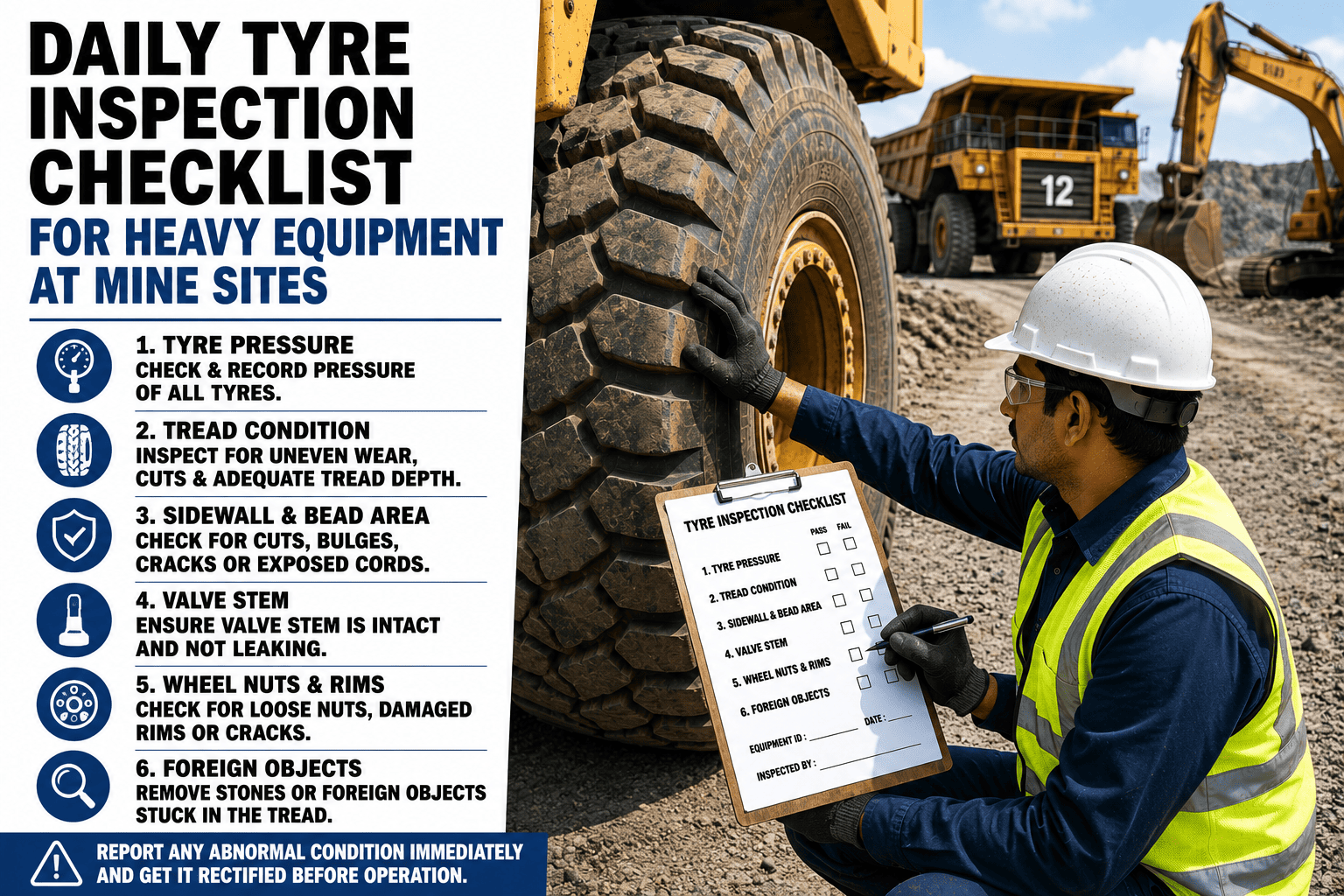
50T to 120T dumpers are the highest-risk vehicle on any open-cast mine. Inspection must cover brake system (service and parking), tyre condition and pressure per position, dump body locking mechanism, steering, lights, and reverse camera. Engine hourmeter reading for PM tracking is mandatory.
Underground LHD loaders operate in confined tunnels where a hydraulic failure or steering loss has immediate fatal consequences. Inspection checklist must cover hydraulic system pressure, articulation joint pins, bucket teeth, tramming lights, fire suppression system status, and operator safety harness point.
Drilling rigs require inspection of the mast locking system, rotary head, feed chain condition, dust suppression system, and ground stability checks around the drill pad. Rod handling system and hydraulic levelling jacks are critical inspection points before each drilling pattern begins.
Surface miners from OEMs like Wirtgen and dozers from BEML and Komatsu require cutting drum condition checks, conveyor belt tension, undercarriage wear assessment, and blade/ripper point inspection. Track tension and idler condition are critical PM indicators that must be captured per shift.
Underground mine winding engines carry personnel and materials — a single failure can be catastrophic. DGMS mandates daily examination by a competent person before any use. Inspection must cover rope condition, drum braking system, depth indicator, safety devices, and load test records. This is one of the most strictly audited inspection categories in Indian mining.
Coal conveyor belts run continuously and must be inspected every shift for belt tracking, idler condition, belt splices, drive pulley alignment, take-up tension, and emergency pull-cord functionality. A missed belt inspection that results in a fire (from belt friction) is one of the leading causes of serious mine incidents in India.
Expert View: What a Mine Safety Officer Wants From an Inspection Platform
We manage equipment across three open-cast mine blocks in Odisha. Before we moved to digital inspection, my biggest challenge every morning was not knowing which machines had actually been inspected and which ones had a register entry filled retroactively. With a digital platform, when I open my phone at 6:30 in the morning, I can see exactly how many of our 47 machines have completed pre-shift inspection for the morning shift. I can see which operator submitted which inspection, at what time, and what defects were flagged. When a DGMS officer visited last year and asked for three months of inspection records for our fleet of dumpers, we produced a complete PDF report in four minutes. That kind of response was not possible before. For mine safety compliance, the issue was never that people did not know what to inspect — the issue was that there was no system enforcing it and no way to prove it happened. Digital inspection solves both problems simultaneously.
Paper Inspection Registers vs Digital Mining Inspection Software
The most common objection to switching from paper to digital inspection on Indian mine sites is that "the old system works." Here is a direct comparison of what actually happens with paper versus what happens with purpose-built mining inspection software.
Paper Inspection Register
Operators fill registers after the shift or at the gate — not during actual machine inspection
No photos — defect descriptions are vague or absent, easy to dispute in inquiry
Mine Manager and Safety Officer cannot verify inspection without visiting the site
Defect reported verbally — repair depends on who picks up the phone; often forgotten by next shift
Preparing records for a DGMS inspection takes days — registers may be incomplete or missing
Machine goes back into service next shift with the same unrepaired defect
Digital Mining Inspection Software
Checklist is completed at the machine before startup — GPS coordinates prove location at time of inspection
Photos attached to each defect flag — irrefutable evidence for DGMS inquiry or insurance claim
Mine Manager sees all shift inspections in real time from any device — no calls, no site visits needed
Defect flagged → work order created automatically → workshop supervisor notified instantly via app
DGMS audit record for any machine, any period exported as PDF in under two minutes
Machine locked from next-shift deployment until repair is confirmed and documented
How HVI Supports Indian Mining Fleet Inspection
HVI — Heavy Vehicle Inspection — is a purpose-built equipment inspection platform that covers all the critical features required for Indian mining operations. It is not a generic form app or a factory maintenance tool adapted for mines. The platform is designed around pre-shift inspection workflows, defect-to-work-order automation, and DGMS-aligned documentation — with full offline functionality that works in underground and remote open-cast sites across Jharkhand, Odisha, Chhattisgarh, Rajasthan, and Meghalaya.
Mining companies using HVI can configure machine-specific inspection checklists for every equipment category in their fleet — from 85T Komatsu HD785 dumpers to Caterpillar 6020B shovels to BEML BD355 dozers. Operators complete their pre-shift examination on a basic Android phone, offline, with photo capture per defect. Any critical defect automatically creates a maintenance work order and flags the machine as unavailable for the next shift. Mine managers see inspection completion in real time. DGMS audit reports are generated with a single tap. Sign up for HVI and run your first mine site inspection within the hour.
Conclusion: Mining Equipment Inspection Software Is Now a Safety and Compliance Requirement
Indian mining has reached a point where paper-based equipment inspection is no longer defensible — not from a DGMS compliance standpoint, not from a safety performance standpoint, and not from an operational efficiency standpoint. With fatal accident rates in Indian mines still far above international benchmarks and DGMS increasing enforcement activity, mine operators who continue to rely on paper registers are carrying real legal and safety risk every single day.
The right mining equipment inspection software does not replace the skill of an experienced operator doing a thorough pre-shift examination — it enforces it, documents it, and makes the evidence available instantly to everyone who needs it. When the DGMS officer walks into your mine office unannounced, when a machine breakdown occurs and lawyers ask what inspection records exist, when your Mine Manager needs to know by 6 AM whether the morning shift can start safely — the answer should come from a system, not from a filing cabinet or a phone call to a supervisor.
Choose software built for mining, not adapted from a factory or office tool. Choose a platform with true offline capability, DGMS-aligned checklists, photo-verified defect capture, and automatic work order escalation. Start your free HVI trial and transform how your mine manages equipment inspection compliance.
Frequently Asked Questions
QIs mining equipment inspection software mandatory for DGMS compliance in India?
DGMS regulations under the Mines Act 1952 require that pre-shift inspections be conducted and records maintained — but they do not specify whether records must be digital or paper. However, digital records are significantly easier to maintain, produce on demand, and defend in an inquiry than paper registers. Mine operators using digital inspection software are also better positioned to demonstrate a systematic safety management approach, which is viewed favourably by DGMS during inspections. The practical question is not whether digital is mandatory, but whether paper records can realistically meet the standards DGMS expects — and for most mines managing 20 or more machines across multiple shifts, they cannot.
QCan inspection software work in underground mines with no network connectivity?
Yes — provided the software is built with true offline functionality. Platforms like HVI store all inspection data, photos, and GPS information locally on the operator's device and sync automatically when any network connection is available, including on surface. This means operators can complete their full pre-shift checklist underground, attach defect photos, and certify the machine without any network — all records sync the moment they emerge to surface. Not all inspection apps support this — many require at least periodic connectivity, which makes them unusable for underground operations.
QWhat mining equipment types does HVI support?
HVI supports all major mining equipment categories including open-cast dumpers and haul trucks, surface miners, dozers, graders, excavators, drilling rigs, underground LHD loaders, conveyor systems, and support vehicles. Inspection checklists are customisable per machine type and can be configured to match your specific OEM models — whether you run Komatsu, Caterpillar, BEML, Wirtgen, Volvo, or other equipment. The platform also supports mixed fleets where the same mine operates both on-road and off-road vehicles under different inspection templates.
QHow quickly can mining inspection software be deployed across multiple mine sites?
Cloud-native platforms like HVI can be deployed across multiple mine sites within days — not months. There is no hardware to install, no server to configure, and no IT team required. You set up your mine locations, add your equipment list with machine numbers and categories, configure your inspection checklists per machine type, add operator and supervisor accounts, and the system is ready. For a mine with 50 machines across two sites, initial deployment typically takes one to two days, with a brief orientation session for operators on how to use the app. The first inspection reports appear in the dashboard within minutes of the first operator completing a checklist.
QHow does mining inspection software help reduce equipment breakdown costs?
Digital inspection reduces breakdown costs through two mechanisms. First, structured pre-shift inspections catch developing defects — brake wear, hydraulic leaks, tyre damage, loose fasteners — before they escalate into full failures. A defect caught during inspection costs a few hours of planned repair time. The same defect missed during inspection and discovered during a breakdown costs days of unplanned downtime, emergency parts procurement, and often secondary damage to related systems. Second, the automatic work order system ensures defects are actually repaired before the machine goes back into service, rather than being verbally noted and forgotten. According to ICRA's infrastructure equipment outlook, unplanned downtime in Indian mining operations costs mine operators on average three to five times more than equivalent planned maintenance.
Ready to Digitise Mine Equipment Inspection?
Join mining fleet managers across India who have replaced paper inspection registers with HVI's digital platform — built for DGMS compliance, offline mine sites, and real-time safety visibility.
No credit card required. No hardware needed. Operational in under 10 minutes.