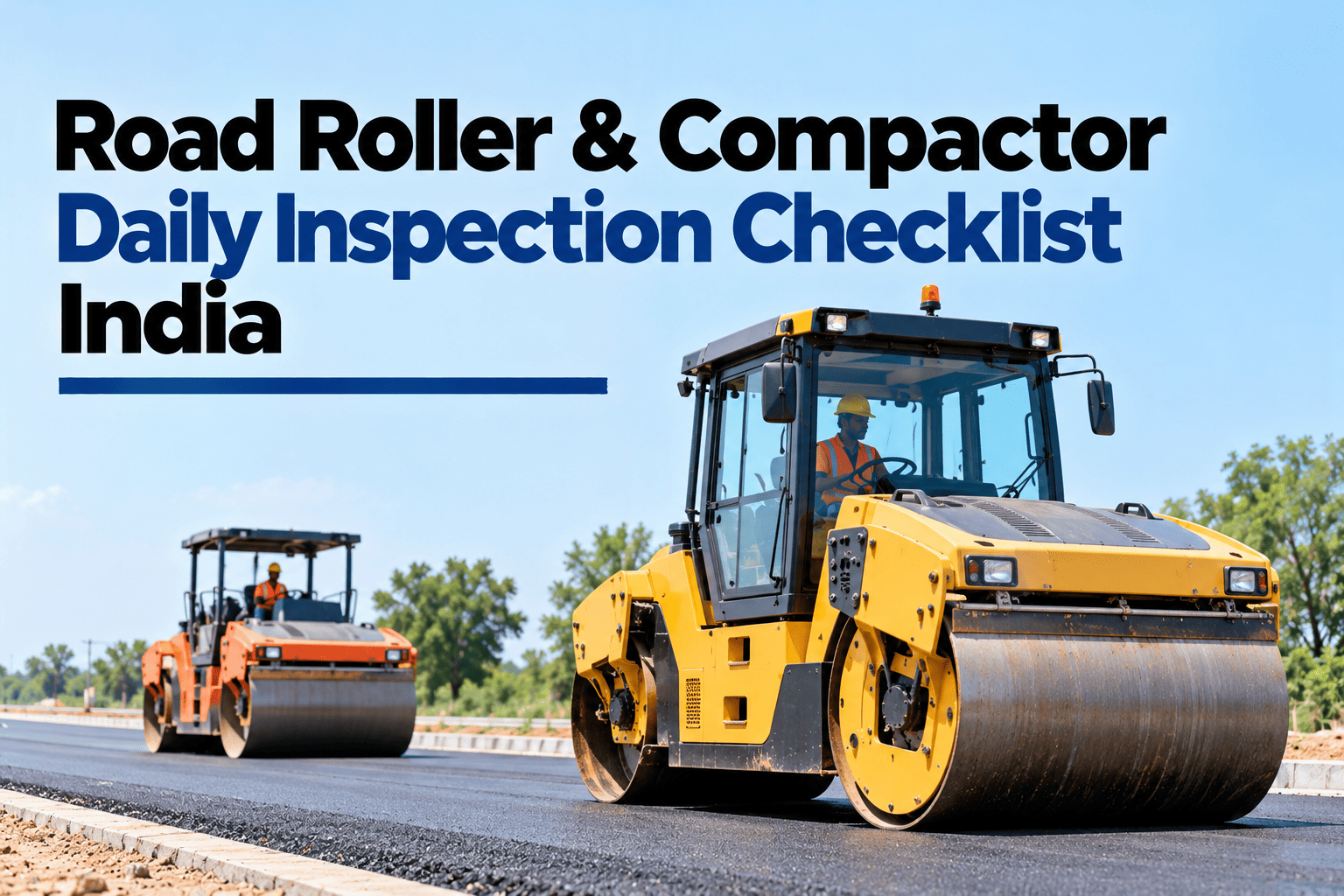
Road rollers and soil compactors work long hours on highway and building sites, often moving back and forth with little supervision. Because they look simple, their daily checks are easy to skip. Yet a stuck scraper can ruin an asphalt surface, a blocked water spray can let hot mix stick to the drum, and a roller tipping off an embankment edge without a working ROPS and seat belt can be fatal. A short daily check catches these problems before work starts. This checklist covers it, and shows how sites record roller checks and alert mechanics in HVI.
Road Roller and Compactor Daily Inspection Checklist India
Drum and scrapers, vibration system, water spray, tyres on pneumatic rollers, brakes, ROPS and seat belt, and engine, checked before every shift.
- Vibration mounts and drum bearings
- Scraper on padfoot or smooth drum
- Tyres on the rear axle
- Water spray nozzles and filters
- Scrapers on both drums
- Drum surface free of build-up
- Even pressure in every tyre
- Tyre cleaning pads or scrapers
- Ballast secure and as required
Daily Pre-Start Checklist
The operator should complete these before starting work each shift. Report defects straight away and do not operate if a safety item fails.
System-by-System Guide
Use this to understand what each check is looking for. Follow the roller maker's manual for limits and service intervals.
| System | What to check | Warning signs |
|---|---|---|
| Drum and scrapers | Drum shell, scraper blades and adjustment | Material build-up, gouges, worn blades |
| Vibration system | Rubber mounts, bearings and controls | Cracked mounts, noise, vibration not engaging |
| Water spray | Tank, pump, filters and nozzles | Patchy spray, blocked nozzles, asphalt sticking |
| Tyres | Pressure, cuts and wear on pneumatic rollers | Uneven pressure, cuts, uneven surface finish |
| Brakes and drive | Service, parking and drive motor operation | Creeping on slopes, slow stopping |
| ROPS and seat belt | Frame, mountings and belt condition | Cracks, missing bolts, belt not latching |
| Engine and hydraulics | Fluids, filters, belts and hoses | Overheating, leaks, warning lights |
Rollover Risk on Edges and Slopes
Rollers often work close to embankment edges, trenches and slopes, where the ground can give way.
Always wear the seat belt and never operate a roller with a damaged or removed ROPS. Keep a safe distance from unsupported edges, work across slopes only within the maker's limits, and never jump from a roller that is tipping, as the ROPS and belt are designed to protect you.
Mark the edges
Use markers or a spotter near embankment edges.
Check the ground
Soft or freshly filled edges can collapse.
Mind the slope
Stay within the maker's slope limits.
Watch for people
Keep workers clear of the rolling area.
Every Roller Checked, Every Defect Reported
HVI gives roller operators this checklist on their phone, records photos of defects and alerts the mechanic straight away, so problems are fixed before they stop compaction.
Asphalt and Soil Work Need Different Care
The same daily check applies, but each type of work puts stress on different parts.
- Keep water spray working to stop pick-up
- Keep scrapers adjusted to the drum
- Avoid stopping on hot mat to prevent marks
- Clean the drum at the end of the shift
- Check vibration mounts more often
- Clear packed soil from padfoot drums
- Watch air filters in dusty conditions
- Turn off vibration before stopping
End-of-Shift Routine
A few minutes at the end of the day make the next start faster and safer.
Park safely
Level ground, away from edges and traffic.
Clean the drum
Remove asphalt or soil build-up.
Secure the machine
Parking brake on, key removed.
Report defects
Record anything found during the shift.
Roller Fleet Status in HVI
A sample morning view across a road project, showing each roller's check and open defects.
| Roller | Type | Daily check | Open defect | Status |
|---|---|---|---|---|
| RL-02 | Tandem, asphalt | Passed at 6:30 am | None | Working |
| RL-05 | Soil compactor | Passed at 6:40 am | Vibration mount cracked | Mechanic notified |
| RL-07 | Pneumatic tyre | Failed at 6:45 am | Seat belt not latching | Do not operate |
Road Roller Inspection FAQs
What should be checked on a road roller every day?
Engine and hydraulic fluids, leaks, the drum and scrapers, water spray, brakes, ROPS and seat belt, horn, lights and reverse alarm, steering and the articulation joint, plus tyre pressure on pneumatic rollers.
Why does asphalt stick to the roller drum?
Usually because the water spray is blocked or not running, or the scrapers are worn or badly adjusted. Clean the nozzles and filters and reset the scrapers to stop pick-up.
How can roller rollover accidents be prevented?
Keep a working ROPS and always wear the seat belt, stay away from unsupported edges, respect slope limits and use markers or a spotter near embankments.
How often should vibration mounts be checked?
Look at them every day and inspect them closely at regular service intervals, more often on heavy soil work. Teams that log checks in HVI spot cracked mounts before they fail.
Can roller checks be done on a phone?
Yes. Operators complete the daily checklist with photos and the mechanic is alerted to any defect straight away. Book a demo to see roller checklists in HVI.
Safer Rolling, Better Compaction
Run daily roller checks, protect operators with ROPS and seat belts, and track every defect in HVI. Fewer breakdowns, better surfaces and safer road sites.