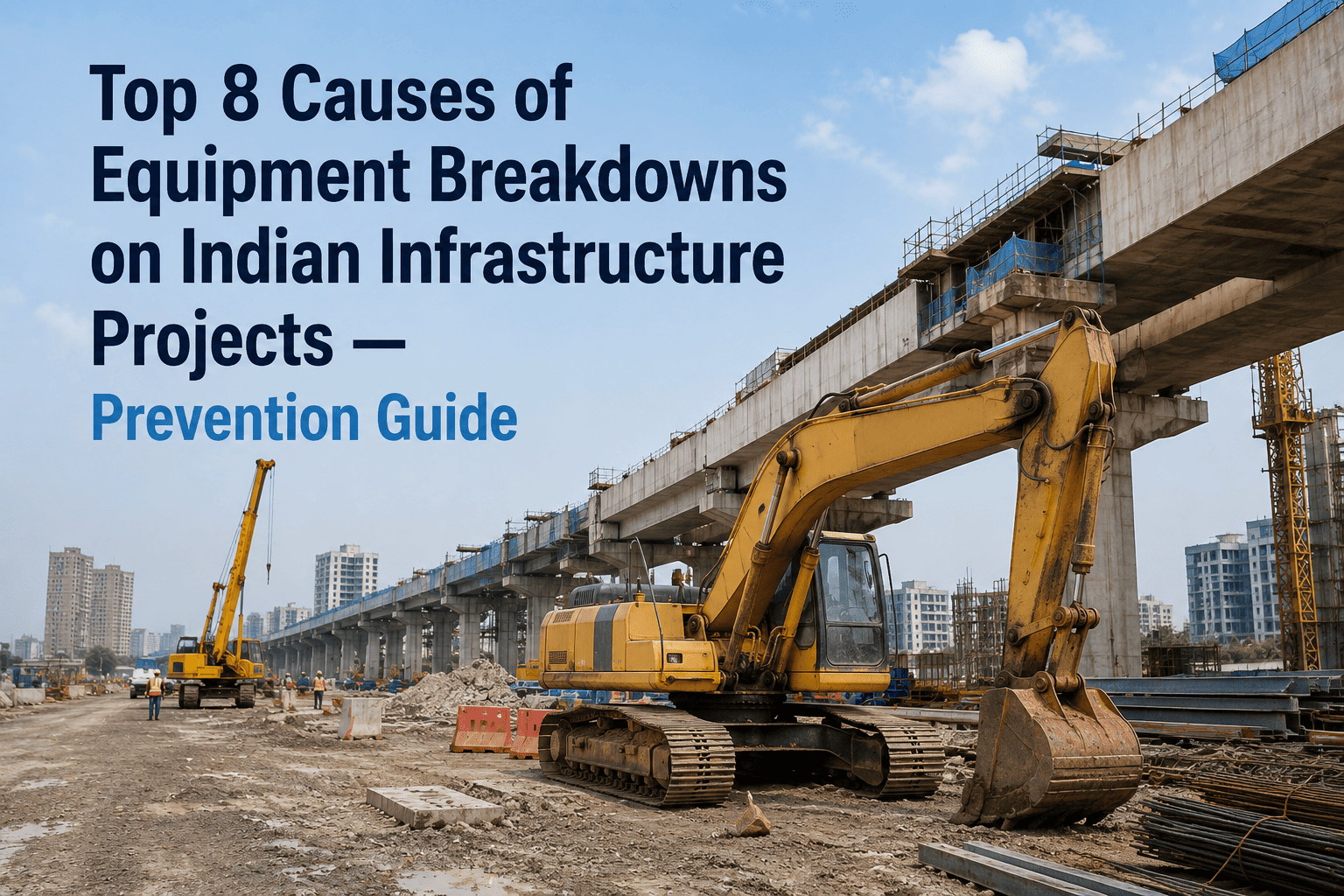
A JCB backhoe sits idle for nine days on an EPC site near Pune — not because the engine failed, but because a ₹1,800 hydraulic seal was out of stock and the nearest dealer warehouse was 600 km away. This single stockout cost the contractor more in idle equipment EMI and rental penalty than three years of holding that seal in inventory would have. Spare parts inventory is the most overlooked line item in Indian heavy equipment fleets — until it stops a JCB, a Tata Hitachi excavator, or an Ashok Leyland tipper cold. This page breaks down the real cost of stockouts, the ABC-VED method fleet teams use to decide what to stock, the reorder point formula that prevents both overstock and shortage, and how automated tracking closes the gap. Sign up free to see your fleet's parts data structured this way in minutes.
Why Indian Fleets Lose Lakhs to Spare Parts Stockouts — And How to Stop It
JCB, Tata Hitachi, Ashok Leyland and BEML fleets across India lose more uptime to missing seals, filters and hoses than to actual engine failures. This guide shows the inventory structure that ends the guesswork.
The Two-Sided Trap Every Fleet Manager Falls Into
Stock too little and a single missing part parks a machine for days. Stock too much and capital sits frozen on a shelf in parts that may never move. Indian contractors managing mixed fleets of JCB, Tata Hitachi, BEML and Ashok Leyland equipment usually swing between both mistakes in the same warehouse — over-buying slow movers while running dry on the parts that actually fail often.
Stocking Too Little
- Machine parked waiting for a part that takes 7–20 days to arrive from an OEM warehouse
- Emergency local purchase at 2–3x normal price just to keep the site moving
- Rental equipment hired at premium daily rates to cover the idle machine
Stocking Too Much
- Working capital frozen in fasteners, gaskets and filters nobody is using
- Shelf life expiry on rubber seals, hoses and hydraulic O-rings
- Warehouse space and manual counting hours wasted on slow-moving SKUs
The ABC-VED Matrix — What To Stock, And How Much
Not every part deserves the same attention. A ₹150 O-ring and a ₹1.5 lakh hydraulic pump both sit in the same storeroom, but they need entirely different stocking rules. ABC ranks parts by consumption value. VED ranks them by what happens if the part is missing. Combine the two and the stocking decision becomes obvious instead of a guess.
Stop Guessing Which Parts Matter Most
HVI applies ABC-VED automatically across your JCB, Tata Hitachi, Ashok Leyland and BEML parts catalog — every part tagged by value and criticality the moment it's added.
The Reorder Point Formula That Ends Both Problems
Reordering on a gut feeling is how warehouses end up either empty or overflowing. One formula, applied consistently, removes the guesswork and tells you exactly when to place the next order.
Worked Example — Excavator Track Roller
India OEM Lead Times — Why Reorder Timing Matters More Here
Lead time is the single biggest variable in the reorder formula, and it varies sharply by brand and region in India. A part sourced from a Pune warehouse behaves very differently from one shipped from a single national depot.
| Equipment Brand | Common Bottleneck Part | Typical Lead Time | Risk If Unstocked |
|---|---|---|---|
| JCB (3DX, 4DX backhoe) | Hydraulic seal kits, bucket pins | 5–10 days | Backhoe idle, RA bill delayed |
| Tata Hitachi (Zaxis excavator) | Track rollers, boom cylinder | 7–15 days | Earthwork activity halted |
| Ashok Leyland (tipper fleet) | Brake pads, clutch assembly | 3–7 days | Material haulage stopped |
| BEML (dozer, dumper) | Final drive, master pin | 10–20 days | Mining/grading work paused |
The Hidden Costs Most Fleet Managers Never Add Up
A stockout's true cost is rarely the part's price tag. It's everything that happens around the missing part — and most of it never appears in the procurement report.
Idle Equipment EMI
A financed excavator still accrues EMI whether it's digging or parked waiting for a part.
Emergency Purchase Premium
Local market parts bought in a rush typically cost 2–3x the normal procurement price.
Rental Backfill Cost
Hiring a replacement machine at daily rate to cover the gap, often at premium pricing.
Schedule Penalty Exposure
Missed milestone dates on EPC contracts can trigger liquidated damages clauses.
Technician Search Time
Manual storeroom hunts for compatible parts add 35–60 minutes per repair event.
Dead Stock Carrying Cost
Overcorrecting after a stockout often means overstocking the same part for years.
From Spreadsheet Chaos to Automated Control
Most Indian fleet teams start parts tracking in an Excel sheet. It works until the fleet crosses 15–20 machines — then updates lag, technicians stop logging consumption, and the spreadsheet becomes a record of what should have happened rather than what did.
Spreadsheet Tracking
HVI Automated Inventory
Frequently Asked Questions
How much spare parts inventory should a construction fleet carry?
What is the difference between ABC and VED classification?
How do I calculate the reorder point for a spare part?
Can HVI track spare parts across JCB, Tata Hitachi, Ashok Leyland and BEML together?
How long does it take to set up automated parts reordering?
Turn Your Parts Shelf Into a Reliability System, Not a Guessing Game
Classify every part by ABC-VED, calculate reorder points automatically, and stop losing equipment days to a missing seal or filter. Built for JCB, Tata Hitachi, Ashok Leyland and BEML fleets across India.