A truck can drive perfectly straight while its tyres are being dragged sideways at every turn of the wheel. That is what misalignment does: a few millimetres of wrong toe or an axle set slightly off square scrubs rubber off the tread and makes the engine push harder on every kilometre. Drivers rarely notice until a set of steer tyres is ruined. This guide explains how alignment and balancing differ, the signs to watch for, when a check is essential and how fleets track alignment with tyre records in HVI.
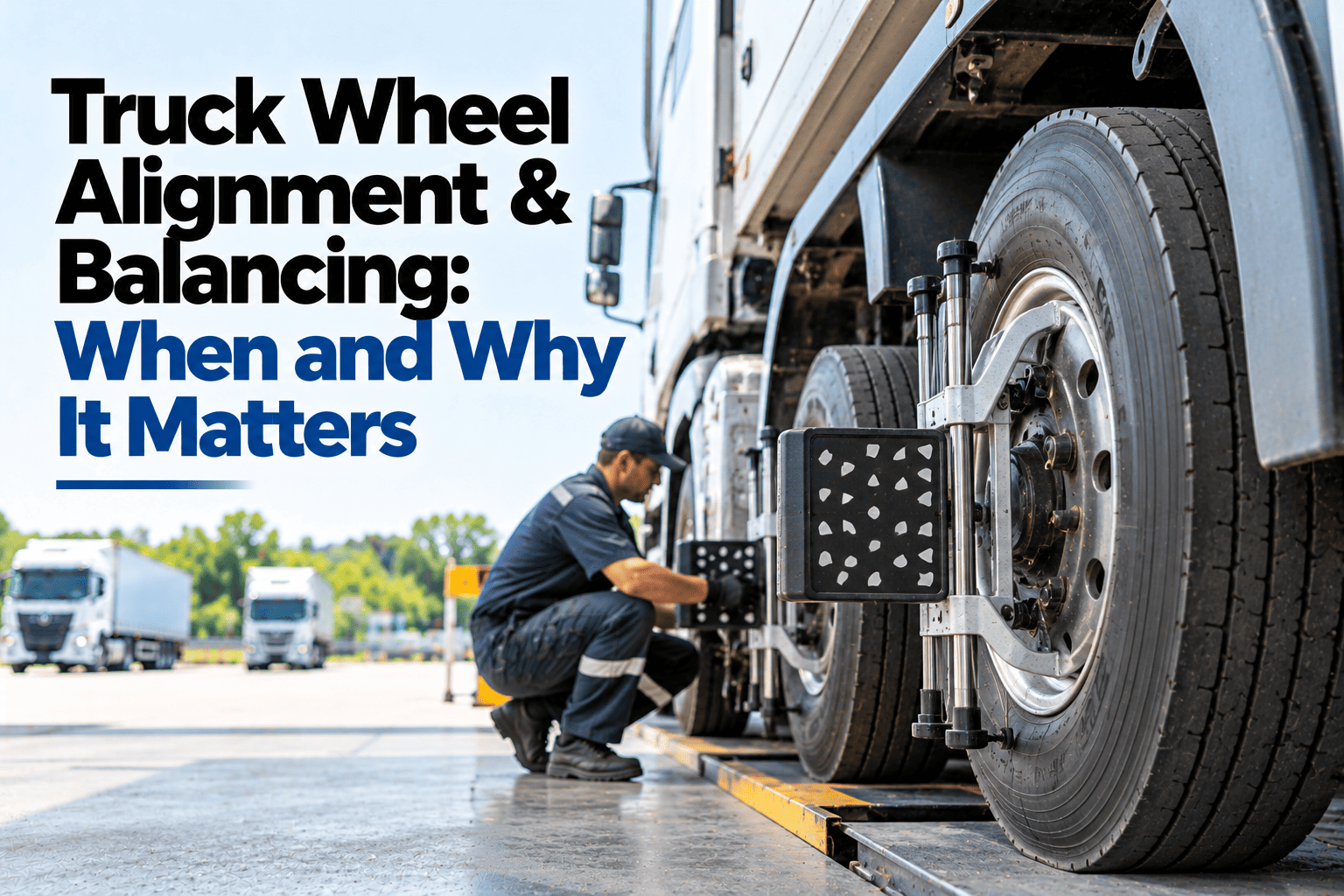
Truck Wheel Alignment and Balancing: When and Why It Matters
See how toe, camber and axle position shape tyre life and fuel use, and learn exactly when your trucks, buses and trailers need an alignment check.
The Four Alignment Settings That Matter on Heavy Vehicles
Each setting controls how the tyre meets the road. When one drifts, tyres wear in a specific way and the vehicle handles differently.
Toe
Whether the fronts of the steer wheels point in or out when seen from above.
Camber
The inward or outward tilt of the wheel when seen from the front.
Caster
The tilt of the steering axis that helps the steering return to straight.
Axle alignment
Whether drive and trailer axles sit square to the frame and parallel to each other.
Alignment and Balancing Are Not the Same Job
Many workshops are asked for one when the vehicle needs the other. This comparison helps you ask for the right job.
| Question | Wheel alignment | Wheel balancing |
|---|---|---|
| What it corrects | The angles of the wheels and axles | Uneven weight around the wheel and tyre |
| Main symptom | Pulling, off-centre steering wheel, uneven wear | Vibration that grows at certain speeds |
| Typical tyre wear | Feathering, one shoulder, diagonal wear | Cupping and patchy wear |
| When it is needed | After steering or suspension work, impacts, new wear patterns | New tyres, repairs, vibration complaints |
| How it is done | Measured and adjusted on an alignment system | Weights added on a balancing machine |
Signs Your Vehicle Needs a Check
Some signs are felt by the driver and some are seen by the inspector. Either one is reason enough to book a check.
What the driver feels
- Vehicle pulls left or right on a flat road
- Steering wheel sits off-centre when driving straight
- Vibration through the steering or seat at certain speeds
- Heavy or wandering steering
- Tyres squeal on gentle turns
What the inspector sees
- Feathered ribs on steer tyres
- One shoulder worn more than the other
- Cupping or diagonal patches
- Trailer tracking off to one side of the tractor
- Worn tie-rod ends, kingpins or torque rods
Link Every Alignment Job to the Tyres It Protects
HVI records alignment and balancing next to tyre depth and photos, so you can see the wear improve after each job and catch the next problem early.
Seven Moments When Alignment Is Essential
Do not wait for the calendar if any of these happen. Each one can knock the settings out in a single day.
How Often Indian Fleets Should Check Alignment
These are sensible starting points by duty. Adjust them using your own tyre wear records and the tyre maker's advice.
Long-haul trucks
At least twice a yearPlus every time new steer tyres are fitted.
Tippers and site trucks
Every three monthsRough sites and impacts move settings quickly.
City buses
At steer tyre rotationTight turns and kerbs wear front tyres fast.
Trailers
At least once a yearAnd after any axle, hanger or suspension work.
How HVI Tracks Alignment With Tyre Records
A sample record for one bus. The alignment job sits on the same timeline as the tyre inspections that triggered it and confirmed the fix.
Wheel Alignment and Balancing FAQs
How do I know if my truck needs wheel alignment?
The clearest signs are the vehicle pulling to one side, an off-centre steering wheel and uneven tyre wear such as feathering or one worn shoulder. Any steering or suspension repair, or a hard impact, is also a reason to check. Waiting until tyres look bad usually means much of their life is already gone.
Does wheel alignment affect fuel consumption?
Yes. Misaligned wheels are dragged slightly sideways as they roll, which increases rolling resistance and makes the engine work harder. The effect per kilometre is small, but across a fleet and a year it adds up, alongside the larger cost of lost tyre life.
What is the difference between alignment and balancing?
Alignment sets the angles of the wheels and axles so tyres roll straight. Balancing evens out the weight around each wheel and tyre so they spin smoothly without vibration. A vehicle can need one, the other or both, depending on the symptoms.
Do trailers need wheel alignment too?
Yes. Trailer axles that are not square to the frame or parallel to each other make the trailer track to one side and wear tyres diagonally. Many fleets forget trailers, which is why tracking trailer checks in HVI alongside tractors helps close the gap.
How can a fleet keep alignment checks on schedule?
Set an interval for each duty type, add event triggers such as suspension repairs and impacts, and link every alignment job to tyre records. That way overdue checks and repeat problems show up straight away. Book a demo to see alignment tracking in HVI.
Straight Wheels, Longer Tyres, Lower Fuel Bills
Schedule alignment by duty and by event, link every job to the tyres it protects and prove the result with follow-up inspections. Your trucks, buses and trailers run truer and your tyres last longer.