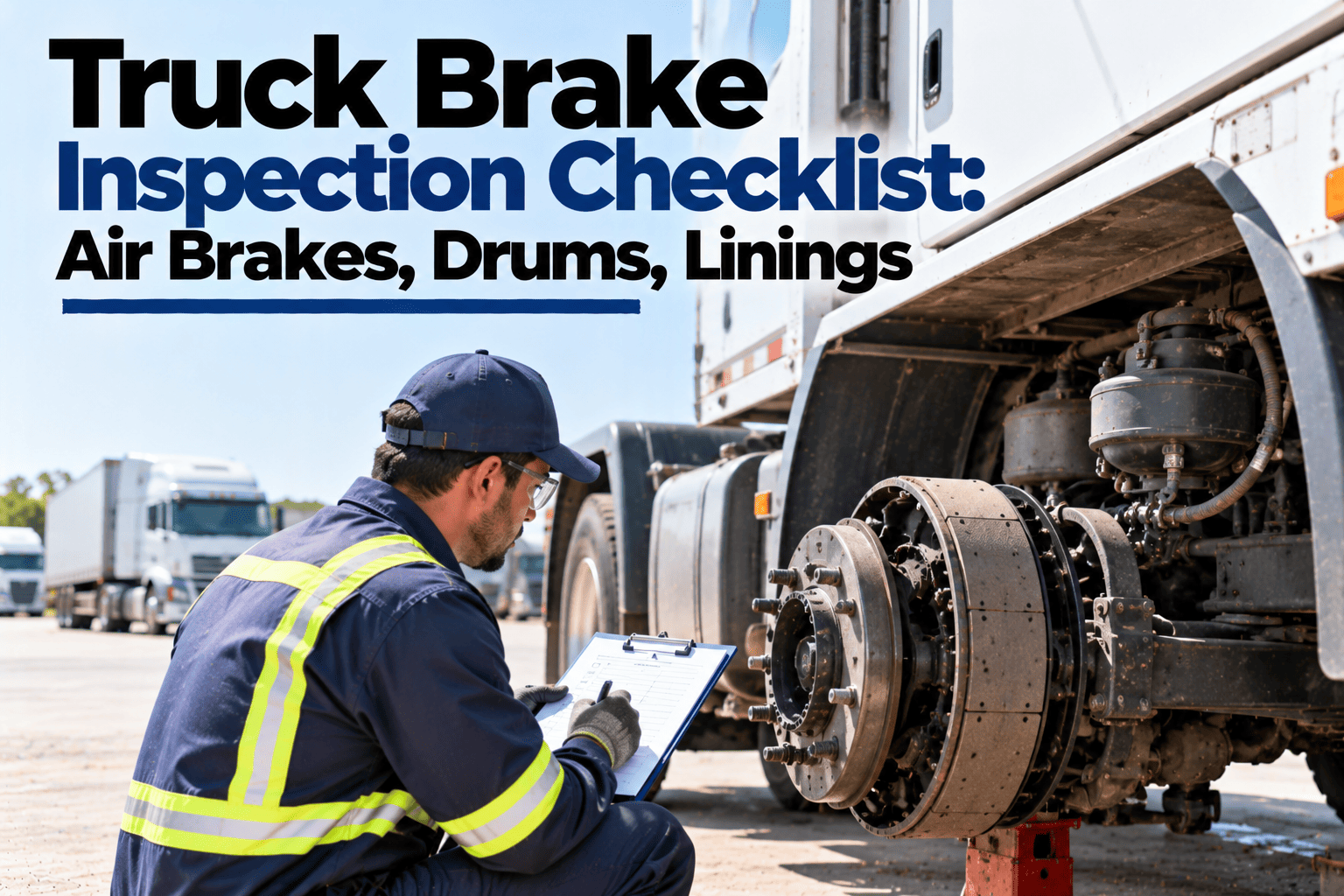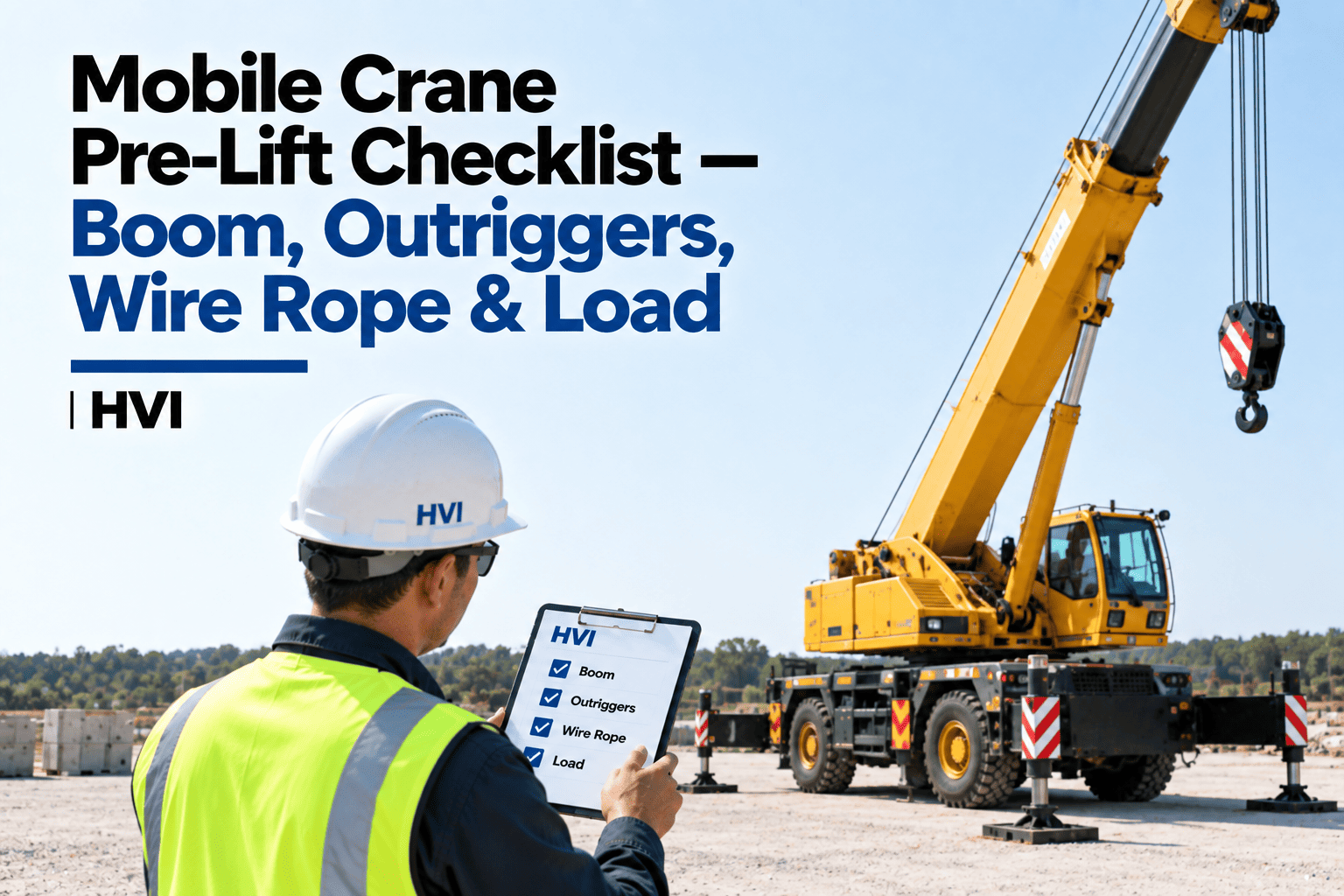
Truck mounted and knuckle boom cranes let utilities, logistics firms and contractors load and place material without waiting for a separate crane. That convenience brings real risk. The crane is only as stable as its outriggers and the ground under them, and a single overload or a worn hose can tip the truck or drop a load. Many of these failures can be spotted in a few minutes before the first lift. This pre-use checklist covers setup, the crane itself and safe lifting, and shows how fleets store every crane check with photos in HVI.
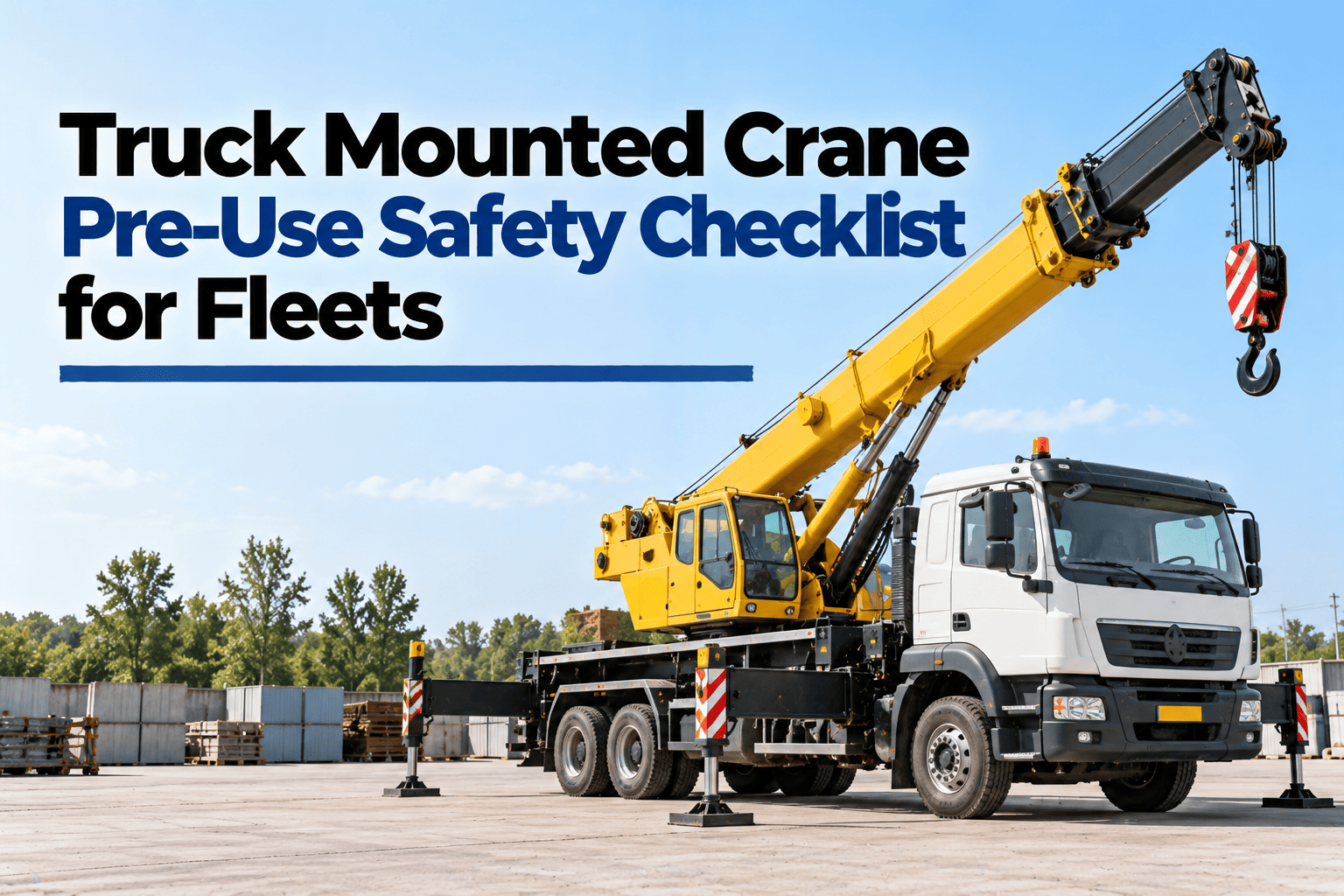
Truck Mounted Crane Pre-Use Safety Checklist for Fleets
Outriggers and ground, boom and slewing, hook and rope, hydraulic hoses, controls, safety devices and the load chart, checked before every lift.
The Pre-Use Checklist
Do the first set before setting up, then test the crane once the outriggers are down. Do not lift if any item fails.
- Hydraulic oil level and no leaks
- Hoses and fittings free of cracks and rubbing
- Boom sections, pins and welds undamaged
- Hook, safety latch and rope or chain
- Outrigger legs and pads in good condition
- Load chart and decals readable
- All outriggers extended as the chart requires
- Truck level within the maker's limit
- Controls return to neutral when released
- Emergency stop cuts all movement
- Overload protection and limit switches tested
- Boom, slew and hoist move smoothly without load
Reading the Ground Before You Set Up
Outrigger loads are concentrated on small pads. Weak ground is a common cause of truck crane tip-overs.
| Ground condition | Risk | What to do |
|---|---|---|
| Soft soil or mud | Pad sinks during the lift | Use larger outrigger mats or move the truck |
| Recently filled ground | Hidden voids collapse | Avoid, or get the ground checked |
| Near trenches or kerbs | Edge gives way | Keep a safe distance from edges |
| Hot asphalt | Pad punches through | Spread the load with mats |
| Slopes | Truck cannot be levelled safely | Find level ground within the maker's limit |
| Covers and manholes | Cover breaks under the pad | Never place a pad on a cover |
Using the Load Chart Every Time
A truck crane's capacity falls quickly as the load moves further out. Check the chart before every lift.
Know the weight
Include hooks, slings and attachments.
Measure the reach
Find the furthest point of the lift.
Check the chart
Confirm capacity at that reach and setup.
Lift slowly
Raise a little, pause and check stability.
Every Crane Truck Checked Before Every Lift
HVI gives operators this pre-use checklist on their phone, records photos of defects and keeps each crane's inspections and certificates together for audits and client checks.
Critical Parts and When to Stop
These defects mean the crane must not lift until repaired.
Hydraulic hoses
Cracks, bulges, leaks or chafed cover.
Stop if leaking or damagedHook and latch
Cracks, opening up or a missing latch.
Stop if deformed or latch missingRope or chain
Broken wires, kinks or stretched links.
Stop if beyond discard limitsBoom and slewing
Cracks, bent sections or slewing play.
Stop if any crack is foundLifting Safely
Many truck crane incidents involve overloading, poor setup or contact with power lines.
Never exceed the load chart or bypass the overload protection. Keep a safe distance from overhead power lines, keep people out from under the load, and never drive the truck with a load on the hook unless the crane maker allows it.
Crane Truck Status in HVI
A sample view across a utility fleet, showing each crane truck's pre-use check and certificate status.
| Crane truck | Depot | Pre-use check | Inspection certificate | Status |
|---|---|---|---|---|
| CT-02 | North depot | Passed at 7:20 am | Valid | Cleared |
| CT-05 | East depot | Passed at 7:35 am | Due in 2 weeks | Book inspection |
| CT-08 | South depot | Failed, hose leaking | Valid | Do not lift |
Truck Mounted Crane FAQs
What should be checked on a truck mounted crane before use?
Hydraulic oil and hoses, boom sections and pins, the hook, latch and rope, outrigger legs and pads, the load chart, controls, emergency stop and overload protection, plus the ground where the outriggers will go.
Why do truck mounted cranes tip over?
Common causes are lifting beyond the load chart, outriggers not fully extended, weak or uneven ground under the pads and lifting on a slope. A careful setup and a working overload system reduce the risk.
Do I need outrigger mats?
Mats spread the load over a larger area and are needed on soft ground, asphalt and any surface that may not take the full pad load. Many operators carry them as standard.
How often should a truck mounted crane be inspected?
The operator checks it before every use, and a competent person inspects it periodically as required by applicable rules and the maker. Teams that track certificates in HVI get reminders before they expire.
Can crane checks be done on a phone?
Yes. Operators complete the pre-use checklist with photos and supervisors see which crane trucks are cleared to lift. Book a demo to see truck crane checklists in HVI.
Stable Setups, Safe Lifts
Check every truck mounted crane before use, set up on solid ground, follow the load chart and keep every inspection in HVI. Fewer tip-overs, fewer dropped loads and safer crews.