Underground, a machine fault is never just a maintenance problem. A worn hose on an SDL can stop a whole district, and a single missing bolt on a flameproof enclosure can turn a small spark into an explosion risk in gassy seams. Indian underground coal mines depend on SDLs, LHDs, roof bolters, conveyors and continuous miners working in tight, wet and dusty conditions. Keeping them safe means caring for both the mechanics and the flameproof electrics on every shift. This guide covers both, and how mines record inspections offline in HVI.
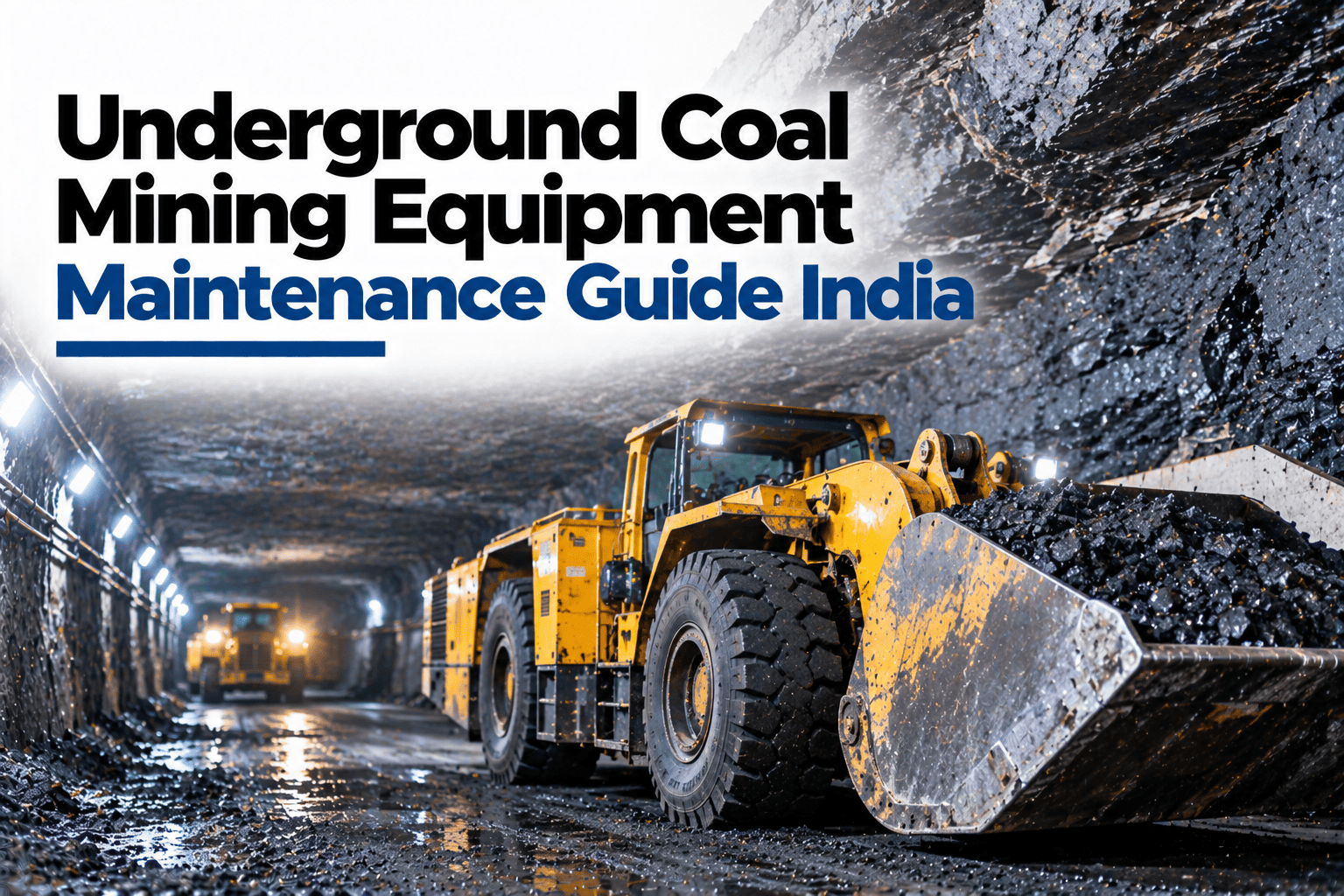
Underground Coal Mining Equipment Maintenance Guide India
Keep underground machines reliable and flameproof-safe with clear shift checks, a practical PM plan and records that work even where there is no network.
- Hydraulics, hoses and cylinders
- Chains, tracks and tyres
- Brakes and steering
- Lubrication and filters
- Enclosures, bolts and covers
- Flame paths and glands
- Trailing cables and plugs
- Earthing and protection
Key Checks by Machine Type
Each underground machine has its own weak points. Build shift checks around them.
Side discharge loaders
Bucket and lift arms, hydraulic hoses, tracks or tyres, brakes, flameproof motor and cable.
Load haul dump machines
Articulation joint, bucket pins, tyres, brakes, exhaust treatment on diesel units.
Roof bolters
Drill heads, feed system, hydraulics, water flushing and canopy protection.
Belt conveyors
Belt tracking, idlers, splices, guards, pull-wire switches and fire protection.
Continuous miners
Cutter picks, gearboxes, water sprays, methane monitor and cut-off where fitted.
Pumps and fans
Bearings, impellers, vibration, starters and standby units ready to run.
Flameproof Enclosure Rules Every Electrician Follows
A flameproof enclosure only protects if it stays exactly as approved. These habits keep it that way.
The Shift Inspection, Step by Step
A consistent routine on every shift catches most faults before they cause a stoppage or an incident.
Handover and gas check
Read the previous shift's defects and confirm gas levels are safe at the workplace.
Pre-start inspection
Walk around for leaks, damage, guards, enclosures, cables and safety devices.
Watch and report
Report abnormal noise, heat or leaks at once and stop if safety is at risk.
Record and hand over
Log hours, defects and work done so the next shift starts informed.
Inspect Underground, Sync on the Surface
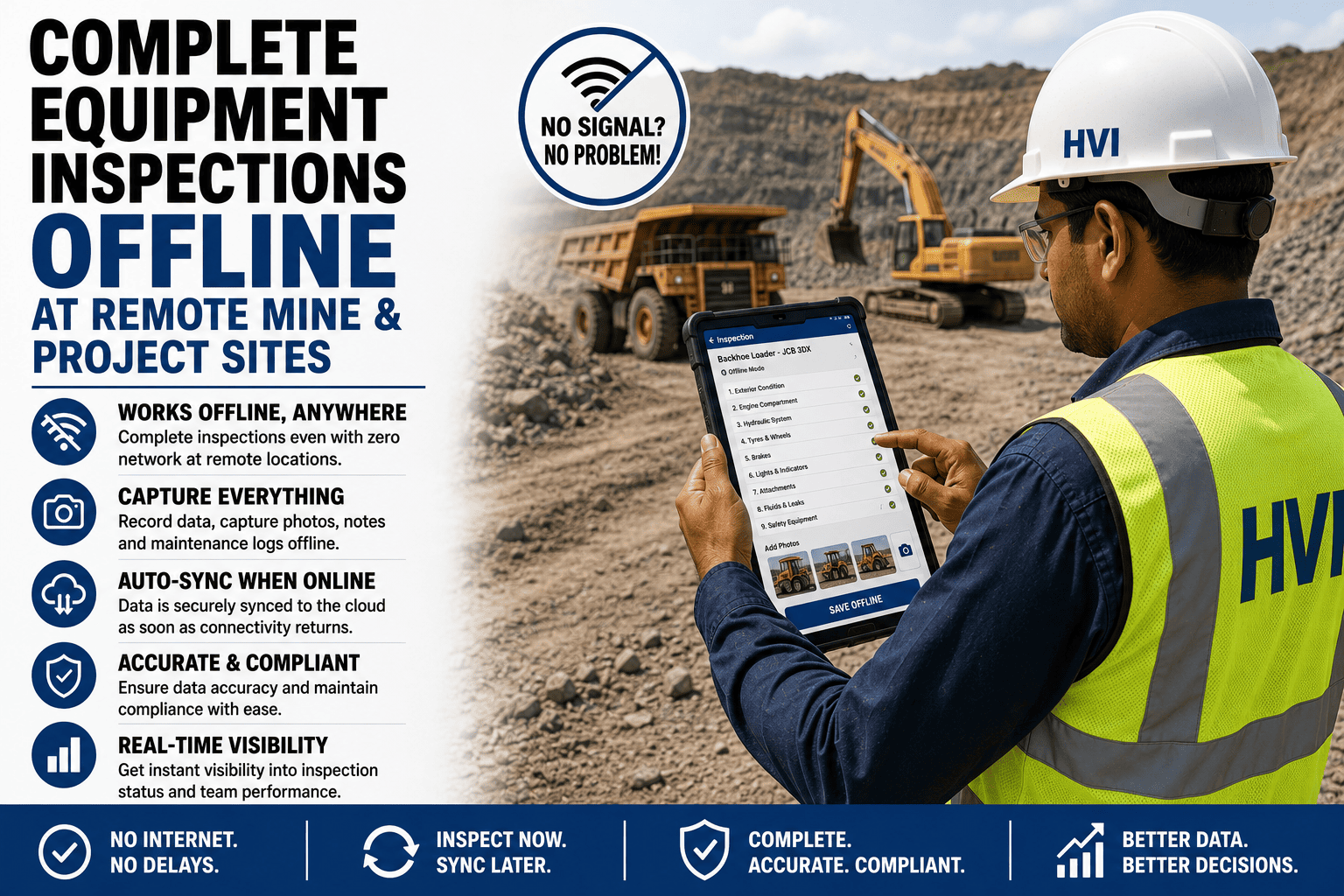
HVI lets supervisors and electricians complete shift checks offline underground, with photos, and syncs every record automatically once they reach network coverage.
A Simple PM Plan for Underground Machines
Use the maker's schedule as the base and add to it for underground dust, water and load. This table shows how tasks are usually layered.
| Area | Every shift | Weekly | Monthly or by hours |
|---|---|---|---|
| Hydraulics | Leaks and hose damage | Oil level and fittings | Filters and oil sample |
| Flameproof electrics | Covers, bolts, cables | Glands and plugs | Full enclosure inspection by a competent person |
| Brakes and steering | Function test | Adjustment check | Wear parts inspection |
| Conveyors | Tracking and guards | Idlers and pull-wires | Splices and drive units |
| Lubrication | Grease points | Gearbox levels | Oil changes as scheduled |
| Safety devices | Alarms and stops work | Methane monitors checked | Calibration as required |
How Offline Inspections Work Underground
Most underground workings have no mobile signal. Offline inspection apps let records be made at the machine and shared later.
Download
Checklists and machine lists load onto the phone on the surface.
Inspect
Complete checks and take photos underground with no network.
Store
Records are saved safely on the device with time stamps.
Sync
Everything uploads automatically when the phone reaches signal.
Any phone or tablet taken underground must meet the mine's rules for electronic devices in hazardous areas. Check with your mine management before use.
Records Inspectors Expect to See
Underground mines work under the Coal Mines Regulations and DGMS guidance. Clear records show that equipment is inspected and maintained as required.
Regulations, approvals and DGMS circulars change over time. Confirm current requirements for your mine and keep copies on file.
Underground Equipment Status in HVI
A sample end-of-shift view after records sync on the surface. Shift checks, flameproof status and PM sit together for every machine.
| Machine | Shift check | Flameproof check | Next PM | Status |
|---|---|---|---|---|
| SDL-07 | Done | Passed | In 40 h | Ready |
| LHD-02 | Done | Passed | Due next shift | PM due |
| RB-04 | Done | Missing cover bolt | In 120 h | Isolated until fixed |
| CNV-11 | Done | Passed | In 60 h | Running |
Underground Equipment Maintenance FAQs
What is an SDL and an LHD in underground mining?
An SDL is a side discharge loader, which loads coal sideways onto a conveyor or tub. An LHD is a load haul dump machine, which loads, carries and dumps material over short distances. Both are common in Indian underground coal mines and need regular checks of hydraulics, brakes and electrics.
Why is flameproof maintenance so important underground?
In gassy mines, a spark inside an electrical enclosure must not ignite the surrounding atmosphere. A flameproof enclosure only does this if it stays exactly as approved, with all bolts fitted, flame paths clean and no modifications. A single missing bolt can defeat the protection.
How often should underground equipment be inspected?
Machines should be checked at the start of every shift, with deeper weekly and monthly checks and PM by hours as the maker recommends. Flameproof enclosures also need periodic detailed inspection by a competent person, as required for your mine.
Can inspections be recorded where there is no network underground?
Yes. Offline inspection apps store checklists and photos on the device and sync them when it reaches signal. Teams that use HVI offline record checks at the machine instead of on paper. Devices must meet the mine's rules for use underground.
What records help during a DGMS inspection?
Shift inspection reports, flameproof inspections and repairs, electrical tests, maintenance history, defect logs and authorisations for operators and electricians. Dated, complete records show that equipment is being looked after properly. Book a demo to see underground records in HVI.
Safer Underground Machines, Records That Never Get Lost
Run mechanical and flameproof shift checks offline at the machine, sync them on the surface and track PM and defects for every SDL, LHD, bolter and conveyor in HVI.