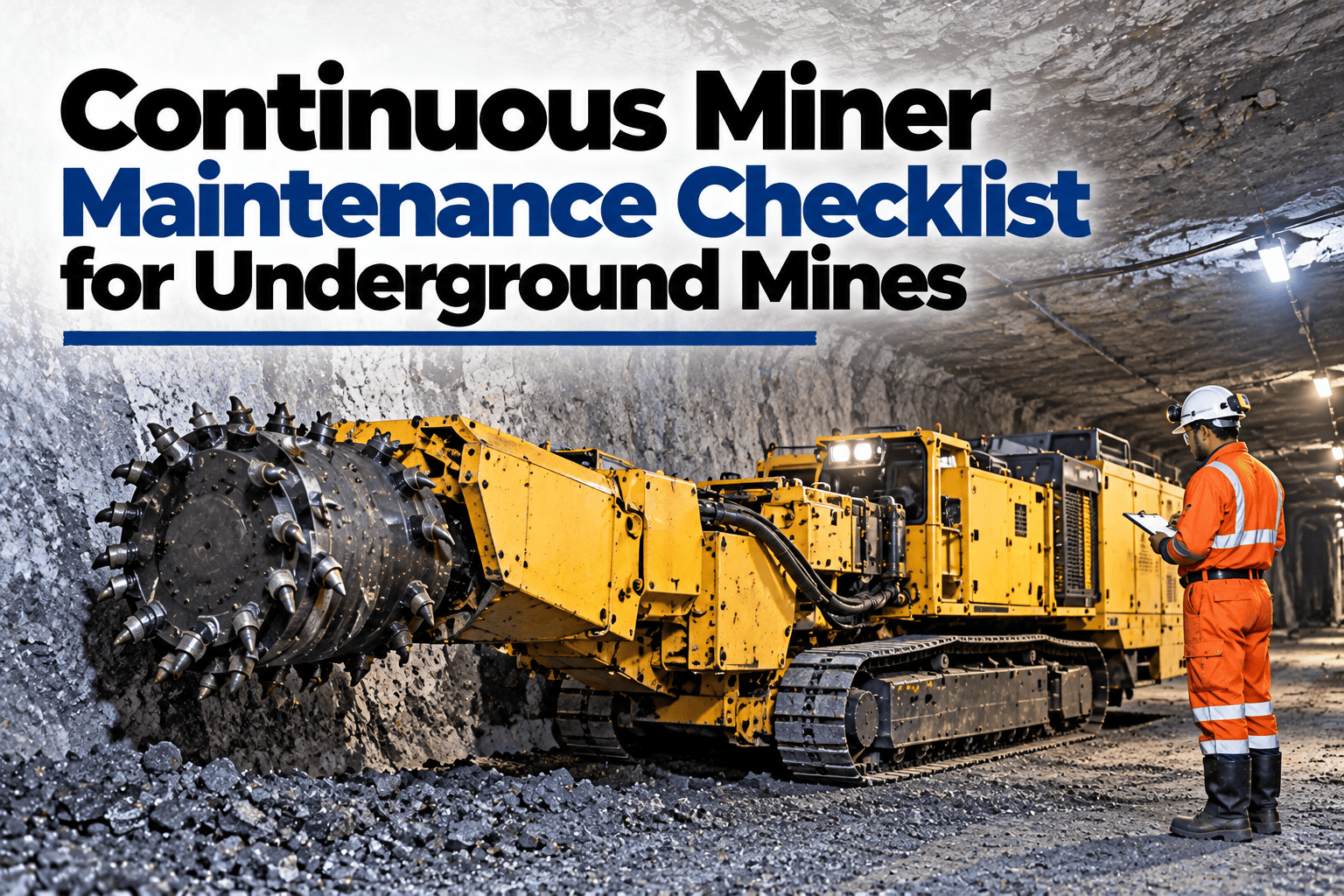
In a mechanised bord and pillar section, the continuous miner sets the pace for everything else. When it stops, shuttle cars, roof bolters and the whole crew wait, and production for the shift is lost. Underground conditions also make faults more dangerous: worn picks raise dust and sparks, a damaged trailing cable is an ignition risk, and a faulty methane monitor removes a key safeguard. Disciplined shift and weekly checks keep the machine cutting and the section safe. This checklist covers them, and shows how mines record continuous miner checks in HVI.
Continuous Miner Maintenance Checklist for Underground Mines
Cutter drum and picks, gathering arms and conveyor, hydraulics, trailing cable, water sprays, methane monitor and tram tracks, checked every shift.
Shift Start Checklist
Complete these with the machine isolated, before cutting starts. Do not cut if any safety item fails.
Weekly Checks by System
Follow the manufacturer's schedule and your mine's approved maintenance plan. These are the core weekly tasks.
| System | Weekly check | Warning signs |
|---|---|---|
| Cutter drum | Drum vanes, pick holders, lacing pattern | Cracked holders, missing picks, drum damage |
| Gearboxes | Oil level and condition, breathers, temperatures | Metal in oil, overheating, unusual noise |
| Gathering arms | Arms, discs and drive | Wear, cracks, uneven loading |
| Conveyor | Chain, flights, sprockets and deck plates | Stretched chain, broken flights, worn deck |
| Tram system | Crawler chains, pads, tensioners | Loose chains, worn pads, poor tracking |
| Electrical | Enclosures, glands, cable reel and connections | Damaged glands, loose covers, overheating |
Gas and Ignition Safety
The cutting face is where methane and frictional sparks can meet. Safety systems must never be bypassed.
Never cut with a faulty methane monitor, blocked water sprays, worn or missing picks, or damaged flameproof enclosures. These systems prevent ignitions at the face. Report any fault immediately and follow your mine's statutory procedures before resuming work.
- Less frictional heat and fewer sparks
- Less fine dust at the face
- Lower power draw and gearbox load
- Faster, smoother cutting
- Cool the picks and cutting zone
- Suppress dust at the source
- Reduce ignition risk
- Protect operators' lungs
Keep Every Shift's Checks on Record
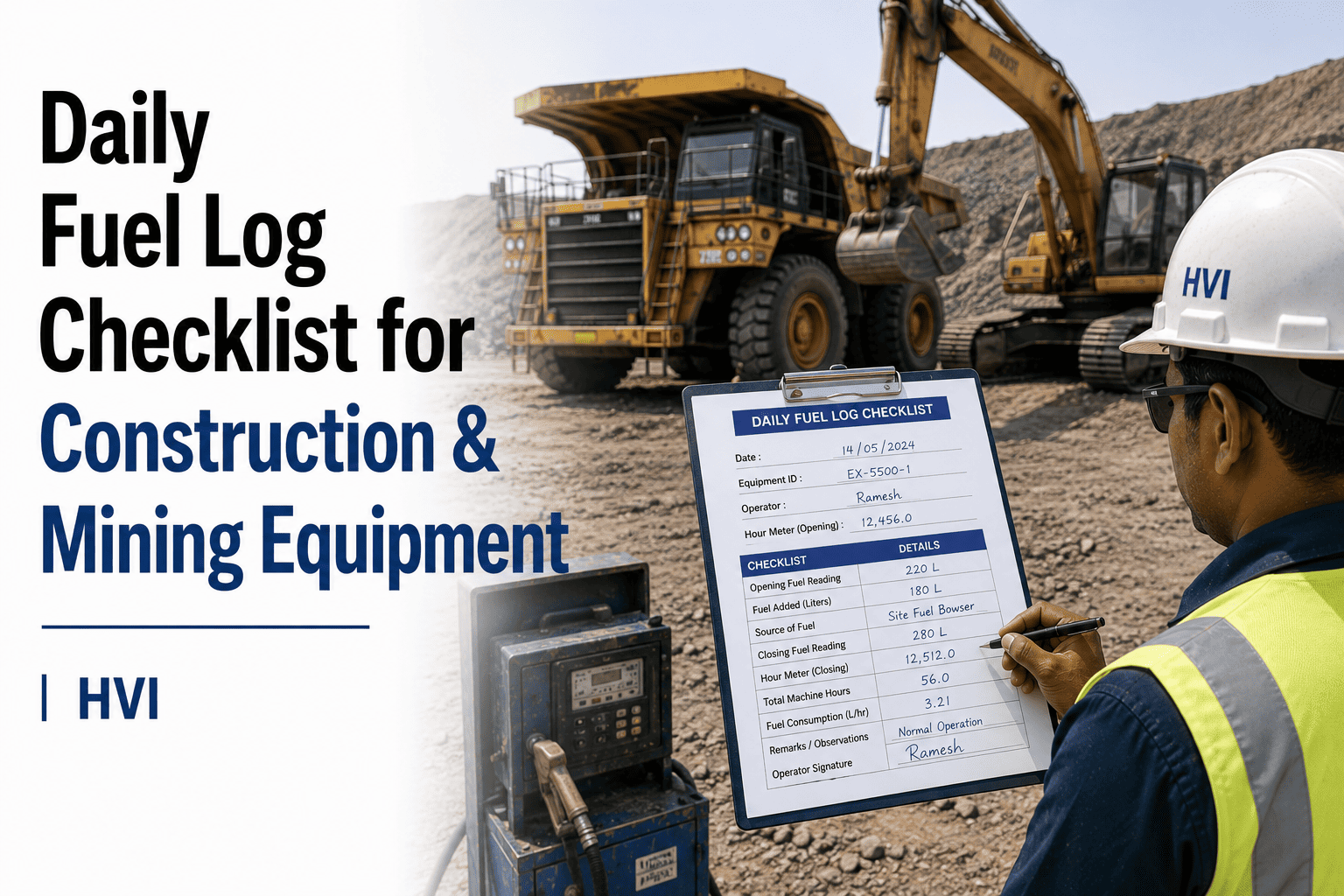
HVI records continuous miner checks, defects and repairs by shift and machine, with dated records that support your mine's statutory and audit requirements.
Trailing Cable Care
The trailing cable powers the whole machine and is easily damaged by tramming and shuttle cars.
Inspect daily
Look for cuts, crushing and exposed cores.
Hang it safely
Keep it off the floor and clear of traffic.
Never run over it
Plan tramming and shuttle routes.
Repair properly
Only approved repairs by authorised staff.
Common Causes of Continuous Miner Downtime
These faults stop sections again and again. Regular checks catch many of them early.
Cable damage
Cuts and crushing from tramming or shuttle cars.
Hydraulic leaks
Worn hoses and seals in harsh conditions.
Conveyor chain failure
Stretched chain and broken flights.
Gearbox overheating
Low oil, blunt picks and overloading.
Continuous Miner Status in HVI
A sample view across sections, showing each machine's shift check and open defects.
| Machine | Section | Shift check | Open defect | Status |
|---|---|---|---|---|
| CM-01 | Section 4 | Passed, A shift | None | Cutting |
| CM-02 | Section 6 | Passed, A shift | Conveyor chain needs tensioning | Fix at shift change |
| CM-03 | Section 7 | Failed, A shift | Two sprays blocked | Stopped until fixed |
Continuous Miner Maintenance FAQs
What should be checked on a continuous miner every shift?
The methane monitor, water sprays, picks and holders, trailing cable, flameproof enclosures, hydraulic oil and leaks, conveyor chain and emergency stops, all before cutting starts.
How often should continuous miner picks be changed?
Check them every shift and replace worn, damaged or missing picks straight away. Blunt picks raise dust and sparks, slow cutting and add load to the gearboxes.
Why are water sprays so important on a continuous miner?
They cool the cutting zone, suppress dust and help reduce the risk of frictional ignition at the face. Blocked or weak sprays should stop cutting until they are fixed.
What are common causes of continuous miner downtime?
Common causes include trailing cable damage, hydraulic leaks, conveyor chain failures and gearbox overheating. Teams that track defects in HVI can see which faults repeat.
Can continuous miner checks be recorded digitally?
Yes. Shift checks, defects and repairs can be recorded by machine and shift, creating dated records for audits. Book a demo to see underground equipment checklists in HVI.
Keep the Section Cutting, Safely
Run shift and weekly continuous miner checks, stop on safety faults and track every defect and repair in HVI. Higher machine availability and a safer underground section.