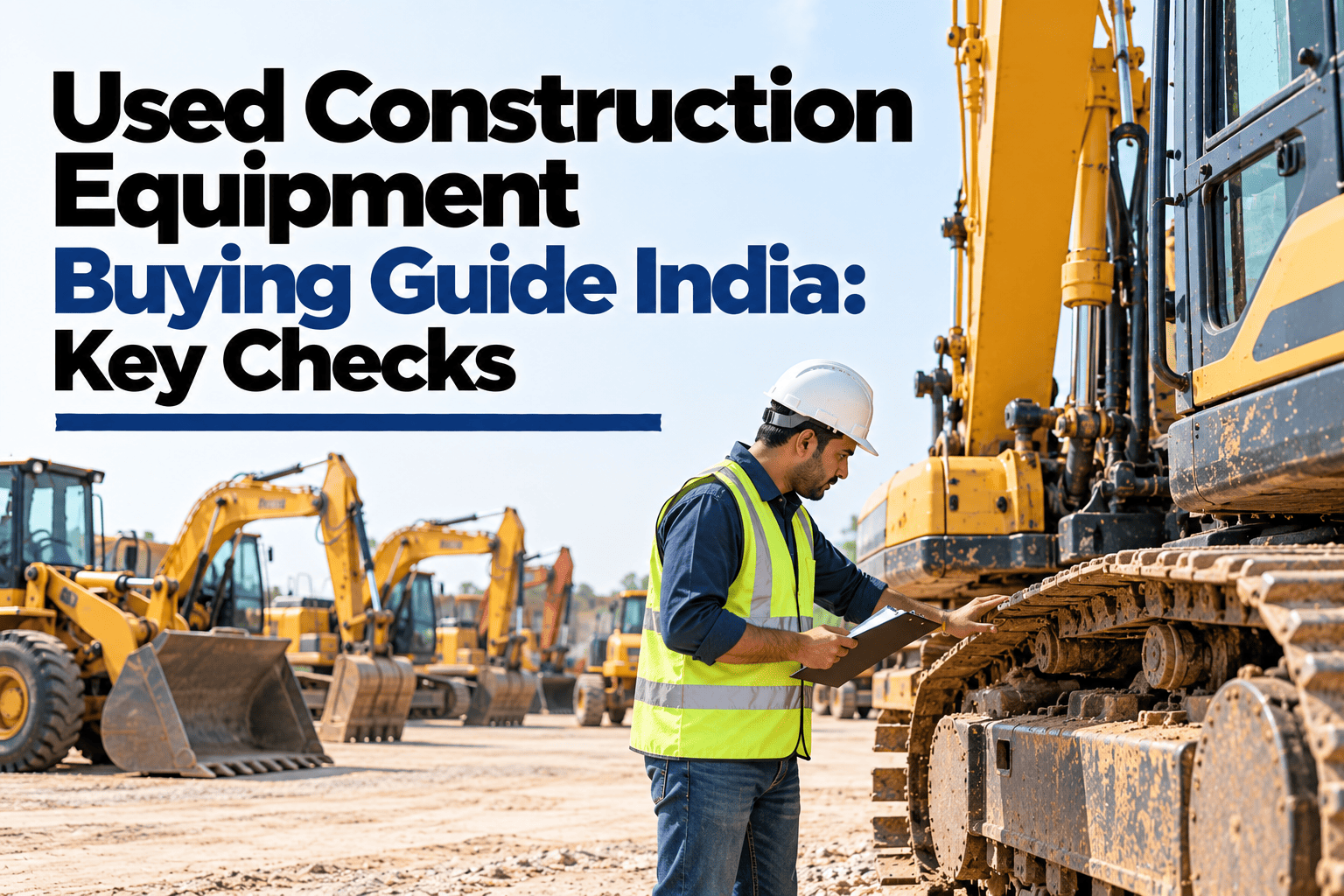
A good used excavator, loader or crane can save a contractor lakhs over buying new. A bad one can swallow those savings in repairs. Worn pumps, cracked booms, tired undercarriages and tampered hour meters are easy to miss. A careful inspection, a check of the paperwork and a clear service history protect you from the worst buys. A few hours checking a machine with a trusted mechanic decide whether it earns money or drains it. This guide shows what to check, and why sellers get more with a digital service history in HVI.
Used Construction Equipment Buying Guide India: Key Checks
What to inspect, how to verify hours and service history, which documents to check, how to value a machine and the red flags that should end a deal.
What to Look For in Each Area
Inspect the machine cold, then again after it has worked for a while. Take an experienced mechanic if you can.
| Area | What to check | Warning signs |
|---|---|---|
| Engine | Cold start, smoke, oil leaks, blow-by | Hard starting, heavy smoke, oil in coolant |
| Hydraulics | Cycle speed, power under load, hoses, cylinders | Slow functions, noisy pump, leaking cylinder seals |
| Undercarriage or tyres | Track wear, rollers, sprockets, tyre condition | Worn sprockets, oily rollers, uneven tyre wear |
| Boom, arm and frame | Welds, cracks, pin and bush play | Fresh welding, cracks, heavy play at pins |
| Electrics and cab | Warning lamps, gauges, controls, AC | Fault codes, missing parts, damaged wiring |
| Bucket and attachments | Teeth, edges, wear plates, couplers | Heavy wear, cracks, repairs to the bucket |
Verifying Hours and Service History
The hour meter alone is not proof. Look for evidence that the hours and condition match.
Read the meter
Note hours on the meter and any telematics system.
Check records
Match hours to dated service records and invoices.
Match the wear
Pedals, seat, pins and undercarriage should fit the hours.
Ask the dealer
Authorised dealers may hold service history for the machine.
Red Flags That Should End a Deal
Any of these is a reason to walk away, or at least to get a professional inspection before paying.
Hours do not match wear
Low hours on a machine that looks heavily used.
No papers
Missing invoice, ownership proof or financier clearance.
Fresh structural welds
Recent welding on the boom, arm or frame.
No test run allowed
A seller who will not let you operate the machine.
Build the History Buyers Look For
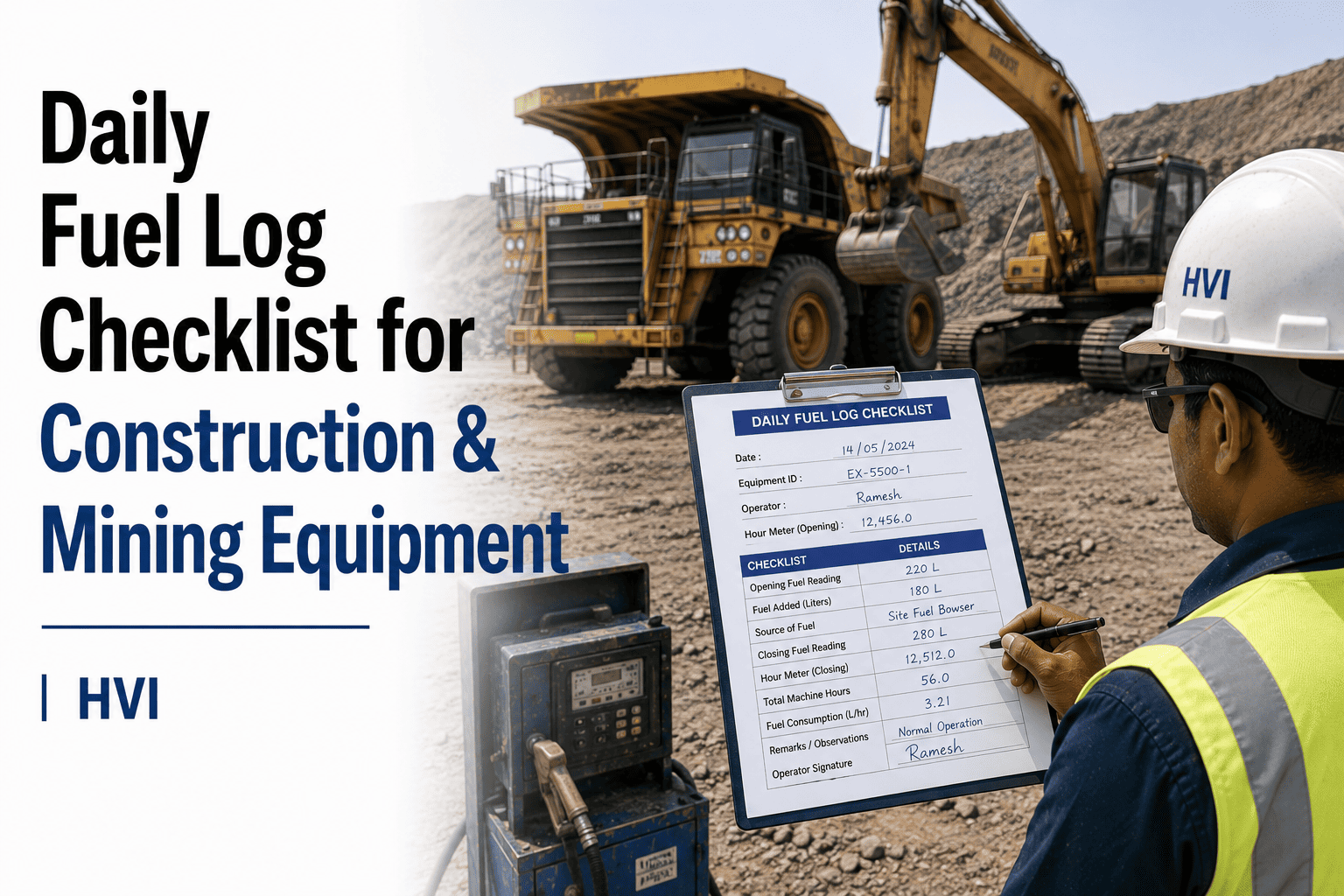
HVI keeps dated inspections, services, repairs and hour meter readings for every machine you own, so when you sell, buyers can see exactly how it was looked after.
Documents to Check Before Paying
Clean paperwork protects you from legal trouble later. Requirements vary by machine type and state.
Valuing the Machine and Testing It
A fair price reflects condition, hours and history, not just the year of manufacture.
- Hours and overall condition
- Brand, model and parts support in your area
- Complete, believable service history
- Cost of repairs needed soon
- Start it cold and watch for smoke
- Run every function under real load
- Check for warning lamps and fault codes
- Inspect again for leaks after working
Why a Digital History Raises Resale Value
Two similar machines can sell for very different prices. The difference is often trust.
- Hours backed by regular dated readings
- Every service and repair recorded
- Inspection results show condition over time
- Buyers decide faster and pay more
- Buyers doubt the hour meter
- Hidden problems are assumed
- Price is pushed down to cover risk
- The sale takes longer
Used Equipment Buying FAQs
What should I check when buying a used excavator?
Check the engine, hydraulics, undercarriage, boom and frame, electrics and bucket, and run every function under load. Verify the hours against service records and check all ownership and finance documents before paying.
How can I tell if the hour meter has been tampered with?
Compare the meter with dated service records, telematics data and the wear on pedals, seat, pins and undercarriage. Low hours on a heavily worn machine is a strong warning sign.
What documents are needed to buy used construction equipment?
Usually the original invoice and ownership proof, the registration certificate for machines registered with the RTO, a no objection letter from any financier, insurance details and service records. Requirements vary by machine and state.
Is it worth paying for a professional inspection?
For expensive machines it usually is. An experienced mechanic can spot hydraulic, structural and engine problems that would cost far more than the inspection to fix later.
How can I get a better price when I sell my machine?
Keep a complete, dated record of hours, inspections, services and repairs. Teams that keep records in HVI can share a clear history with buyers. Book a demo to see how.
Buy Carefully, Sell for More
Inspect thoroughly and check every document before buying, then keep a full digital history for every machine in HVI. Fewer bad buys and better prices when it is time to sell.