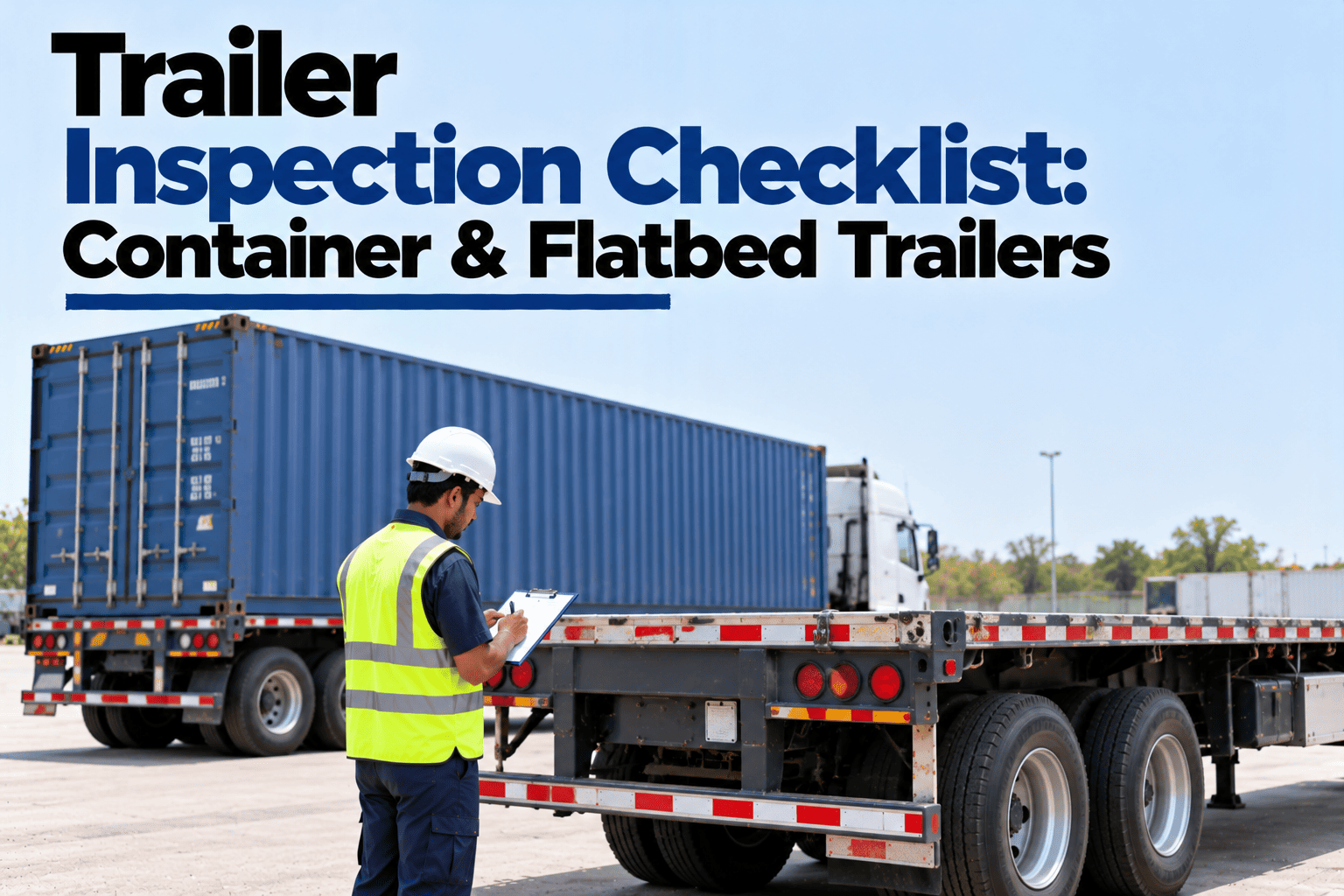
Trailers often get less attention than the tractors that pull them. A driver checks the cab, the engine and the tractor tyres, then hooks up whichever trailer is waiting in the yard. Yet worn trailer brakes, under-inflated trailer tyres, an unlocked twist lock or a badly coupled kingpin can cause serious highway incidents. Because trailers swap between tractors, each one needs its own inspection and its own record. This checklist covers container, flatbed and low-bed trailers, and shows how fleets track every trailer separately in HVI.
Trailer Inspection Checklist: Container and Flatbed Trailers
Kingpin and fifth wheel coupling, twist locks, air lines and brakes, suspension and axles, tyres, landing gear, lights and reflectors.
Coupling the Trailer Safely
A poor coupling is one of the most serious trailer faults. Check every step each time a trailer is hooked up.
Couple and lock
Check the fifth wheel jaws close fully on the kingpin.
Tug test
Gently pull against the trailer brakes to confirm the lock.
Connect lines
Fit air and electrical lines without tangles or rubbing.
Raise landing gear
Wind it fully up and stow the handle.
Trailer Pre-Trip Checklist
Walk around the whole trailer before every trip, after coupling. Report any defect before moving.
Extra Checks by Trailer Type
Every trailer needs the basic checks above. Each type also has its own points to watch.
| Trailer type | Extra checks | Common risks |
|---|---|---|
| Container trailer | Twist locks, locating cones, container seating | Container shifting or falling |
| Flatbed trailer | Deck boards, side stakes, lashing points | Loads moving if not secured |
| Low-bed trailer | Ramps, deck, lashing points, ground clearance | Machinery shifting, grounding on bumps |
| Hydraulic axle trailer | Hydraulic lines, steering, axle levelling | Leaks, uneven axle loads |
| Tipping trailer | Hoist, body hinges and locks | Tipping on uneven ground |
Every Trailer With Its Own Inspection Record
HVI tracks each trailer separately from the tractor, records coupling and pre-trip checks with photos and shows the defect history of every trailer in your yard.
Brakes and Tyres: The Biggest Trailer Risks
Trailer brakes and tyres carry most of the load, yet they are easy to overlook behind the tractor.
- Drain air tanks as instructed
- Check slack adjusters and pushrod travel
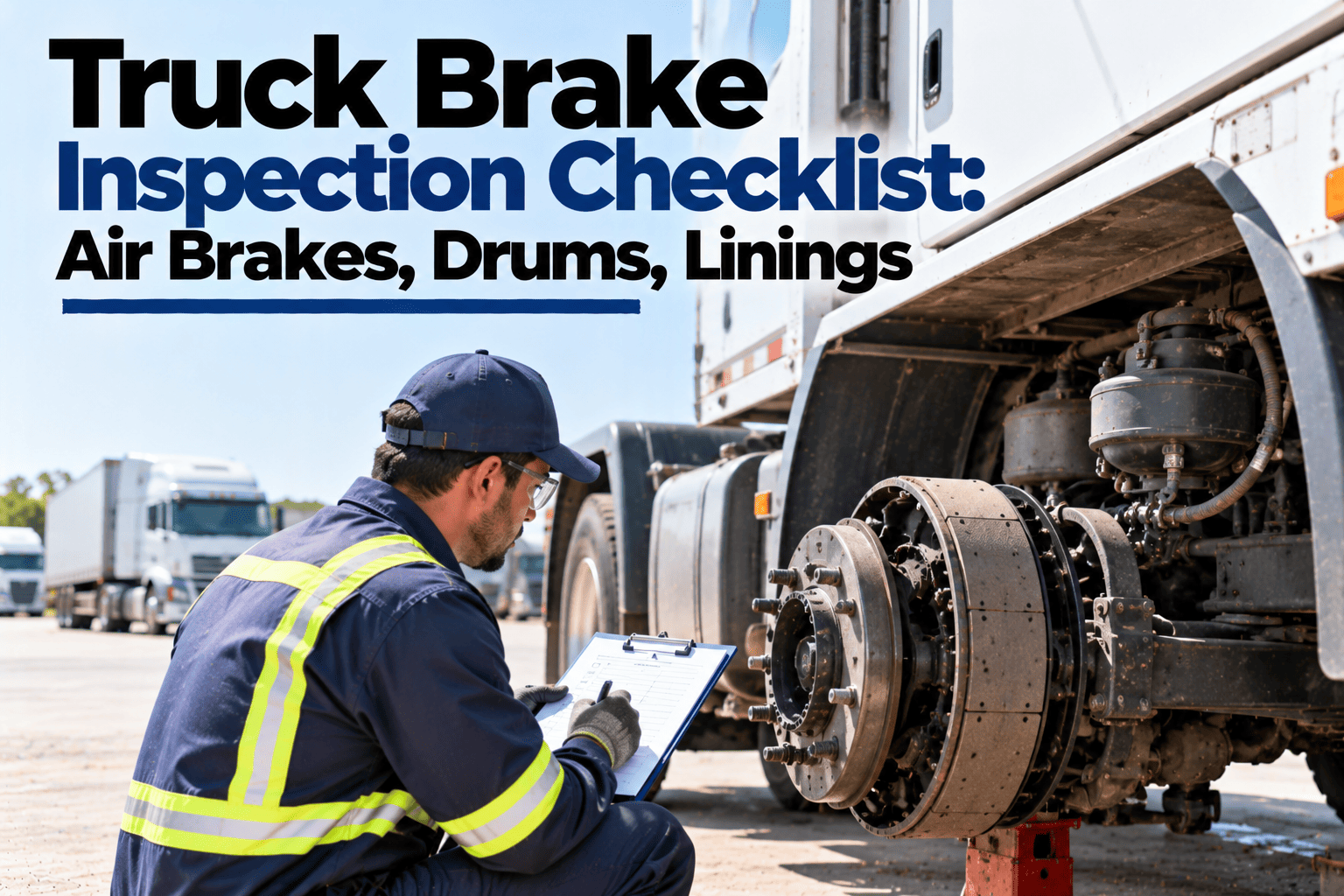
- Look for worn linings and drums
- Listen for air leaks at every joint
- Check pressures on every axle
- Look for cuts, bulges and uneven wear
- Check twin tyres are not touching
- Confirm wheel nuts are tight
Never go under a trailer that is only held by its landing gear or a jack. Lower the landing gear onto firm ground before uncoupling, chock the wheels, and never move a container trailer unless all twist locks are engaged.
Trailer Fleet Status in HVI
A sample yard view. Each trailer keeps its own record, whichever tractor pulls it.
| Trailer | Type | Coupled to | Pre-trip check | Status |
|---|---|---|---|---|
| TR-112 | Container | Tractor T-08 | Passed | Cleared |
| TR-118 | Flatbed | Tractor T-03 | One reflector missing | Fix before night trip |
| TR-125 | Low-bed | Not coupled | Brake air leak | Do not move |
Trailer Inspection FAQs
What should be checked on a trailer before every trip?
The kingpin and coupling, twist locks, air lines, trailer brakes, tyres and wheel nuts, suspension, chassis for cracks, landing gear, and all lights, reflectors and the number plate.
What is a tug test?
After coupling, the driver applies the trailer brakes and gently pulls forward with the tractor. If the trailer holds, the fifth wheel jaws are locked on the kingpin.
Why should trailers be tracked separately from tractors?
Trailers often swap between tractors, so a trailer's defects can be lost if they are only recorded against the tractor. Separate records keep each trailer's history complete.
How often should twist locks be checked?
Every time a container is loaded and before every trip. Check each lock is fully engaged and undamaged. Teams that log checks in HVI have a record for every load.
Can trailer inspections be done on a phone?
Yes. Drivers complete coupling and pre-trip checks with photos against each trailer's own record. Book a demo to see trailer checklists in HVI.
Safe Trailers Behind Every Tractor
Check every trailer at coupling and before each trip, keep a separate record for each one and track every defect in HVI. Fewer highway incidents and a clear history for every trailer.